
SPARK Matrix™: Service Lifecycle Management has emerged as a critical pillar for organizations seeking to improve the performance, longevity, and overall value derived from their service-based products and assets. As industries worldwide shift toward service-centric business models and prioritize operational efficiency, the role of integrated SLM platforms has become increasingly strategic. Recognizing this growing importance, QKS Group’s Service Lifecycle Management (SLM) market research provides an extensive and detailed analysis of the global SLM landscape. The research focuses on key technological advancements, evolving market dynamics, competitive forces, and the future trajectory of SLM solutions, making it a valuable guide for vendors and enterprise users alike.
The research offers deep insights into the latest trends shaping the SLM market, including the integration of artificial intelligence, predictive analytics, IoT-enabled monitoring, and cloud-based service delivery. These technologies are transforming how companies provision, manage, and enhance their services across various phases of the lifecycle. By understanding these trends, technology vendors can refine product strategies, enhance innovation, and identify new growth opportunities within the increasingly competitive SLM ecosystem. For end-users, QKS Group’s analysis becomes equally critical, helping them evaluate vendor strengths, understand competitive differentiation, and make informed decisions when selecting SLM platforms that align with their operational and strategic requirements.
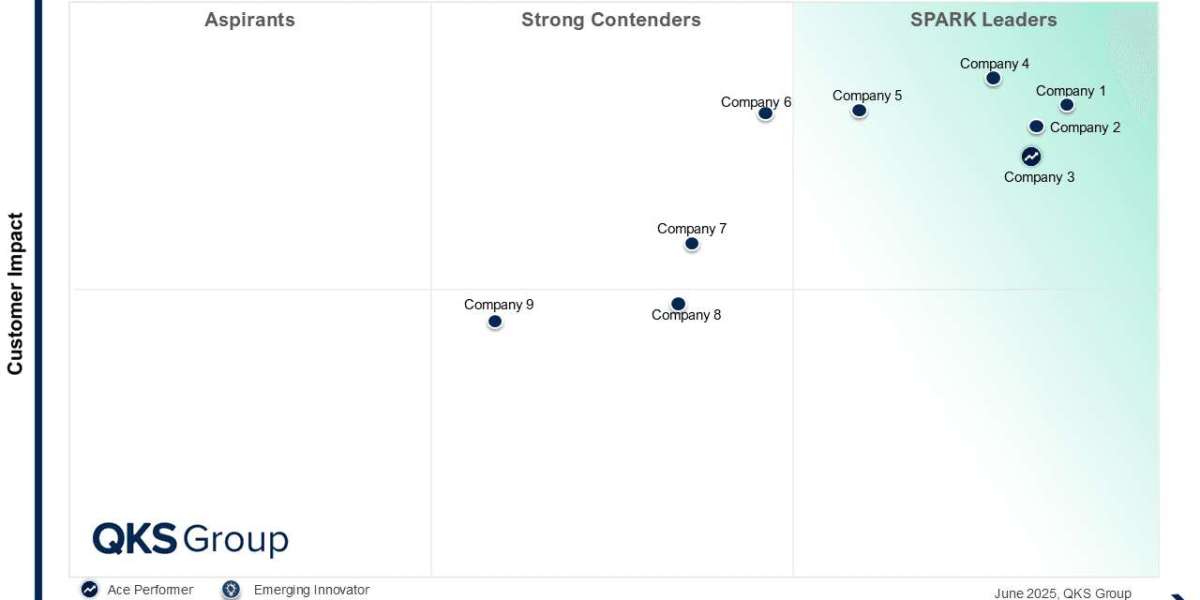
A core component of this research is the comprehensive competitive landscape assessment and vendor evaluation conducted using QKS Group’s proprietary SPARK Matrix. The SPARK Matrix is a holistic framework that examines both the technological excellence and market impact of industry-leading vendors. By visually positioning vendors based on their innovation, product capabilities, customer value proposition, and strategic vision, the SPARK Matrix gives enterprises a robust comparative view. This helps users identify which vendors lead in performance, which excel in execution, and which have the strongest long-term market potential.
The 2025 SPARK Matrix for Service Lifecycle Management highlights several prominent global vendors shaping the SLM market. This includes industry leaders such as IFS, Microsoft, Syncron, Kloudgin, Oracle, Salesforce, SAP, PTC, and ServiceNow. Each of these vendors brings unique capabilities, ranging from advanced field service management and customer engagement platforms to integrated ERP-driven service workflows and cloud-native service orchestration. The diversity of these players also reflects the growing convergence of SLM with adjacent business areas such as enterprise asset management (EAM), customer relationship management (CRM), warranty and contract management, and digital service delivery.
According to Nithin A K, Analyst at QKS Group, “A Service Lifecycle Management (SLM) is a comprehensive solution that streamlines and manages the entire lifecycle of service-based products and assets from initial installation and service delivery to maintenance, repairs, and eventual decommissioning.” Nithin’s perspective highlights the end-to-end nature of SPARK Matrix™: Service Lifecycle Management systems, which are designed to centralize service workflows and ensure that every stage in the lifecycle of an asset is optimized for performance, cost efficiency, and customer satisfaction.
SLM platforms typically encompass a broad range of functionalities that include service contract management, warranty tracking, spare parts and inventory management, service scheduling, technician dispatching, field service automation, remote diagnostics, and real-time asset performance monitoring. These features collectively ensure that organizations can deliver timely, accurate, and proactive service experiences. With rising customer expectations and increasing global competition, companies can no longer rely on reactive service models; hence, SLM is becoming a strategic necessity rather than a functional add-on.
One of the most significant advantages of adopting a modern SLM platform is the ability to reduce downtime and optimize service performance. With real-time monitoring enabled by sensors and IoT devices, service teams can detect anomalies or potential failures before they occur. Predictive maintenance capabilities supported by AI and analytics allow organizations to anticipate issues and take corrective action, helping to extend asset lifespan and improve reliability. This shift from reactive to predictive service management contributes to substantial cost savings, improved customer satisfaction, and stronger long-term relationships between service providers and their customers.
Furthermore, SLM platforms support seamless integration across departments and systems, ensuring that service data flows effortlessly throughout the organization. Whether it involves coordinating between customer service teams, logistics providers, field technicians, or service managers, an SLM platform ensures that all stakeholders have access to accurate and timely information. This integration eliminates operational silos, improves transparency, and enables data-driven decision-making, which is crucial in today’s complex and dynamic business environments.
Another major driver shaping the SLM market is the global shift toward servitization—where companies move from selling products to offering product-as-a-service or outcome-based service models. In this model, service delivery becomes the primary revenue generator, making SLM platforms essential for managing contract performance, monitoring usage, and ensuring consistent compliance with service-level agreements (SLAs). As more industries—from manufacturing and utilities to healthcare and automotive—embrace servitization, the demand for robust SLM solutions is expected to increase significantly.
Cloud adoption is also accelerating the growth of the SLM market. Cloud-based SLM platforms offer faster deployment, lower upfront investment, seamless scalability, and enhanced remote accessibility. These advantages enable even mid-sized businesses to adopt enterprise-grade service management capabilities without the infrastructure burden associated with on-premises solutions. This trend is particularly relevant in industries with large distributed asset networks where service teams operate across multiple locations.
Looking ahead, the future of Service Lifecycle Management is expected to be shaped by greater automation, deeper AI-driven intelligence, advanced digital twin capabilities, and stronger integration with enterprise digital transformation initiatives. As organizations continue to prioritize agility, resilience, and customer-centricity, SLM platforms will play an even greater role in enabling sustainable and profitable service operations.
In conclusion, QKS Group’s SPARK Matrix™: Service Lifecycle Management research provides a comprehensive and strategic perspective on one of the most essential components of modern enterprise operations. Through detailed market insights, competitive analysis, and the SPARK Matrix evaluation, the research empowers vendors and enterprises to navigate the evolving SLM landscape with confidence. As service excellence becomes a key differentiator in global markets, organizations equipped with advanced SLM capabilities will be better positioned to achieve long-term success, operational efficiency, and superior customer outcomes.