
Introduction
Industrial enterprises today generate enormous volumes of data from machines, sensors, production systems, and enterprise applications. Yet, many organizations still struggle to turn this data into actionable insights that can improve operational performance and strategic decision-making.
Industrial DataOps Software is emerging as a critical enabler for modern industrial operations. It provides a unified framework that streamlines the management, integration, and utilization of industrial data across complex operational environments. By connecting operational technology (OT) systems with enterprise IT infrastructure and analytics platforms, Industrial DataOps enables organizations to extract meaningful insights from real-time data.
Beyond data integration, these platforms bridge collaboration gaps across operations, engineering, IT, and analytics teams. The result is improved decision-making, enhanced productivity, and optimized operational performance. As industrial enterprises accelerate digital transformation initiatives, Industrial DataOps is becoming a foundational capability for building intelligent, data-driven operations.
Market / Industry Overview
Industrial organizations operate within highly complex data environments. Data is generated continuously from industrial machines, control systems, supply chain platforms, and enterprise applications.
Traditionally, this data remained fragmented across multiple systems, limiting its value for strategic decision-making. However, with the rise of Industry 4.0 initiatives, enterprises are seeking platforms that can integrate and operationalize industrial data effectively.
Industrial DataOps Software addresses this challenge by enabling organizations to orchestrate and manage industrial data pipelines across OT and IT environments. These platforms provide a centralized architecture for collecting, transforming, and delivering operational data to analytics systems, AI models, and enterprise applications.
QKS Group’s Industrial DataOps market research provides a comprehensive view of the evolving global market. The research explores emerging technology trends, market dynamics, and the long-term outlook for Industrial DataOps platforms.
This research also provides valuable strategic insights for:
- Technology vendors seeking to refine their market strategies
- Enterprises evaluating Industrial DataOps solutions
- Decision-makers assessing vendor capabilities and differentiation
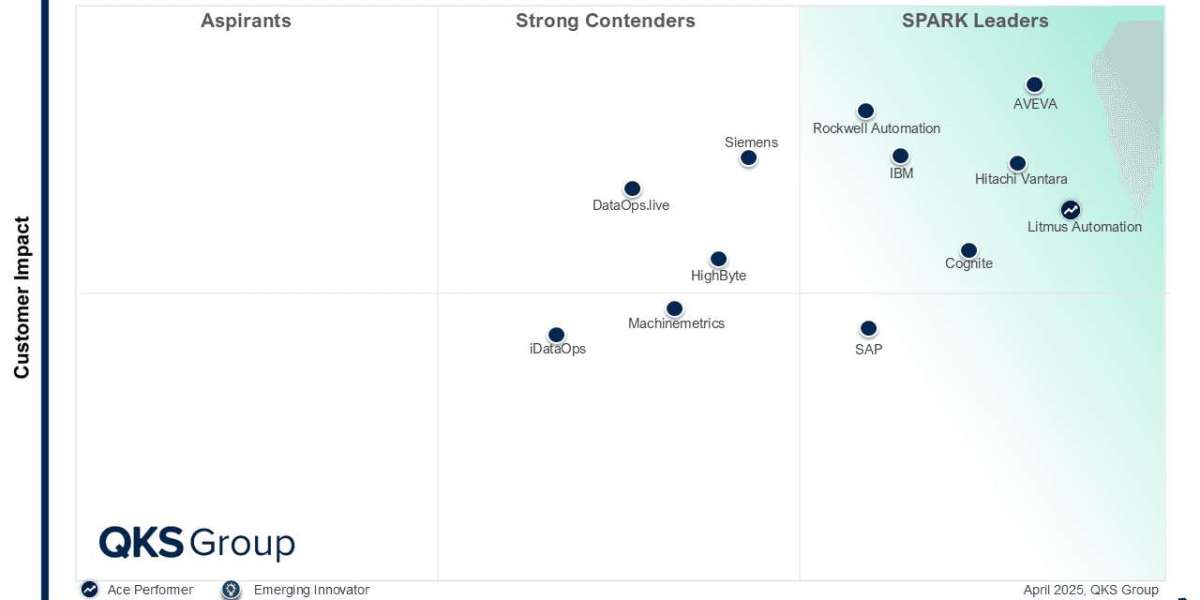
A key component of the research is the proprietary SPARK Matrix™, which provides a detailed competition analysis and vendor evaluation.
The SPARK Matrix ranks and positions leading Industrial DataOps vendors with global market influence, including:
- AVEVA
- Cognite
- DataOps.live
- HighByte
- Hitachi Vantara
- IBM
- Litmus Automation
- Machinemetrics
- Rawcubes
- Rockwell Automation
- SAP
- Siemens
These vendors are driving innovation in industrial data integration, analytics enablement, and operational intelligence platforms.
Key Challenges Businesses Face
Despite growing investments in industrial technologies, many organizations still face significant challenges in managing and utilizing operational data effectively.
- Data Silos Across OT and IT Systems
Operational data often resides in isolated systems across manufacturing plants, engineering platforms, and enterprise applications. This fragmentation limits enterprise-wide visibility and prevents organizations from gaining a holistic view of operations.
- Complex Data Integration
Industrial environments use a wide range of protocols, legacy systems, and proprietary technologies. Integrating these data sources into a unified architecture can be technically complex and resource intensive.
- Limited Real-Time Visibility
Without effective data orchestration tools, organizations cannot easily access real-time operational insights. This limits their ability to optimize production processes and respond quickly to operational disruptions.
- Data Governance and Security Concerns
Industrial data environments require strict governance policies to ensure data integrity, security, and regulatory compliance. Managing these requirements across multiple systems can be challenging.
- Collaboration Gaps Between Teams
Operations, engineering, IT, and analytics teams often operate independently. This separation creates inefficiencies in how data is shared and utilized across the organization.
Key Trends & Innovations
The Industrial DataOps market is rapidly evolving as new technologies reshape how industrial data is managed and analyzed.
- AI and Machine Learning Integration
Artificial intelligence is increasingly embedded into DataOps platforms to enable predictive maintenance, anomaly detection, and advanced operational analytics.
- Cloud-Native Industrial Data Platforms
Cloud infrastructure is becoming the backbone of modern Industrial DataOps deployments. Cloud-based architectures enable scalable data processing and improved collaboration across distributed teams.
- Edge Computing for Real-Time Processing
Edge computing allows industrial data to be processed closer to the source. This reduces latency and enables faster decision-making for critical operations.
- Unified Data Architectures
Modern data architectures such as data fabrics and unified namespaces are helping organizations simplify data integration across complex industrial environments.
- Automated Data Pipelines
Automation tools are transforming how industrial data pipelines are created and managed. These capabilities reduce manual effort and ensure consistent data availability for analytics.
As these innovations mature, Industrial DataOps Software is evolving into a powerful platform for enabling industrial data intelligence.
Benefits & Business Impact
Implementing Industrial DataOps platforms delivers significant business value across operations, efficiency, and innovation.
- Improved Operational Efficiency
Real-time data integration allows organizations to monitor production performance, detect inefficiencies, and optimize equipment utilization.
- Faster Data-Driven Decision-Making
Access to centralized operational data enables executives and operational leaders to make informed decisions quickly.
- Enhanced Collaboration Across Teams
By connecting operations, engineering, IT, and analytics teams through a unified data platform, Industrial DataOps Software fosters stronger collaboration.
- Scalable Data Infrastructure
Industrial DataOps platforms support the growing scale and complexity of industrial data environments.
- Stronger Data Governance and Security
Built-in governance frameworks help organizations maintain data accuracy while ensuring compliance with industry regulations.
Use Cases or Real-World Examples
Industrial DataOps solutions are widely used across industries to improve operational performance and enable data-driven strategies.
- Smart Manufacturing
Manufacturers use DataOps platforms to integrate machine data with production analytics systems. This enables real-time monitoring and predictive maintenance capabilities.
- Energy and Utilities Operations
Energy companies use DataOps platforms to integrate sensor data from power plants and grid infrastructure, improving operational reliability and energy efficiency.
- Industrial Asset Performance Management
Organizations use Industrial DataOps platforms to analyze equipment performance data and predict maintenance needs.
- Supply Chain and Production Visibility
DataOps platforms enable integration between manufacturing systems and supply chain platforms, improving coordination across operations.
How Organizations Can Choose the Right Solution
Selecting the right Industrial DataOps platform requires careful evaluation of both technical capabilities and vendor expertise.
Key evaluation factors include:
- Integration Capabilities
The solution should support multiple industrial protocols and integrate easily with existing OT and IT systems. - Real-Time Data Processing
Enterprises should assess the platform’s ability to process high-frequency industrial data in real time. - Scalability and Deployment Flexibility
The platform should support cloud, on-premise, and hybrid deployment models. - Security and Data Governance
Strong data governance frameworks are essential for protecting sensitive industrial data. - Vendor Ecosystem and Industry Expertise
Organizations should evaluate vendor experience, industry partnerships, and product innovation capabilities.
Frameworks such as the SPARK Matrix™ Industrial DataOps analysis help enterprises identify technology leaders and evaluate vendor performance.
Future Outlook (2025–2028)
The Industrial DataOps market is expected to experience rapid growth over the next several years as industrial organizations expand their digital transformation initiatives.
Key developments expected between 2025 and 2028 include:
- Greater adoption of AI-driven industrial analytics
- Expansion of edge computing across manufacturing environments
- Increasing integration between OT and IT systems
- Growth of unified industrial data architectures
- Stronger focus on industrial data governance and cybersecurity
As industrial operations become increasingly data-driven, Industrial DataOps Software will serve as a key enabler of operational intelligence and business agility.
Conclusion
Industrial enterprises are generating more data than ever before. However, unlocking the true value of this data requires advanced platforms capable of integrating, managing, and analyzing complex industrial data environments.
Industrial DataOps platforms provide the foundation for transforming raw data into actionable insights. By enabling seamless data integration and collaboration across teams, these platforms help organizations improve operational efficiency, accelerate innovation, and drive better business outcomes.
As the demand for real-time operational intelligence continues to grow, Industrial DataOps will remain a critical technology for enterprises seeking to build intelligent and resilient industrial operations.