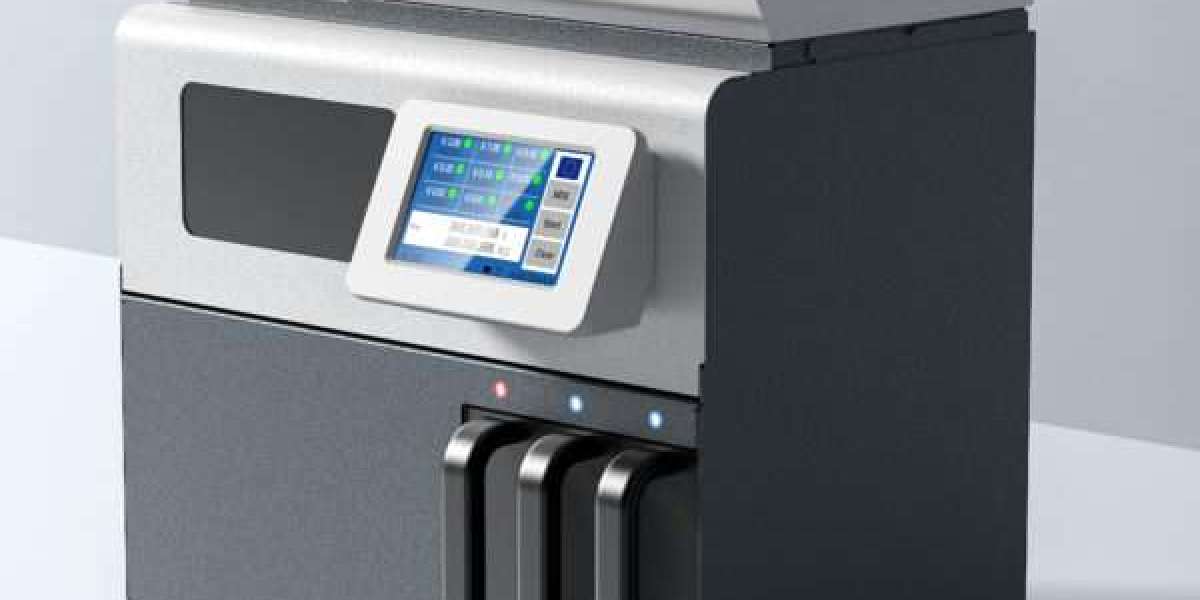
Currency sorter market grows as retail sector expands cash handling capacity in response to rising in-store transactions, organized retail expansion, and higher cash-intensive sales across supermarkets, department stores, and large-format outlets. Retail operators are upgrading back-office cash management infrastructure with advanced sorting systems to accelerate reconciliation processes, improve counterfeit detection, and enhance operational transparency within multi-branch commercial networks.
Expansion of Organized Retail Networks
The continued expansion of organized retail chains across urban and semi-urban regions has significantly increased daily cash inflows at store locations. Newly opened supermarkets, hypermarkets, and specialty stores are incorporating structured back-office cash rooms equipped with automated sorting machines. These systems enable rapid counting, authentication, and bundling of mixed denominations collected throughout the business day, supporting efficient end-of-shift reconciliation procedures.
Rising Volume of Daily Transactions
Despite the growth of digital payments, cash remains a widely used payment method in grocery, fuel, and convenience retail segments. High customer footfall during peak seasons, promotional events, and holiday periods generates substantial volumes of physical currency that must be processed quickly. Automated sorting equipment allows retail outlets to manage these fluctuations without increasing manual staffing requirements, maintaining operational continuity during busy trading cycles.
Improvement in Reconciliation Accuracy
Manual cash counting processes are vulnerable to human error, particularly in large stores handling thousands of transactions daily. Deployment of sorting systems with advanced denomination recognition and counterfeit detection modules reduces discrepancies during register balancing. Automated systems generate transaction summaries and audit logs that facilitate transparent reconciliation between store-level collections and centralized accounting departments.
Integration with Centralized Cash Management
Large retail chains are linking in-store sorting systems to centralized cash management platforms that consolidate data from multiple outlets. Real-time reporting enables head offices to monitor deposit volumes, identify anomalies, and coordinate cash pickups efficiently. Integration of sorting equipment with enterprise resource planning software enhances visibility across distributed store networks and strengthens internal financial controls.
Counterfeit Detection and Risk Mitigation
Retail environments face exposure to counterfeit currency due to high transaction frequency and limited verification time at checkout counters. Back-office sorting machines equipped with ultraviolet, magnetic, and infrared sensors provide an additional layer of verification before deposits are forwarded to banks. Early detection at store level reduces financial losses and supports compliance with banking deposit standards.
Adoption by Large-Format and Warehouse Retailers
Warehouse-style retailers and bulk merchandise outlets often process high-value cash payments for wholesale purchases. These businesses are investing in high-capacity sorting systems capable of handling substantial note volumes within limited processing windows. Efficient back-office automation enables these retailers to prepare deposits promptly, supporting daily liquidity management and minimizing overnight cash exposure.
Impact on Cash Logistics Coordination
The expansion of automated sorting in retail outlets is influencing coordination with cash-in-transit service providers. Accurate counting and bundling performed at store level streamline handover procedures and reduce verification time during collection. Digital records generated by sorting systems support reconciliation between retailers and logistics operators, minimizing disputes related to deposit discrepancies.
Regional Retail Development Trends
Emerging economies experiencing rapid urbanization are witnessing accelerated retail infrastructure development, including shopping malls and organized marketplaces. Increased consumer spending in these regions sustains high levels of physical currency circulation. Retailers operating in such markets are incorporating automated cash handling equipment as part of standardized store design and operational guidelines.
Technological Enhancements in Retail Environments
Manufacturers are designing compact, energy-efficient sorting machines tailored to retail back-office environments with limited space. Touchscreen interfaces and simplified user controls allow store personnel to operate equipment with minimal technical training. Some systems incorporate remote diagnostics and software updates, ensuring consistent performance across geographically dispersed outlets.
Future Outlook for Retail-Driven Growth
As retail networks continue expanding into tier-two and tier-three cities, demand for reliable cash processing infrastructure is expected to rise correspondingly. Seasonal sales cycles, promotional campaigns, and population growth are likely to sustain substantial in-store cash flows. Retailers are anticipated to prioritize scalable and interoperable sorting systems capable of adapting to fluctuating transaction volumes. Continued emphasis on reconciliation accuracy, counterfeit detection, and operational efficiency positions automated sorting technologies as integral components of modern retail cash management frameworks.
The growth associated with expanding retail cash handling capacity underscores the ongoing relevance of physical currency within commercial ecosystems. Automated sorting solutions are enabling retailers to align operational efficiency with security and compliance requirements while supporting broader financial accountability objectives.