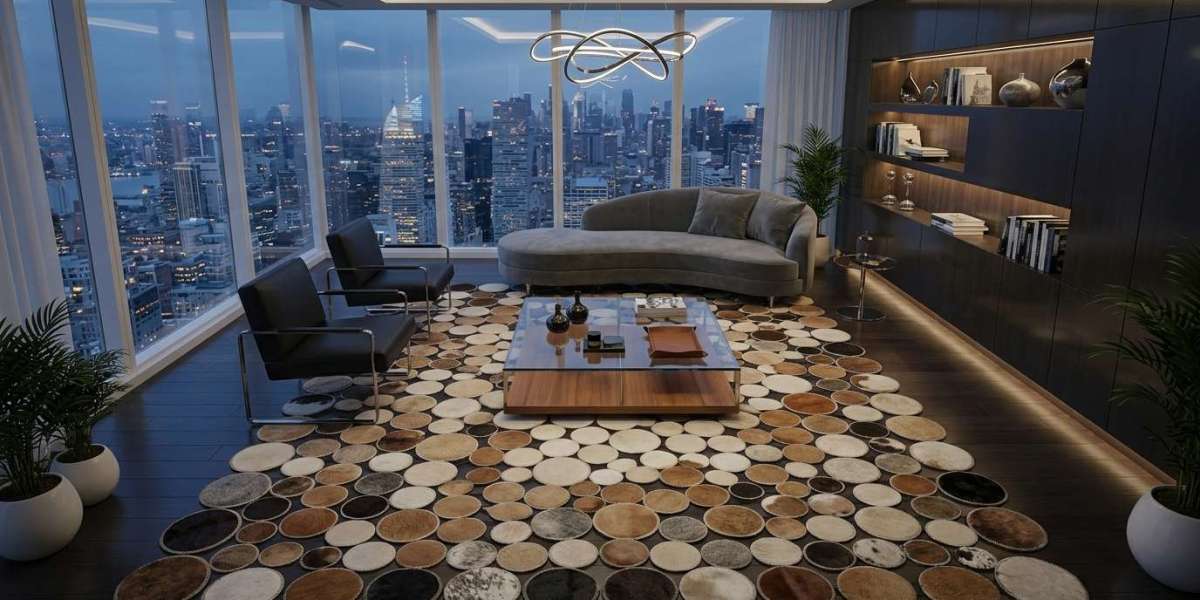
Modern interiors are no longer about filling every corner of a room. Instead, the focus has shifted toward restraint. Designers are learning that what you leave out can matter just as much as what you include.
This idea is rooted in the concept of negative space. It allows a room to breathe, creating clarity and balance. Rather than overwhelming the eye, it guides attention toward a few carefully chosen elements.
One of the most effective ways to apply this principle is through statement pieces. Cowhide area rugs, in particular, offer a unique way to define a space without overcrowding it. Their natural shape and texture make them ideal for interiors that value simplicity with impact.
What Is Negative Space in Interior Design?
Negative space refers to the empty areas around objects in a room. It is not wasted space. Instead, it serves as a visual pause that enhances the elements around it.
In well-designed interiors, negative space creates balance. It prevents a room from feeling cluttered or chaotic. By allowing certain areas to remain open, designers can highlight key features more effectively.
This approach is often seen in modern and minimalist homes. However, it can be applied to almost any style. The goal is not to remove elements completely, but to be intentional about what stays and what goes.
When used correctly, negative space transforms a room from busy to refined. It creates a sense of calm that is difficult to achieve through decoration alone.
Why Statement Rugs Work in Open, Minimal Spaces
In spaces that rely on negative space, every piece must serve a purpose. Statement rugs are particularly effective because they combine function with visual impact. They define areas without requiring additional furniture or décor.
Cowhide area rugs stand out because of their organic form. Unlike traditional rectangular rugs, they do not impose rigid boundaries. Instead, they create soft, natural transitions within a space.
This makes them ideal for open layouts. A single rug can anchor a seating area or highlight a focal point without disrupting the overall flow. It becomes a visual marker rather than a barrier.
Because of their unique patterns, these rugs also add interest without relying on bold colors. This aligns perfectly with the principles of negative space.
Defining Zones Without Adding Clutter
Open-concept living has become increasingly popular. While it offers flexibility, it can also make it difficult to define separate areas within a room. This is where thoughtful design choices become essential.
Rugs are one of the simplest ways to create zones. They provide visual cues that help organize a space. However, not all rugs achieve this effect in the same way.
Cowhide area rugs offer a more subtle solution. Their irregular edges allow them to blend into the surrounding space while still marking a specific area. This avoids the boxed-in feeling that traditional rugs can create.
Designers often use them to define seating areas, reading corners, or entry points. By doing so, they maintain openness while still giving each section a clear identity.
Balancing Texture With Simplicity
Negative space does not mean a room should feel empty. Texture plays a key role in adding depth without increasing visual noise. It introduces variation while maintaining a clean aesthetic.
Cowhide area rugs contribute to this balance through their natural surface. Their texture contrasts with smoother materials like wood, metal, or glass. This creates a layered look without adding extra elements.
The key is to keep surrounding pieces simple. Neutral furniture and minimal décor allow the texture of the rug to stand out. This creates a focal point without overwhelming the space.
For those exploring how statement rugs can work within minimalist interiors, curated examples such as kareliasandsons illustrate how natural textures can define a room while preserving openness.
Letting One Element Do the Work
One of the most effective design strategies is to let a single element carry the visual weight of a room. This reduces the need for multiple competing features. It also creates a more cohesive and intentional design.
A cowhide area rug can serve this purpose. Its natural pattern and shape draw attention without feeling forced. This allows other elements in the room to remain understated.
When one piece takes center stage, the rest of the space can support it. This creates harmony and prevents visual overload. It also makes the design feel more curated.
This approach is particularly useful in smaller spaces. By limiting the number of focal points, the room feels larger and more organized.
Why Less Is Becoming More in Interior Design
The shift toward negative space reflects a broader change in how people think about their homes. There is a growing preference for environments that feel calm and manageable. Excess is being replaced with intention.
Designers are responding to this by simplifying layouts and focusing on quality over quantity. Each element is chosen for its impact rather than its ability to fill space.
Cowhide area rugs align with this philosophy. They offer visual interest, texture, and function in a single piece. This makes them a practical choice for modern interiors.
As this trend continues, the importance of negative space will only grow. It provides a foundation for designs that feel both elegant and livable.
Final Thoughts
Designing with negative space is about more than minimalism. It is about creating balance, clarity, and purpose within a room. By focusing on fewer elements, designers can achieve a stronger overall impact.
Statement pieces play a key role in this process. Cowhide area rugs, with their organic shapes and natural textures, offer a unique way to define space without adding clutter. They bring both structure and softness into modern interiors.
As homes continue to evolve, the ability to design with intention will become increasingly important. Negative space is not an absence of design—it is a tool that allows the right elements to stand out.