Overview
In recent years, the market for high-security door locks in the United Arab Emirates (UAE) has expanded rapidly. A combination of rising security awareness among residents and businesses, urbanization, growth in real estate development, and increased adoption of smart-home technologies has driven demand for advanced locking systems far beyond traditional mechanical locks.
As the UAE continues to evolve as a hub for luxury real estate, commercial infrastructure, and smart-city initiatives, high-security and smart door locks have become an essential feature rather than an optional upgrade.
Key Drivers Behind the Surge in Demand
- Increased Security Concerns & Awareness
- Many UAE residents recognize that simply closing a door is insufficient for modern security needs. Even though a majority lock their doors when away or indoors, surveys have shown that almost half of households lack additional security measures beyond basic locks.
- Growing concerns over burglary, unauthorized access, and property protection have pushed both homeowners and businesses toward more robust locking solutions.
- Rise of Smart Homes & Smart-City Initiatives
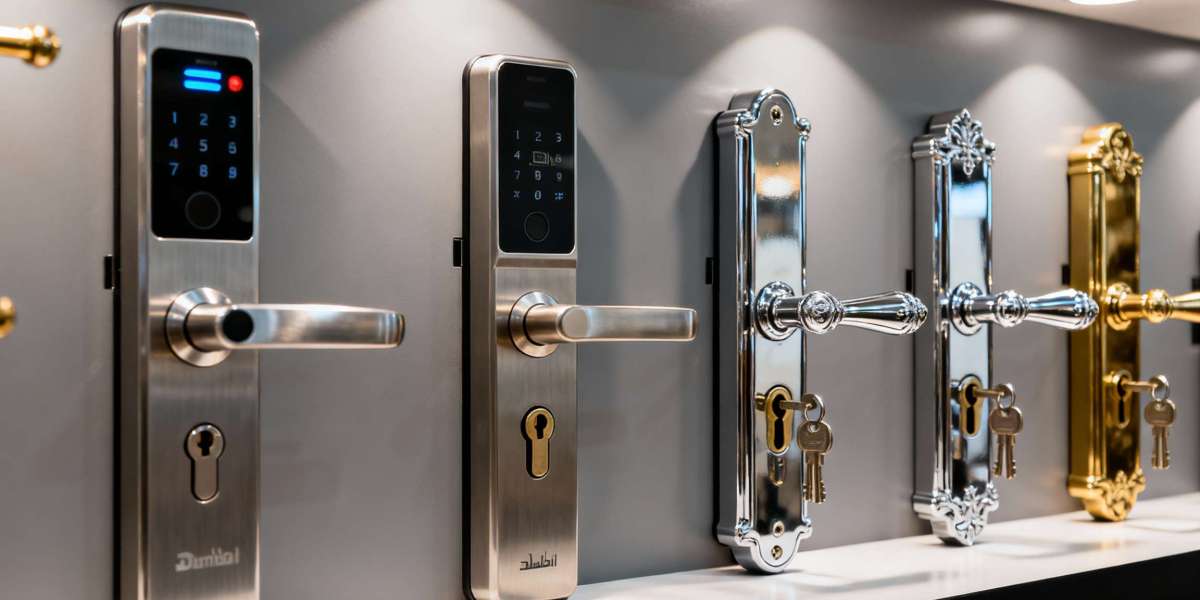
- The push toward smart homes and integrated access control systems in the UAE has encouraged adoption of “smart locks” — electronic or biometric locks that offer features like PINs, fingerprint/biometric access, remote unlocking, and integration with home automation systems.
- As residential, hospitality, and commercial developments increasingly include smart-home features as standard, demand for advanced door-lock systems has grown accordingly.
- Urbanization, Luxury Real Estate & Commercial Growth
- The UAE’s booming real estate market — including luxury villas, gated communities, corporate offices, hotels, and retail complexes — demands high-quality security infrastructure. High-security doors and locks help meet these needs.
- Developers and property managers increasingly specify advanced locking systems to meet both regulatory standards and customer expectations.
- Technological Advancements in Locking Systems
- Lock manufacturers now offer doors and locks with biometric authentication, smart-home connectivity (Wi-Fi, Bluetooth, mobile apps), smart-home integration, and tamper resistance, making them more attractive and functional than traditional locks.
- The appeal of convenience — no keys to lose, remote access, temporary access codes — combined with security is increasingly influencing buyer choices.
- Market & Regulatory Trends Supporting Security Infrastructure
- The broader access-control market in the UAE is growing. A recent forecast estimated the UAE access-control market will grow strongly between 2025–2033, supported by public and private sector demand.
- As security standards rise for commercial, hospitality, and high-end residential properties, high-security locks are becoming part of standard fitting rather than optional add-ons.
7 Questions Every Buyer Must Ask Before Ordering High-Security Locks in Bulk
When procuring high-security or smart locking systems — especially in bulk for residential developments, hotels, or offices — due diligence is essential. Here are seven critical questions to evaluate before placing the order:
- What level of security certification does the lock meet (e.g. tamper resistance, pick/drill resistance)?
- Ensure the lock meets recognized standards for forced-entry resistance, especially if being deployed in areas vulnerable to break-in attempts or unauthorized access.
- Is the lock suitable for the local climate and environmental conditions?
- In the UAE, high temperatures, humidity, dust, and harsh weather can affect lock durability. Choose locks rated for weather resistance and long-term reliability.
- Does the lock support biometric / multi-factor authentication or smart-home integration (e.g. fingerprint, PIN, smartphone, remote access)?
- For convenience, flexibility, and security, smart or biometric locks — which allow keyless entry and remote control — offer major advantages over traditional mechanical locks.
- Is the lock compatible with existing doors and building infrastructure?
- Especially when retrofitting, confirm that the lock’s physical dimensions, mounting requirements, wiring (if applicable), and integration with access control or building management systems are compatible.
- What is the maintenance requirement and expected lifespan of the lock?
- Evaluate factors like battery life (for electronic/smart locks), resistance to wear and tear, and maintenance support. High-traffic installations (hotels, offices) need durable, low-maintenance locks.
- What are the costs per unit — including installation, support, and possible replacement — compared to long-term security benefits?
- Bulk purchase means high upfront cost; you must balance price against durability, security performance, and features to ensure value over time.
- Does the supplier offer warranties, after-sales support, and compliance with local building or safety regulations?
- For commercial or large residential projects, ensure supplier reliability, warranty, and compliance with UAE building codes and safety regulations.
Implications for Stakeholders
- Homeowners & Residents: For individuals and families seeking safety and peace of mind, high-security or smart locks are increasingly accessible; investing in them can prevent unauthorized entry and provide convenience.
- Property Developers & Real Estate Firms: Offering advanced locking systems adds value to properties, meets modern buyer expectations, and aligns with smart-home trends in luxury and mid-range developments.
- Commercial & Hospitality Sector: Offices, hotels, and retail spaces benefit from improved access control, guest or staff management, and integration with broader security/surveillance systems.
- Lock Manufacturers & Suppliers: The fast-growing demand represents a market opportunity for producers of advanced locks — especially those offering biometric, electronic, or smart-home compatible solutions optimized for the climate and regulatory context of the UAE.
Risks, Challenges & Considerations
- Cost and Affordability: High-quality security/smart locks are more expensive than traditional locks — the upfront investment may deter some price-sensitive buyers.
- Maintenance & Technical Complexity: Smart locks require maintenance (battery changes, software updates) — poor maintenance can degrade security over time.
- Cybersecurity & Reliability Concerns: For locks connected to networks (smart locks), there may be concerns about hacking, unauthorized remote access, or system failures.
- Regulatory and Compliance Issues: Implementation in large buildings or public/commercial facilities may require compliance with local building codes and safety standards.
Conclusion
The surge in demand for high-security door locks in the UAE reflects a broader shift: traditional locks no longer suffice in a rapidly urbanizing, high-security, and technology-driven environment. Between rising security awareness, growth of smart homes, expansion in real estate and commercial development, and technological advances in electronic and biometric locks — the market for advanced locking systems is fast becoming a necessity rather than a luxury.
For bulk buyers — developers, hotels, commercial real-estate firms — it is crucial to conduct careful evaluation based on security standards, durability, compatibility, long-term costs, and compliance. When chosen wisely, high-security locks offer not just protection, but also convenience and long-term value.