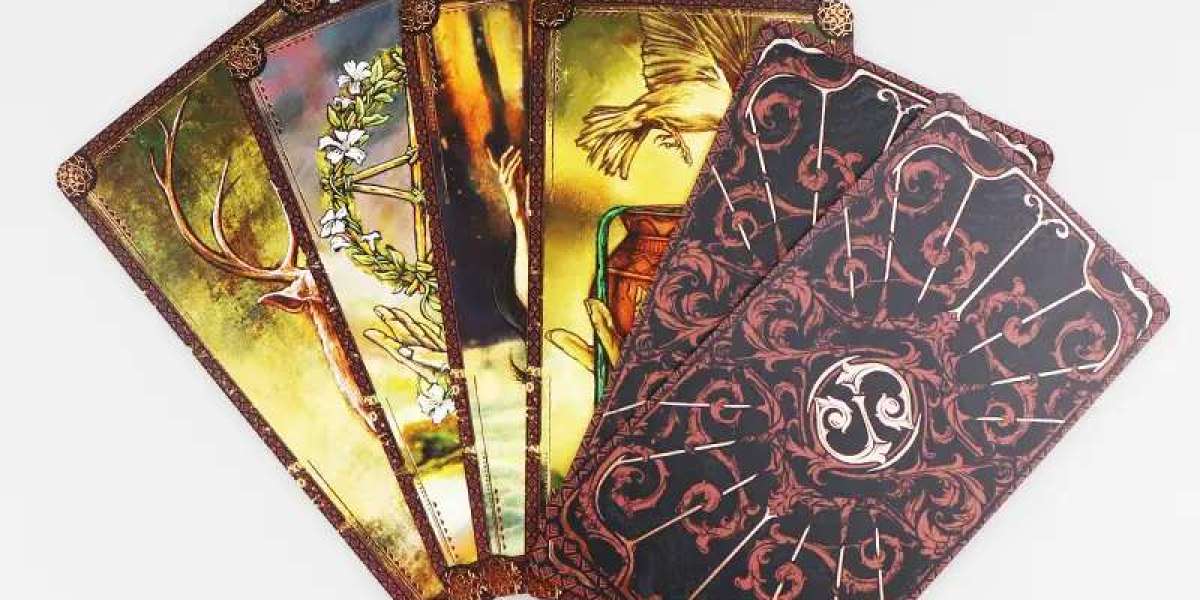
The Gilded Edge: Why Gold Foil Card Edges Transform Tarot Decks into Heirlooms
Imagine a collector removing a tarot deck from its box, sliding cards into the light. As the deck spreads across the table, something extraordinary happens. Light catches the edges of each card, creating a continuous ribbon of gold that traces the outline of the spread. Every turn reveals a flash of brilliance.
This is the magic of gold foil edges—a finishing technique so distinctive that it instantly separates ordinary decks from objects of lasting value. In custom tarot production, few features communicate quality and permanence as immediately as a gilded edge.
Beyond the Surface: The Sixth Side of Every Card
Most discussions of card quality focus on printed faces and backs. Yet every card possesses five visible sides. The four edges, often overlooked in standard production, represent untapped potential for differentiation.
Gold foil edges transform these neglected surfaces into integral design elements. When cards stack, gilded edges form a unified golden block. When spread, each card reveals its individual border. When handled, fingers encounter subtle resistance that signals special treatment.
This attention to the complete object defines true luxury production. A deck with gold edges announces itself as something made with intention, where no detail was too small for consideration.
A Tradition of Reverence
The practice of gilding book edges traces to medieval scriptoriums, where scribes applied gold leaf to protect precious manuscripts while honoring sacred texts. Over centuries, the technique evolved from protection to decorative art.
This heritage connects modern luxury tarot decks to an unbroken tradition of reverence for the symbolic word. When a tarot deck receives gold edges, it inherits this history—an acknowledgment that the cards deserve the same care once reserved for illuminated manuscripts.
The Technical Demands of Perfect Edges
Creating consistent, durable gold foil edges requires manufacturing capabilities that relatively few facilities possess. The process reveals much about a producer's commitment to quality.
Before foil touches card edges, the cards themselves must be manufactured to exceptional tolerances. Variations as small as fractions of a millimeter become obvious when edges stack for gilding. Premium manufacturers maintain die-cutting precision that ensures every card matches exactly.
Edge gilding applies foil to multiple cards simultaneously. Operators carefully stack decks, aligning edges with painstaking accuracy. The stacked block undergoes compression to ensure uniform contact. Any misalignment produces visible defects.
The actual foil transfer applies heated dies under controlled pressure. Temperature must suit both foil formulation and card stock composition. Pressure must transfer foil completely without crushing edges. Timing must balance adhesion against heat damage.
After gilding, stacks separate into individual cards for inspection. Technicians examine each edge under appropriate lighting, verifying complete coverage, consistent brightness, and secure adhesion. Cards with imperfections are removed—a process that reduces yield rates and increases effective costs.
This rigorous inspection explains why edge-gilded decks command premium pricing. Technical difficulty combined with quality rejection creates genuine scarcity of perfect units.
The Aesthetic Impact: Why Gold Resonates
Gold carries meaning that transcends cultural boundaries. Its resistance to tarnish symbolizes permanence. Its rarity associates it with value. Its reflective properties connect it to light and the sacred.
When applied to tarot card edges, gold activates multiple levels of response:
Visual distinction: Gold edges catch light differently than printed surfaces, creating dynamic interaction as cards move during reading.
Tactile feedback: The subtle boundary between card surface and gilded edge provides sensory information that enhances handling.
Ritual enhancement: Visible gold when cards stack creates anticipation. The flash of gold with each turn marks moments of revelation.
Collector appeal: Objects with gold edges are instinctively recognized as special, worthy of preservation.
Dark Art, Golden Light
Decks with deep color palettes—midnight blues, forest greens, earth-toned umbers—provide the perfect foundation for gold edges. Dark surfaces absorb light, allowing gold to emerge as boundaries of illumination.
Gilded edges do not compete with intricate artwork. Instead, they frame each card as a complete composition, defining the space where imagery meets the world outside. The effect transforms reading into engagement with individually presented artworks.
The Collector's Perspective
Serious tarot collectors evaluate decks beyond immediate visual appeal. They consider longevity, craftsmanship, and alignment with tradition.
Gold edges address multiple collector priorities. Gold suggests a deck built to last through decades of use. Visible edge gilding demonstrates manufacturer commitment to complete quality. Decks receiving this treatment feel fully realized, with no aspect left to chance. The relative rarity of edge-gilded decks positions them as special acquisitions.
For creators targeting collector markets, gold edges provide immediately recognizable differentiation that justifies premium positioning.
Market Positioning and Price
Decks featuring gold foil edges occupy distinct market territory. They compete not with mass-market tarot but with limited editions, artist collaborations, and luxury gifts.
Standard tarot decks retail from fifteen to twenty-five dollars. Premium decks range from thirty to fifty dollars. Edge-gilded decks from established creators often command seventy-five to one hundred fifty dollars or more, particularly for numbered limited editions.
For creators, the arithmetic proves compelling. A deck selling one thousand units at forty dollars generates forty thousand dollars revenue. The same deck selling three hundred units at one hundred twenty dollars generates thirty-six thousand dollars—comparable revenue with lower volume and higher margin.
Beyond Gold: Edge Treatment Options
While gold remains classic, contemporary production offers expanding possibilities. Silver and copper foils provide cooler metallic options for different palettes. Rose gold offers warmth with contemporary appeal. Holographic edges create shifting colors that change with viewing angle. Colored edges apply pigmented coatings matching or contrasting with card schemes.
Each option carries distinct technical requirements. Experienced manufacturers guide creators toward choices aligned with design intentions and market positioning.
Practical Considerations for Creators
Gold edges work best when design anticipates them. Dark card backgrounds create maximum contrast. Packaging should acknowledge and protect the special finish.
Edge gilding adds genuine cost through materials, specialized equipment, skilled labor, and reduced yields. However, margin potential from premium positioning often outweighs increased costs.
Not all manufacturers claiming edge-gilding capabilities deliver consistent quality. Request samples showing edge treatment on actual card stock. Examine edges under magnification for complete coverage and secure adhesion.
Edge-gilded decks naturally suit limited edition treatment. Numbered certificates, special packaging, and controlled quantities amplify collectibility and justify premium pricing.
The Unboxing Experience
For edge-gilded decks, packaging assumes heightened importance. The box must protect delicate edges while building anticipation.
Foil-stamped boxes create continuity between packaging and contents. Interior fits should hold decks securely without compressing edges. The moment when a buyer first sees gold edges catch light represents the payoff for all preceding effort.
The Future of Premium Tarot
As tarot markets mature, differentiation through basic printing becomes difficult. Hundreds of decks compete, many with beautiful artwork and competent production. Standing out requires going beyond adequate toward exceptional.
Gold foil edges represent one path to exceptional territory. They speak to consumers who have seen everything and seek something more—collectors who recognize quality, practitioners who value ritual, gift buyers seeking undeniable presentation.
Manufacturers investing in advanced capabilities position themselves to support creators exploring these frontiers. The concentration of printing expertise in manufacturing centers like Dongguan ensures access to techniques that distinguish true luxury production.
Your Deck Deserves Complete Consideration
Every aspect of your tarot deck communicates something. Artwork shares your vision. Card stock conveys quality standards. Packaging frames expectations. And edges offer opportunity to signal that no detail escaped your attention.
Gold foil edges represent the difference between a deck that serves its purpose and one that transcends function into art. They transform tools into heirlooms, possessions into treasures.
For creators ready to pursue this level of execution, manufacturing partners exist who understand both technical requirements and market implications. The path from concept to gilded reality requires collaboration with those who have mastered the craft.
Your vision deserves complete expression—from surface to edge, from first impression to lasting legacy.