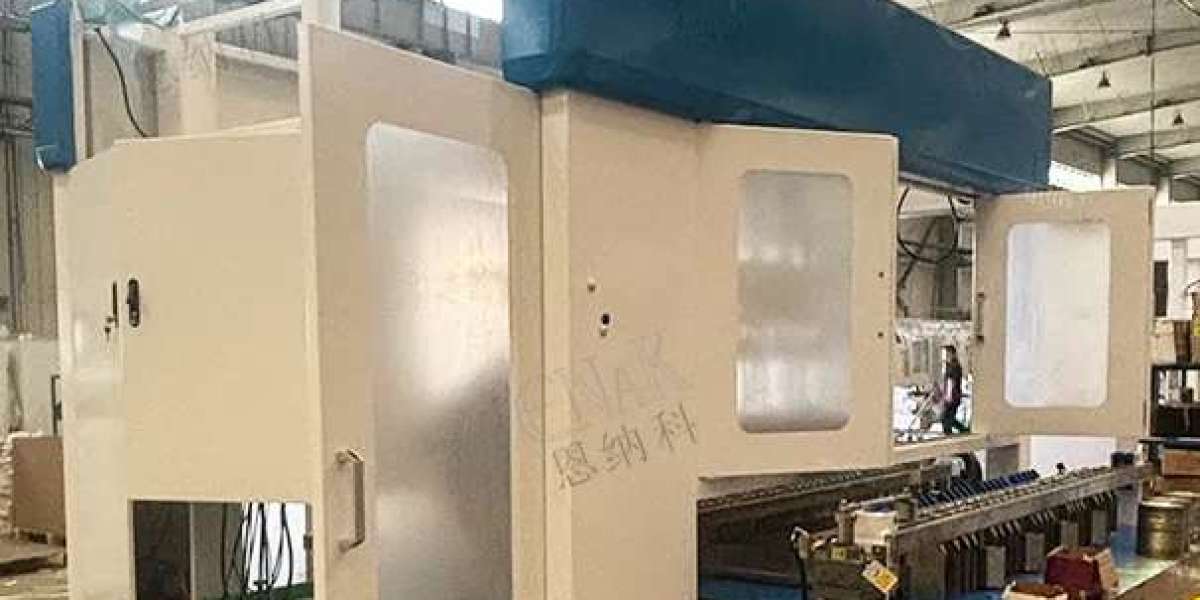
Revolutionizing Packaging Lines: How Smart Case Packers Solve Bottle Tipping and Contamination Risks
The Hidden Challenges in Modern Packaging Lines
In today's fast-paced manufacturing environment, the efficiency of a production line is only as strong as its weakest link. For companies in the food and beverage, pharmaceutical, and daily chemical industries, the back-end packaging process—specifically case packing—often becomes that bottleneck. The challenges are numerous: fragile glass bottles tipping over, contamination risks from lubricants, frequent downtime for maintenance, and the inability to quickly switch between different product specifications.
Manufacturing facilities worldwide are searching for solutions that not only automate these processes but do so with high-quality reliability and precision. This is where advanced engineering from experienced manufacturers comes into play. A well-designed automatic case packer can transform a chaotic, high-waste operation into a streamlined, cost-effective part of the production line.
The Costly Problem of Bottle Tipping in High-Speed Lines
For production managers, few things are as frustrating as watching a perfectly filled and labeled product tip over inside the case packer. This seemingly small incident can cause a cascade of failures: the line stops, workers must manually clear the jam, product is wasted, and valuable production time is lost. In industries using glass containers or unstable soft packaging, the bottle tipping rate can become a critical metric that directly impacts the bottom line.
Traditional case packing equipment often struggles with this issue. The root cause is usually uncontrolled pressure and impact during the conveying and transfer process. When bottles accumulate, they collide, creating a domino effect. This is especially problematic for Chinese manufacturers and global producers who export large volumes of goods; any instability in packaging can lead to damaged goods in transit and unhappy customers.
Engineering the Solution: The Four-Level Pressure Reduction Innovation
To combat these challenges, a forward-thinking approach to equipment design is necessary. One of the most significant advancements in recent years is the development of a four-level pressure reduction system specifically engineered to eliminate product pressure before the case packing process begins. This isn't just a minor adjustment; it's a fundamental rethinking of how products should flow into a case packer.
Level 1 & 2: Intelligent Conveying and Gentle Stops
The first line of defense against bottle tipping starts at the infeed. By creating a strategic speed differential between the bottle feeding conveyor and the front-end conveyor, the accumulation of products is prevented. This "soft separation" ensures that bottles arrive at the packing station in a single, orderly file rather than in a crushing crowd. Following this, a pneumatic bottle stopping device acts as a gentle gate, further reducing the momentum and impact forces that can destabilize a container.
Level 3 & 4: Final Buffering for Zero-Pressure Packing
The final stages of pressure reduction occur right at the end of the conveyor. Here, cylinders implement two levels of buffering, gently decelerating the products to a near-stop before they are even touched by the gripper. The result is remarkable: the product enters the case packing process in a pressure-free and stable state. For producers of glass bottles, such as those in the wine or sauce manufacturing sectors, this innovation is a game-changer. It brings the bottle tipping rate down to an industry-leading below 0.1% , with the alignment error between the gripper and the product kept at ≤ 0.3mm. This level of precision directly translates to less waste and higher efficiency.
Precision Mechanics: The Role of High-Performance Linear Positioning
While pressure reduction prepares the product, the actual act of picking and placing requires extreme precision. Any vibration or deviation during this movement can dislodge the product, damage labels, or cause mispacking. To achieve the necessary accuracy, modern equipment integrates high-end positioning systems.
The use of a German-designed linear positioning system represents a commitment to quality. Such systems offer a positioning accuracy of ±0.1mm, ensuring that movements are not only precise but also smooth. By reducing impact and vibration during operation, the stability and reliability of the entire unit can be improved by up to 40%. This is crucial for high-speed production lines where even minor inconsistencies can be magnified over thousands of cycles.
Furthermore, these advanced positioning systems are often designed with maintenance in mind. A lubrication-free design not only reduces the daily workload for factory staff but also eliminates a potential source of contamination. In pharmaceutical packaging or food processing environments, this feature alone can justify the investment in higher-grade equipment, as it helps maintain a sterile and clean operation.
Meeting Global Standards with High-Quality Materials
The choice of materials in a case packer is not just about durability; it's about compliance and hygiene. A machine built with high-quality materials ensures longevity and meets the strict regulations of various industries.
A well-constructed automatic case packer will utilize a combination of materials tailored to their function:
Stainless Steel: Used for all parts that come into direct contact with products. Its corrosion resistance and ease of cleaning make it mandatory for meeting food and pharmaceutical industry hygiene standards.
Aluminum Alloy: Employed in the transmission structure for its lightweight yet strong properties, which helps reduce the overall weight of the equipment without sacrificing strength.
Engineering Plastics: Used for protective shells, offering durability and a clean appearance.
Carbon Steel with Spray Plating: For the main frame, this combination provides robust structural support with enhanced rust resistance.
This thoughtful material selection ensures the equipment not only performs well but also complies with international safety standards, such as the Chinese national standard GB 12265.1-2007 regarding safety distances to prevent operator injury. Fully enclosed safety guards and photoelectric sensors are standard, ensuring that the pursuit of efficiency never comes at the cost of worker safety.
Adaptability Across Industries: A Versatile Solution
One of the most compelling reasons to invest in advanced automation is versatility. The modern production line must be flexible enough to handle different products, package sizes, and market demands. A high-quality automatic case packer is designed with this in mind, serving as a flexible asset across multiple sectors.
Food and Beverage Industry Applications
In the food sector, whether it's for bottled water, fruit juices, canned foods, or dairy products, the requirements are clear: high speed, hygiene, and gentle handling. Imagine a production line running 550ml water bottles needing to pack 24 units per carton, or a line handling 330ml tin cans that must be carefully layered. The oil-free lubrication design is critical here, preventing any risk of food contamination. The four-level pressure reduction system ensures that even delicate glass sauce bottles travel through the line without incident, making it an ideal partner for food industry automation.
Daily Chemical Production Lines
The daily chemical industry presents its own set of challenges. Products like shampoo, body wash, and laundry detergent often come in uniquely shaped PE bottles—flat, curved, or with ergonomic grips. These irregular shapes can be difficult for standard grippers to handle without causing label damage or instability. Here, the high precision of the linear positioning system is invaluable. It ensures that each bottle, regardless of its shape, is grasped accurately and placed gently into the carton. The machine's compact footprint is also a major advantage for manufacturers with limited factory floor space.
Pharmaceutical and Health Product Manufacturing
Perhaps the most demanding application is in the pharmaceutical industry. Here, the stakes are highest. Products like oral liquid vials and small glass bottles are both expensive and fragile. The requirements for a sterile environment are non-negotiable. An automatic case packer suited for this sector must offer:
Lubrication-free operation to eliminate cleaning dead spots and contamination vectors.
Multiple fault protection functions to immediately halt operations if there's a shortage of cartons, a bottle misalignment, or any other anomaly, preventing costly product loss.
Automatic speed adjustment to handle the small-batch, multi-specification production runs typical of pharmaceutical manufacturing.
By meeting these stringent requirements, the equipment ensures that the case packing process maintains the sterility and accuracy that the sector demands.
Seamless Integration and Operational Simplicity
A common concern for production managers is how new equipment will integrate with existing lines. The best machines are designed for seamless connection. The conveying system, equipped with high-quality integral mesh chains and transition plates, ensures a smooth handoff from upstream filling and labeling equipment. The system intelligently adjusts the case packing speed based on the real-time product feeding speed, creating a harmonious and efficient workflow.
From an operator's perspective, ease of use is paramount. Modern equipment utilizes servo + PLC control technology paired with an intuitive human-machine interface (HMI). This allows for stepless speed regulation and easy monitoring of the entire process. When it's time to switch product sizes—for example, moving from a 150mm bottle to an 80mm one—the operator doesn't need to be a mechanic. The parameters for the gripper and conveyor can be adjusted through the HMI in as little as 10 minutes, with no need to replace core components. This supports products with a diameter of 50-150mm and a height of 80-300mm, offering true flexibility for co-line production.
Addressing the Economics: Price, Quality, and Long-Term Value
When procurement managers evaluate new machinery, the initial price is always a factor, but it is far from the only one. The total cost of ownership, which includes maintenance, downtime, and product waste, often tells the real story. This is where the value of investing in a high-quality manufacturer becomes evident.
Consider the cost of maintenance. Traditional machines often require regular lubrication, which not only consumes labor hours but also requires the purchase of oils and greases. In contrast, the adoption of oil-free pneumatic components and maintenance-free linear systems in modern equipment offers significant savings. Most moving parts are designed to require no oil injection for their entire lifespan. Daily maintenance is reduced to simple cleaning and visual inspections.
Furthermore, the durability provided by high-quality materials and precision engineering extends the equipment's service life. A positioning system that lasts three times longer than traditional systems, for instance, directly reduces the long-term capital expenditure on replacement parts. For a China-based manufacturer looking to compete in the global market, offering equipment with such a clear total-cost-of-ownership advantage is a powerful differentiator.
Conclusion: Future-Proofing Your Packaging Operations
As global competition intensifies and consumer expectations rise, the efficiency of your packaging line becomes a strategic advantage. The days of accepting high rates of product damage, frequent maintenance interruptions, and contamination risks are over. Today's solutions, born from the expertise of specialized manufacturers, offer a path to a smarter, more reliable operation.
An automatic case packer equipped with features like four-level pressure reduction, precision linear positioning, and a robust, hygienic build is more than just a piece of machinery; it's an investment in quality and efficiency. It protects your products, safeguards your brand's reputation, and provides the flexibility to adapt to future market changes.
For companies seeking to upgrade their production capabilities, partnering with a reliable supplier is the first step. Whether you are in the market for new equipment for your food production line, need to enhance your pharmaceutical packaging standards, or are looking to increase output in your daily chemical plant, exploring advanced automation solutions is essential. Contact a professional sales team today to discuss your specific product specifications and discover a customized automatic case packing solution designed to elevate your entire production line's performance.