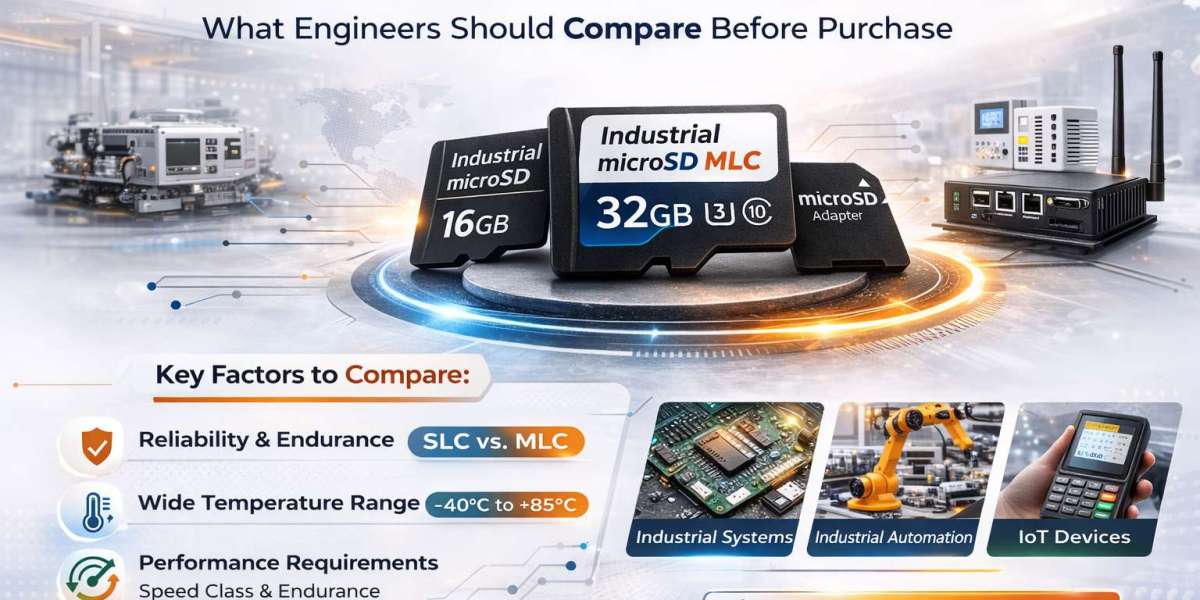
Industrial embedded systems such as Industrial PCs (IPCs), IoT gateways, automation controllers, and data logging devices require reliable storage that can operate continuously under demanding conditions. Unlike consumer-grade memory cards, industrial microSD cards are designed for long lifecycle availability, high endurance, and stable performance.
For engineers and technical buyers, selecting the right industrial microSD card is not only about capacity—it directly impacts system reliability, maintenance costs, and long-term project stability. This guide explains the key factors engineers should compare before purchasing industrial microSD for IPC and IoT devices.
- NAND Flash Type: SLC vs MLC vs TLC
One of the most important technical specifications is the type of NAND flash memory used in the microSD card.
SLC (Single-Level Cell)
- Highest endurance (up to 100,000 write cycles)
- Best reliability
- Ideal for mission-critical applications
MLC (Multi-Level Cell)
- Balanced performance and cost
- Suitable for most industrial IPC and IoT systems
- Common choice for automation and embedded devices
TLC (Triple-Level Cell)
- Lower cost but reduced endurance
- Typically used in consumer environments
For most automation and embedded applications, industrial MLC microSD offers the best balance between durability and cost efficiency.
- Endurance and Write Cycles
Industrial IoT systems often perform continuous logging and frequent data updates. Engineers should compare:
- TBW (Total Bytes Written)
- DWPD (Drive Writes Per Day)
- Wear leveling technology
- Error correction capability (ECC)
High-endurance industrial microSD cards reduce the risk of unexpected failures and help minimize downtime in production environments.
- Wide Temperature Support
Industrial environments frequently expose devices to extreme temperatures. Standard consumer cards operate between 0°C to 70°C, while industrial-grade cards typically support:
- -40°C to +85°C operating range
- Stable read/write performance under temperature fluctuations
Wide-temperature support is essential for:
- Outdoor IoT installations
- Transportation systems
- Manufacturing environments
- Power Loss Protection and Data Integrity
Unexpected power interruptions are common in industrial systems. Engineers should look for microSD cards that include:
- Power failure protection
- Bad block management
- Advanced ECC algorithms
- Static and dynamic wear leveling
These features prevent data corruption and improve overall system stability.
- Compatibility with IPC and Embedded Platforms
Not all microSD cards perform equally across embedded systems. Before purchasing, verify:
- Interface support (SD 2.0 / SD 3.0)
- Host controller compatibility
- Operating system support (Linux, Windows Embedded, RTOS)
- Boot capability for embedded IPCs
Industrial microSD cards designed specifically for embedded environments provide better long-term compatibility.
- Lifecycle Availability and Supply Stability
One of the biggest differences between consumer and industrial storage is product lifecycle.
Consumer memory cards often change components without notice, which can cause:
- Firmware inconsistencies
- Performance variations
- System validation issues
Industrial suppliers typically guarantee:
- 3–7 year lifecycle availability
- Controlled BOM (Bill of Materials)
- Firmware consistency
This is critical for OEMs and long-term automation projects.
- Industrial Certifications and Quality Testing
Before finalizing a purchase, engineers should evaluate whether the microSD card is tested for industrial conditions, including:
- Shock and vibration resistance
- EMC compliance
- Temperature cycling tests
- Reliability validation reports
Industrial validation ensures stable performance in real-world environments.
- Supplier Expertise and Technical Support
Choosing the right supplier is just as important as choosing the product. A specialized industrial storage supplier can provide:
- Compatibility guidance
- Firmware recommendations
- Lifecycle management support
- Technical documentation and datasheets
This helps engineers avoid integration issues and reduce deployment risks.
Common Applications for Industrial microSD in IPC and IoT Systems
Industrial microSD cards are widely used in:
- Industrial PCs and panel PCs
- IoT gateways and edge devices
- Data logging systems
- Automation controllers
- Smart transportation systems
- Remote monitoring solutions
These applications require stable and durable storage for continuous operation.
Conclusion
Selecting the right industrial microSD for IPC and IoT devices requires careful comparison of endurance, temperature range, NAND type, lifecycle support, and data integrity features. Engineers should avoid consumer-grade cards for industrial deployments, as they lack the reliability needed for long-term operation.
By evaluating technical specifications and working with a trusted industrial storage supplier, businesses can reduce downtime, improve system reliability, and ensure long-term project stability.
For industrial automation and embedded applications, investing in the right industrial microSD solution is not just a hardware decision—it is a critical step toward building reliable and scalable systems.
Read More: https://tecsysproductguides.blogspot.com/2026/02/industrial-microsd-for-ipc-and-iot.html