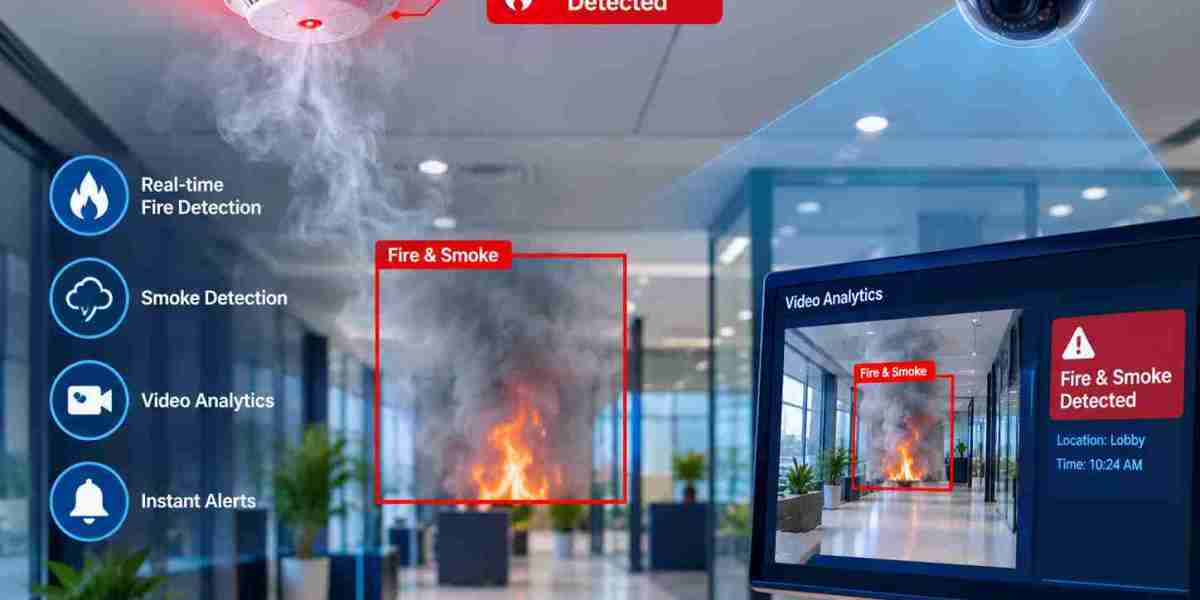
In a fire, the first minutes decide whether an incident stays small or becomes a disaster. Yet in large warehouses, open storage yards, tank farms, and busy ports, a ceiling sensor may sit far from where a fire starts, and smoke may never reach it in time. Video Analytics changes that by teaching cameras to recognize flame and smoke directly, so a developing hazard can be spotted from a distance, often well before conventional detectors react.
Tektronix supplies and installs intelligent monitoring systems across the Gulf, and its fire and smoke detection with video analytics brings camera-based hazard recognition to industrial and commercial sites in Oman. This article explains how the technology works, where it helps most, and how it fits alongside the certified fire protection systems that every Omani facility must maintain.
Why Early Detection Matters So Much
Fire grows exponentially. A small flame that could be put out with an extinguisher becomes a major blaze within minutes if nobody notices it. In facilities that hold fuel, chemicals, packaging, or stored goods, the cost of a delay is measured in damaged assets, lost production, and risk to people. Gaining even a minute or two of warning gives staff time to raise the alarm, evacuate safely, and begin firefighting while the incident is still manageable.
The Limits of Traditional Point Detectors
Conventional smoke and heat detectors are excellent in enclosed rooms with ceilings, because smoke rises and reaches them quickly. They struggle in tall halls, open yards, and outdoor areas, where smoke disperses before it reaches a sensor and wind scatters heat. Dust and steam can also trigger false alarms indoors. These limitations explain why many industrial operators supplement point detectors with visual detection that can look across a whole area at once.
How Cameras Recognize Flame and Smoke
Detection software examines each video frame for the visual signatures of fire: the colour and flicker of flame, the movement and spreading texture of smoke, and in thermal imaging, abnormal heat. It tracks these features over time, because real fire behaves differently from a reflection or a passing vehicle. When a pattern persists and matches a hazard profile, the system raises an alert and stores a clip of the event for review.
AI Powered Video Analytics Trained on Real Conditions
AI Powered Video Analytics learns from large collections of labelled footage showing real flame and smoke as well as the many harmless things that look similar, such as steam, dust, exhaust, and sun glare. This training allows the system to separate genuine hazards from lookalikes far better than simple rule-based detection. Performance improves further when models are tuned on footage from the actual site, because every location has its own lighting, backgrounds, and routine activity.
Video Analytics Software and the Control Room View
Cameras and models are only part of the picture. Video Analytics Software provides the dashboard, alert rules, stored clips, and reports that operators use daily. It shows live alerts with a short video so staff can judge a situation in seconds, lets supervisors set different sensitivity for different zones, and connects with the fire panel, public address system, and building management platform. Good software shows operators what matters without burying them in noise.
Complete Video Analytics Solutions for Industrial and Commercial Sites
Fire detection is rarely the only need on a large site. Complete Video Analytics Solutions combine it with perimeter intrusion alerts, vehicle and pedestrian monitoring, safety equipment checks, and crowd detection, all running on the same camera network and management platform. This consolidation lowers cost and complexity compared with buying a separate product for every hazard and gives safety and security teams a single view of the site.
Real Time Hazard Detection Across Large Areas
Real Time Hazard Detection means an alert reaches operators within seconds of a hazard first appearing on camera. A single well-placed camera can watch a loading bay, a stockyard, or a section of a tank farm that would need dozens of point detectors to cover. Operators see the actual scene, which helps them decide quickly whether to dispatch a team, trigger an alarm, or call emergency services, instead of guessing from a bare alarm signal.
Automated Emergency Response When Seconds Count
Automated Emergency Response links a confirmed detection to the rest of the facility's safety systems. Depending on how a site is configured, it can sound alarms, notify the nearest response team, unlock emergency exits, shut ventilation to slow the spread of smoke, stop conveyors, or alert external responders. Removing manual steps matters most in the first critical minute, when every second spent deciding what to do next allows a hazard to grow.
Reduced False Alarms and Operator Trust
Reduced False Alarms is one of the benefits that operators notice quickly. Nuisance alarms from steam, dust, or lighting changes drain trust and waste response resources, and over time staff begin to ignore the alarm panel. Analytics trained on a site's real conditions filter many of these events, so when an alert does sound, people take it seriously and respond with full attention.
Detailed Incident Reporting for Investigation and Insurance
Every detection event generates footage, a timestamp, the camera location, and a record of how the system classified the event and what actions followed. This provides Detailed Incident Reporting for investigations, regulatory review, and insurance discussions. Instead of piecing together what happened from memory, teams can watch the first moments of an incident and review how quickly each response step occurred, which is valuable for improving procedures.
Video Analytics Oman: Energy, Logistics, and Industrial Growth
Oman's energy facilities, logistics hubs, manufacturing zones, and large warehouses all store materials that can burn, and many are spread over large areas. Video Analytics Oman projects increasingly use camera-based detection as an extra layer of protection beside certified fire systems, particularly for open areas and tall structures. Employers should also consider the personal data protection law when recording footage that shows workers or visitors, and should confirm obligations with their own legal advisers.
Video Analytics Muscat: Commercial Buildings and Public Venues
The capital has busy commercial towers, malls, hotels, hospitals, and logistics yards on its edges. Video Analytics Muscat installations tend to focus on large open spaces such as atriums, car parks, loading docks, and storage areas, where smoke may take longer to reach ceiling detectors. Integration with building management and public address systems helps staff react quickly and guide occupants calmly.
Video Analytics Salalah: Port, Free Zone, and Monsoon Mist
In the south, a major port, a free zone, and industrial storage areas create demanding conditions. Video Analytics Salalah projects face an unusual challenge during the monsoon season, when mist and low cloud can look like smoke to an untrained system. Models must be tuned using footage from the local season, and cameras should be placed and shielded to minimize condensation, so that genuine events are detected without constant false triggers.
Camera Choices: Visible, Infrared, and Thermal
Standard cameras detect flame and smoke in good light, infrared illumination supports night time monitoring, and thermal cameras detect abnormal heat regardless of light or visible smoke. Many high-risk sites combine types, using thermal for early warning of overheating equipment or stored material and visible cameras for confirmation. Matching camera type, lens, and mounting position to each hazard is a major part of a successful design.
Working Alongside Certified Fire Systems
Video detection supports, but does not replace, the certified fire alarm and suppression systems required by civil defence regulations. Owners should confirm what their authority requires, keep certified systems maintained, and treat analytics as an additional layer that provides earlier warning and better information. Clear procedures should state how an analytics alert is verified and how it connects to the official alarm and evacuation process.
Planning a Deployment That Performs
A good project starts with a survey of hazards, layout, lighting, and existing systems. A pilot on a few cameras then tests detection against real site conditions, and rules are tuned before the system expands. Staff need training on verifying alerts and following response procedures, and a maintenance plan covering lens cleaning, firmware updates, and periodic testing keeps accuracy high through heat, dust, and humidity.
Engineering Experience and Trust Behind Every Deployment
Tektronix has engineered and commissioned surveillance, access control, and monitoring systems across the Gulf for many years. An in-house engineering team handles site surveys, network integration, and system configuration rather than passing installation to a subcontractor unfamiliar with the platform, and regional support helps keep a failed camera or analytics server from leaving an area without detection for long.
Technical information covering supported analytics, camera options, and deployment models is available through the company's fire and smoke video analytics page, giving safety and procurement teams specific detail to review rather than a marketing summary alone.
Choosing the Right Partner for an Omani Site
Selecting a supplier is as much about tuning and support as about the software itself. Ask about experience on comparable sites, how false alarm rates are measured and reduced, how alerts connect to existing fire panels, and how quickly local engineers can respond. Organizations that want one accountable partner for cameras, analytics, and support can review Tektronix's full range of video analytics hazard detection solutions before finalizing a shortlist.
Conclusion
Video Analytics gives Omani facilities earlier warning of fire and smoke than ceiling sensors alone. AI Powered Video Analytics, capable Video Analytics Software, and complete Video Analytics Solutions separate real hazards from harmless lookalikes. Real Time Hazard Detection and Automated Emergency Response save the critical first minutes of an incident. Reduced False Alarms and Detailed Incident Reporting improve daily operations and post incident review. Facilities planning Video Analytics Oman, Video Analytics Muscat, and Video Analytics Salalah projects should choose a partner like Tektronix with proven regional engineering.
FAQs
- Can video analytics replace certified fire alarm systems?
No, it supports them by adding earlier warning and better information, while certified fire alarm and suppression systems required by the civil defence authority must still be installed and maintained.
- How does the system avoid confusing monsoon mist with smoke?
Models are tuned using footage from the local season, cameras are positioned and protected to limit condensation, and alert rules can require a pattern to persist before an alarm is raised.
- Does it work at night?
Yes, infrared illumination and thermal cameras support detection in darkness, and many sites combine camera types so that early warning and visual confirmation both work after dark.
- Can an alert trigger other building systems automatically?
When properly integrated, a confirmed detection can sound alarms, notify response teams, unlock exits, or shut ventilation without waiting for someone to act on a screen.
- What does an incident report contain?
A typical record includes the video clip, timestamp, camera location, the system's classification and confidence, and a log of any automated actions taken.