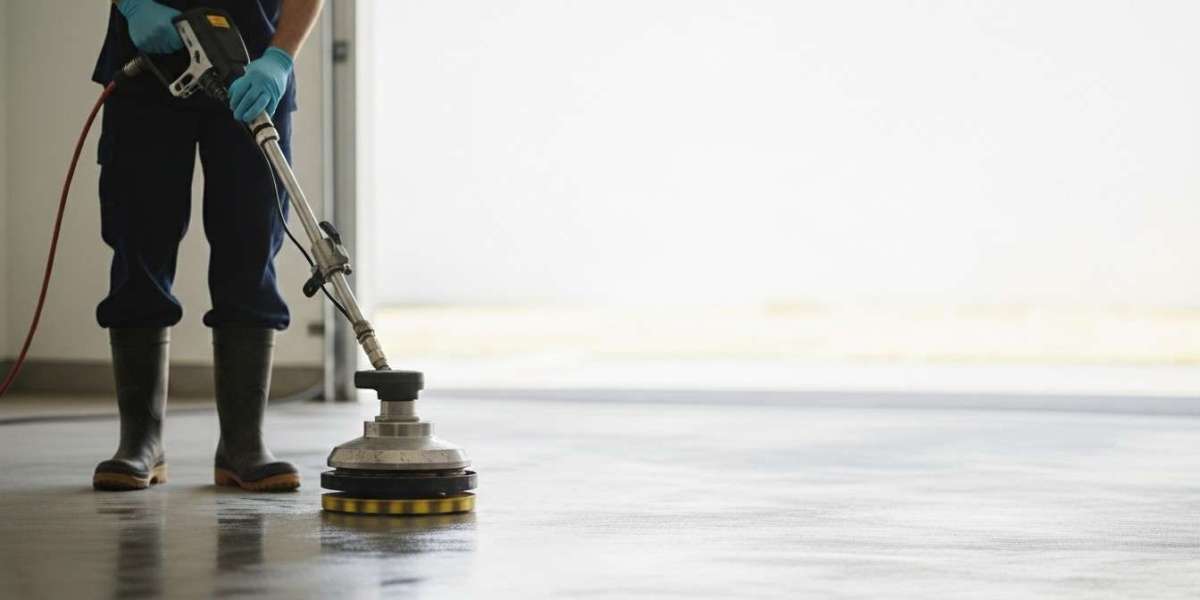
Garage floor pressure cleaning uses high-pressure water streams to blast away built-up dirt, stains, and debris from concrete or coated surfaces. It removes common issues like oil spots, tyre marks, mould growth, and everyday grime that accumulates over time. This process restores the floor's appearance and improves safety by reducing slip risks. For the safest approach, hire professionals who assess the surface type first. They use the right pressure levels to avoid damage, apply eco-friendly cleaners if needed, and handle wastewater to prevent environmental harm. DIY attempts often lead to uneven results or etching on sensitive coatings. Expect the job to take a few hours for a standard single-car garage, depending on stain severity. Always prioritise the containment of runoff water, as it can carry contaminants into local drains.
This guide explains what pressure cleaning achieves and its limits. It breaks down garage floor types and how they affect methods. You will learn about typical problems in Sydney garages. It covers method choices with a decision table. Safety tips prevent injuries and damage. Runoff handling keeps things compliant. Compare DIY and pro options. Understand what drives quotes. Get aftercare advice for lasting results. A hiring checklist helps you choose wisely.
What Garage Floor Pressure Cleaning Is and Is Not
Pressure cleaning sprays water at high force to strip away surface contaminants. It targets embedded dirt that brooms or mops miss. The process works well on porous concrete where grime settles into tiny holes.
It removes oil and grease by breaking their bond with the surface. Tyre marks lift as rubber particles get flushed out. Mould and algae die off when their roots lose hold. Rust stains fade with targeted blasts. Efflorescence, those white salt deposits, wash away as water dissolves them.
Pressure cleaning does not repair structural issues. It cannot fill pits or cracks in the slab. Failing coatings stay damaged if the pressure is too high. Deep oil penetration remains if stains have soaked in for years. Expect surface-level results only.
For example, a mechanic's garage with fresh oil spills cleans up quickly. An old warehouse floor with layered grime needs multiple passes.
Garage Floor Surface Types
A quick guide to common garage floor finishes and how to clean each one safely, so you avoid etching bare concrete, peeling coatings, and damaging grout or paint
Bare concrete
Bare concrete is porous, so it soaks up oil, tyre marks, rust, and tannin stains quickly. The biggest risk is etching, which looks like lighter “tiger stripes” or rough patches where the top layer got damaged.
How to identify
- Water darkens the concrete fast and absorbs instead of beading
- The surface looks matte and chalky, not glossy
- Stains look “in the concrete”, not sitting on top
Cleaning approach
- Pressure: 1500–2500 PSI is usually enough
- Nozzle: wide fan tip (25° or 40°) to spread force
- Technique: keep the wand moving, avoid holding one spot
- Pre-treatment matters: use a degreaser for oil and traffic film, let it dwell 5–10 minutes, then rinse
- For heavy oil: you often need agitation (stiff nylon brush) before pressure washing
Common mistakes
- Using a turbo nozzle too close (etching)
- Skipping degreaser and trying to “blast” oil out (spreads it and damages the surface)
Sealed concrete
Sealed concrete has a protective layer (acrylic, polyurethane, or other sealers). It resists liquids better, but the sealant can be patchy or worn, especially near the garage door or where tyres sit.
How to identify
- Water beads more than bare concrete
- Slight sheen, sometimes glossy
- You may see worn lanes or dull areas where the sealer has thinned
Cleaning approach
- Start gentle: lower pressure first, then increase only if needed
- Dwell time helps: cleaners do more work because the surface is less absorbent
- Use a soft bristle brush for agitation if grime is stubborn
- Rinse thoroughly so detergents do not leave a haze
What to check first
- If the sealer is flaking or peeling, high pressure can lift more of it
- Do a small test patch in a corner to see if the sealer stays stable
Common mistakes
- Hot water plus strong chemicals on weak sealer (can dull or soften it)
- High pressure on peeling areas (turns a small issue into a big patch)
Epoxy-coated floors
Epoxy is a hard, smooth coating designed to protect concrete and make cleaning easier. It usually handles pressure well, but epoxy shows scratches and swirl marks if you skip pre-treatment and drag grit across it.
How to identify
- Smooth, glossy or satin finish
- Colour is uniform, sometimes with flakes
- Water beads and wipes easily
Cleaning approach
- Good pre-rinse: remove sand and grit first
- Use a pH-neutral cleaner for general grime, and a targeted degreaser for oil spots
- A soft deck brush or microfibre mop helps lift film without scratching
- Avoid heat above 60°C (very hot water can soften some coatings and reduce gloss)
Common mistakes
- Using aggressive brushes or dirty pads (micro-scratches)
- Going straight to pressure on gritty floors (abrasion marks)
Common Garage Floor Problems
Oil and grease spots form from car leaks. They darken concrete and create slips.
Tyre marks transfer rubber during turns. Hot weather worsens this in Sydney's humid suburbs.
Mould and algae grow on damp edges. Poor ventilation in enclosed spaces speeds it.
Rust stains come from metal tools or water drips. They turn orange and spread.
Efflorescence appears as white powder. Moisture pulls salts to the surface.
Paint overspray happens during renovations. It sticks hard without quick action.
Gum, dirt tracking, and soot build up from foot traffic. Sydney's urban dust adds to it.
These issues worsen in coastal areas with salt air. Regular cleans prevent permanent marks.
Method Selection for Garage Floor Pressure Cleaning
Choose cold water for light dirt. It saves energy and suits most jobs.
Hot water cuts grease faster. Use it for heavy oil in workshops.
Apply the degreaser first. Let it dwell 10-15 minutes, then rinse.
Surface cleaner attachments spin water evenly. They beat wand-only for large areas.
Spot treat tough stains. Full floor cleaning suit overall refresh.
Soft wash pre-treats delicate coatings. It uses low pressure with chemicals.
Decision Table:
Stain Type | Surface Type | Best Method | Risk | Aftercare |
Oil/Grease | Bare Concrete | Hot Water + Degreaser | Etching if overdone | Seal to prevent re-soiling |
Tyre Marks | Epoxy | Cold Water + Surface Cleaner | Scratching | Wipe spills quickly |
Mould | Sealed Concrete | Degreaser + Rinse | Runoff pollution | Improve airflow |
Rust | Painted | Spot Treatment | Chipping | Neutralize acids |
Efflorescence | Tile/Stone | Soft Wash | Grout damage | Dry thoroughly |
Match the method to the problem for the best results.
Safety and Damage Prevention Pressure Cleaning
Manage slip risk by drying in sections and using mats while you work. Limit splashback with plastic sheeting as a barrier. Protect edging and door seals by taping them off before starting. Avoid etching by doing a quick test and starting on low pressure. Reduce striping by using steady, even strokes and overlapping each pass. Prevent coating failure by avoiding heat on epoxy surfaces. Keep joints intact by angling nozzles away from gaps. In enclosed garages, improve airflow by opening doors and ventilating the space. Wear PPE like goggles, gloves, boots, and ear protection. Example: a pro team marks wet zones with cones and checks ventilation before starting. Safety note: shut off power near water and never point jets at people.
Runoff and Wash-Water Handling
Wash water can carry oils, metals, and cleaners, so contain it to protect waterways. Use mats or berms to control flow and guide it to a collection point. Use a wet vac to remove liquids, then filter before disposal. Capture systems help trap solids, and reuse water where possible. In Sydney, follow local rules to avoid fines, and keep runoff out of drains. Research notes stormwater can spread pathogens and chemicals (PMC article on microbial contaminants). Sydney Water advises no runoff to drains (Sydney Water Water Wise Guidelines). Safe Work Australia outlines high-pressure jetting risks (Guide for managing risks from high-pressure water jetting). NSW EPA highlights pollution prevention (NSW EPA stormwater info). Practical tip: pump to sewer only with approval.
FAQs
Is pressure cleaning safe for epoxy garage floors?
Yes, with low pressure under 2000 PSI and no heat. Pros test spots to avoid bubbling. It removes dirt without harming the bond. Skip DIY if unsure.
What are the limits of oil stain removal on garage floors?
Surface oil lifts easily, but deep-soaked stains may fade only partially. Degreasers help, but old penetration needs multiple treatments. Sealing prevents future issues.
When should I use hot water vs cold water for garage floor cleaning?
Hot water tackles grease and oil better by melting them. Cold works for dust and light marks. Choose hot for workshops, cold for home garages.
What pressure level is best for garage floors?
Aim for 1500-2500 PSI. Higher risks damage. Focus on nozzle type and technique over raw power. Pros adjust based on surface.
Where does the runoff water go during pressure cleaning?
Collect it with berms or vacs. Filter and dispose per local rules. Untreated runoff pollutes drains. Pros handle this to comply.
How long does a cleaned garage floor stay clean?
6-12 months with regular sweeps. Seal for longer. Traffic and spills shorten it. Sydney's dust means more upkeep.
What are the risks of renting a pressure washer for DIY?
Overpressure etches concrete. Wrong angle strips coatings. Slips from wet floors hurt. Poor containment fines you.
Should I seal my garage floor after pressure cleaning?
Yes, if bare concrete. It repels stains and eases future cleans. Wait 24 hours to dry. Pros apply evenly.
Can pressure cleaning remove rust stains from garage floors?
It fades them with acid cleaners. Neutralize after. Deep rust may linger. Prevent with dry storage.
How does mould affect garage floors in Sydney?
Humidity grows it fast. It slips and stains. Clean with fungicides. Ventilate to stop regrowth.