Data engineering has quietly become one of the most stable bets in tech hiring, even as other roles wobble under AI-driven restructuring. An analysis of more than 700 verified US data engineer job postings by 365 Data Science found that data lakes now appear in roughly a quarter of listings, while cloud data warehousing platforms like Snowflake, Redshift, and BigQuery collectively show up across a meaningful share of requirements too. In other words, employers are not choosing one architecture over the other, but they are hiring for people who can move fluidly between both.
If you are trying to figure out where this field is headed or how to position yourself for it, that split is actually the most useful signal in the entire report. It tells you what to study, which roles to target, and how to think about your own career path in data engineering over the next few years.
For a broader look at why this role keeps climbing hiring lists even during tech layoffs, USDSI®'s own breakdown of why data engineering keeps ranking among the fastest-growing careers is worth a read alongside this one.
Data Warehouses or Data Lakes: Which Skill Set Do Employers Actually Want?
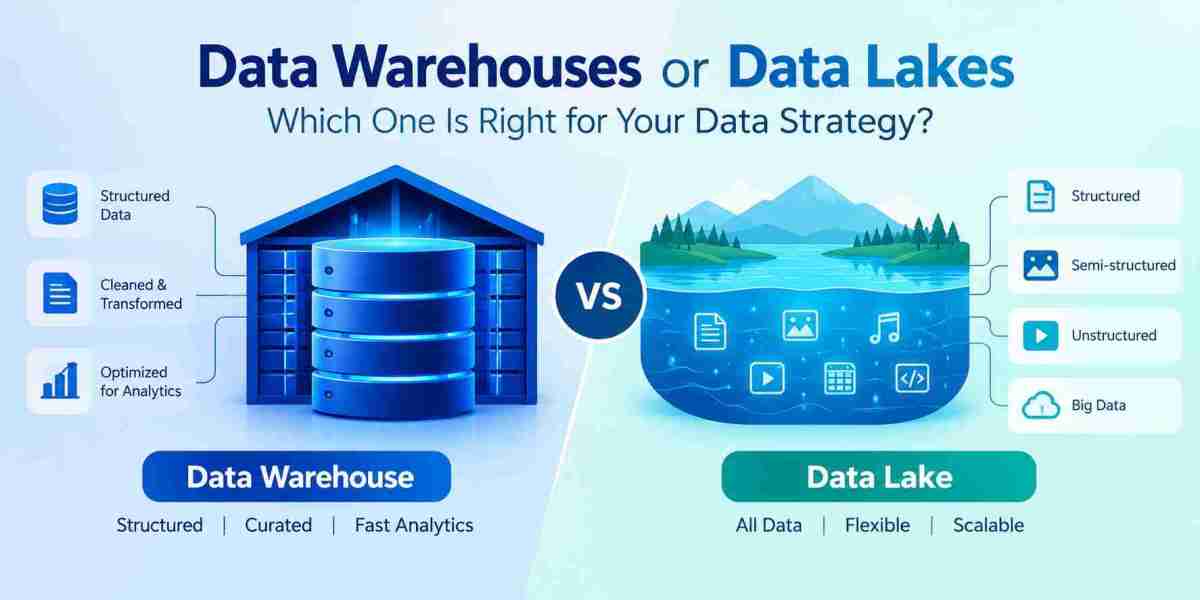
Data warehouses or data lakes used to be framed as a binary choice: warehouses for structured, query-ready data and lakes for raw, flexible storage, but that line has blurred considerably. Many organizations now run lakehouse architectures that borrow the discipline of a warehouse and the flexibility of a lake, and job postings reflect that hybrid reality.
Here is roughly how the skill demand breaks down based on the 365 Data Science research:
Technology Area | Approximate Presence in Job Postings |
SQL | Nearly 80% |
ETL processes | 57% |
Data lakes | 25% |
Snowflake | 11.70% |
Redshift | 6.10% |
BigQuery | 3.30% |
What this tells a working data engineer is that no single platform dominates, as employers care more about whether you understand the underlying principles of data modeling, partitioning, and governance than whether you have memorized one vendor's syntax.
If you want a deeper architectural view of how warehouses, lakes, and mesh-style designs fit together, USDSI®'s guide on modern data architecture from warehouses to mesh walks through that evolution in more detail.
Which Data Engineer Roles Are in Demand Right Now?
The title "data engineer" now covers a much wider range of day-to-day work than it did even three years ago. Some of the data engineer roles in demand include:
- Cloud data engineers, who build and maintain pipelines on AWS, Azure, or GCP and are increasingly expected to manage cost alongside performance
- Analytics engineers, a role that sits between data engineering and analytics, focused on transforming raw data into trusted, business-ready tables
- AI and ML infrastructure engineers, who build the feature stores, vector databases, and streaming pipelines that machine learning systems depend on
- Data platform engineers, who own the reliability, observability, and governance of the entire data stack rather than a single pipeline
- DataOps specialists, who bring automation and CI/CD discipline to data workflows the way DevOps did for software
Notice how many of these titles barely existed a decade ago, which is a useful reminder that the field rewards adaptability more than it rewards loyalty to a single toolset. Recruiters are also leaning harder on degrees outside computer science, including statistics, physics, and economics, as long as candidates can show hands-on pipeline and cloud experience.
What Does a Realistic Career Path in Data Engineering Look Like?
Most engineers move through a fairly recognizable arc, though the pace varies a lot by company and industry.
- Entry-level engineers typically start with SQL-heavy tasks, basic ETL maintenance, and cloud fundamentals, often earning somewhere in the low six figures depending on region.
- Mid-level engineers take ownership of full pipelines, start working across multiple cloud services, and begin contributing to architectural decisions.
- Senior and lead engineers design systems end to end, manage governance and cost trade-offs, and often mentor junior staff or coordinate with data science teams.
A structured certification can compress that timeline by validating exactly where you sit on that curve to a hiring manager who has never worked with you before. This is where USDSI®'s certification stack maps naturally onto the field.
The Certified Data Science Professional (CDSP™) is built for those establishing entry-level foundations in data handling, statistics, and pipeline logic. The Certified Lead Data Scientist (CLDS™) targets professionals ready to lead projects and make architectural calls, which lines up closely with the mid-to-senior transition many data engineers face.
The Certified Senior Data Scientist (CSDS™) is designed for those operating at a strategic level, overseeing data infrastructure decisions that affect an entire organization.
None of these credentials replace hands-on pipeline experience, but they do give recruiters a fast, standardized way to gauge where you fall on the entry-to-senior spectrum, which matters more than ever in a market where data engineer can mean five different jobs depending on the company.
Where Does This Leave Data Engineers Heading Into 2026?
The role is fragmenting into more specialized paths, and that is arguably good news for anyone willing to keep learning. Whether you gravitate toward warehouse-centric analytics work or lake-based, AI-adjacent infrastructure, the fundamentals of clean pipelines, solid SQL, and cloud fluency remain non-negotiable.
Building a career path in data engineering now means choosing a lane deliberately rather than drifting into whichever project lands on your desk first and using a recognized certification along the way to make that choice visible to the people making hiring decisions.