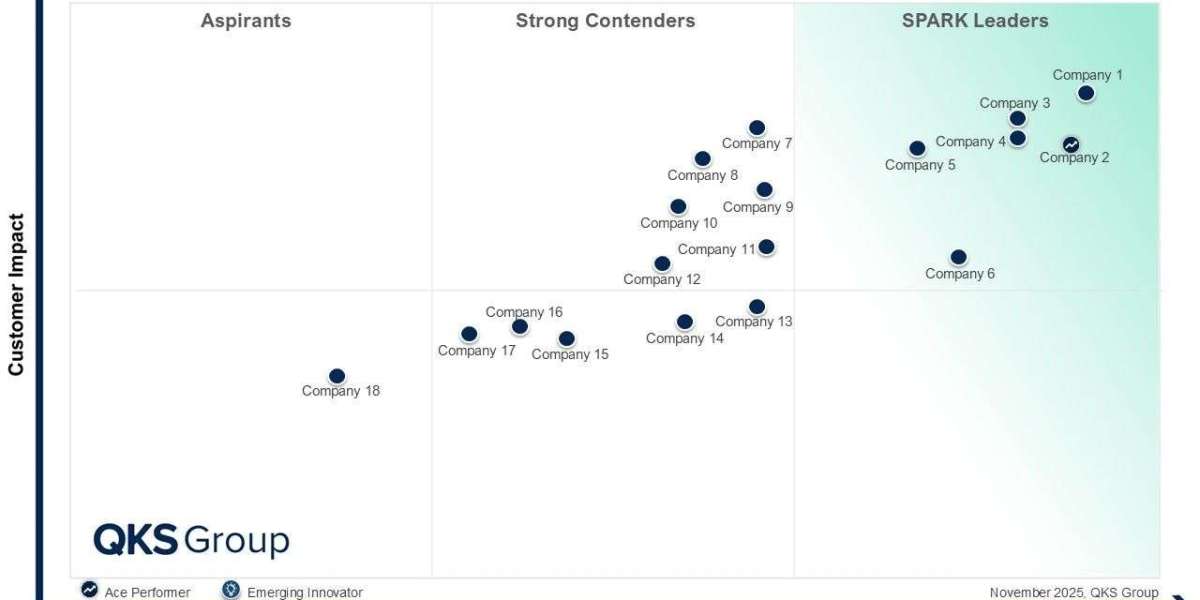
As digital products become central to business growth, organizations are increasingly investing in advanced analytics to understand user behavior, optimize experiences, and drive measurable outcomes. QKS Group’s Product Analytics Software Market Research delivers a comprehensive analysis of the global market, highlighting emerging technology innovations, evolving market trends, and the future outlook shaping digital product strategies.
This research provides strategic intelligence for technology vendors seeking to strengthen market positioning and refine growth strategies, while enabling enterprises to evaluate vendor capabilities, competitive differentiation, and overall market standing.
The Growing Importance of Product Analytics Software
QKS Group identifies Product Analytics Software as a critical enabler for organizations building, scaling, and optimizing digital products across web, mobile, and SaaS platforms.
Modern product analytics platforms empower businesses to:
- Track and analyze user interactions across digital touchpoints
- Identify friction points in onboarding and feature adoption
- Measure engagement, retention, and churn drivers
- Optimize product features using behavioral insights
- Support data-driven product and growth decisions
In a competitive digital economy, understanding user journeys is no longer optional—it is foundational to sustainable growth.
Market Trends Shaping the Product Analytics Landscape
QKS Group’s research highlights several transformative trends influencing the Product Analytics Software market in 2026 and beyond:
- AI-Driven Behavioral Insights
Vendors are embedding artificial intelligence and machine learning capabilities to deliver predictive modeling, anomaly detection, and automated insight generation.
- Experience-Level Analytics
Organizations are moving beyond event tracking to deeper experience analytics, including session replay, journey visualization, and qualitative feedback integration.
- Integration with Enterprise Data Ecosystems
Modern platforms increasingly integrate with data warehouses, customer data platforms (CDPs), and BI tools to provide a unified view of product and business performance.
- Real-Time Decision Enablement
Real-time dashboards and alerts enable product teams to respond quickly to user behavior changes, ensuring agile product iteration.
SPARK Matrix™: Competitive Benchmarking Framework
The research includes a detailed competitive analysis and vendor evaluation using the proprietary SPARK Matrix™ framework. This structured methodology ranks and positions leading Product Analytics Software vendors based on:
- Global impact and market presence
- Technological innovation
- Product capabilities and feature depth
- Customer value proposition
- Strategic vision and execution
The SPARK Matrix™ enables enterprises to compare vendors objectively and identify innovation leaders and strong performers in the global market.
Leading Product Analytics Software Vendors Evaluated
The study provides in-depth analysis of prominent vendors, including: Amplitude, Contentsquare, FullStory , Gainsight , Glassbox, Kubit, LogRocket, Mixpanel, Mouseflow, MParticle, Pendo, Planhat, PostHog, Pyze, Quantum Metric, Sprig, VWO, and Whatfix.
Each vendor is evaluated for product innovation, enterprise scalability, analytics depth, and integration capabilities.
Expert Perspective
According to Senior Analyst at QKS Group:
“Product analytics software is becoming a core capability for organizations building and scaling digital products. Enterprises are using analytics not only to understand how users interact with features, but also to identify friction, improve onboarding, and support decisions around adoption, retention, and growth. As platforms mature, organizations are increasingly adopting capabilities such as AI-driven analysis, predictive modeling, and experience-level insight, alongside stronger integration with enterprise data environments, to support more informed and timely product and business decisions.”
Strategic Benefits for Technology Vendors
Technology providers can leverage this research to:
- Benchmark against global competitors
- Identify feature gaps and innovation opportunities
- Align product strategy with evolving enterprise demand
- Strengthen differentiation in a competitive market
Strategic Value for Enterprises
Enterprises evaluating Product Analytics Software solutions can:
- Compare vendors using structured performance criteria
- Assess integration with existing data ecosystems
- Evaluate AI and predictive capabilities
- Align analytics investments with growth and retention goals
Future Outlook: The Evolution of Product Analytics
As organizations continue to scale digital-first strategies, product analytics platforms will evolve into intelligent decision-support systems. The convergence of behavioral analytics, AI-driven automation, predictive insights, and enterprise data integration will redefine how product teams innovate and compete.
Organizations investing in advanced product analytics today are building a foundation for:
- Faster feature optimization
- Improved customer retention
- Higher product adoption
- Data-driven innovation culture
Conclusion
QKS Group’s Product Analytics Software Market Research provides a structured, strategic, and data-driven view of the global competitive landscape. Through its SPARK Matrix™ evaluation, the study offers actionable insights for both vendors and enterprises navigating a rapidly evolving analytics ecosystem.
In a digital economy where user experience defines success, Product Analytics Software is not just a reporting tool—it is a strategic growth engine for modern enterprises.