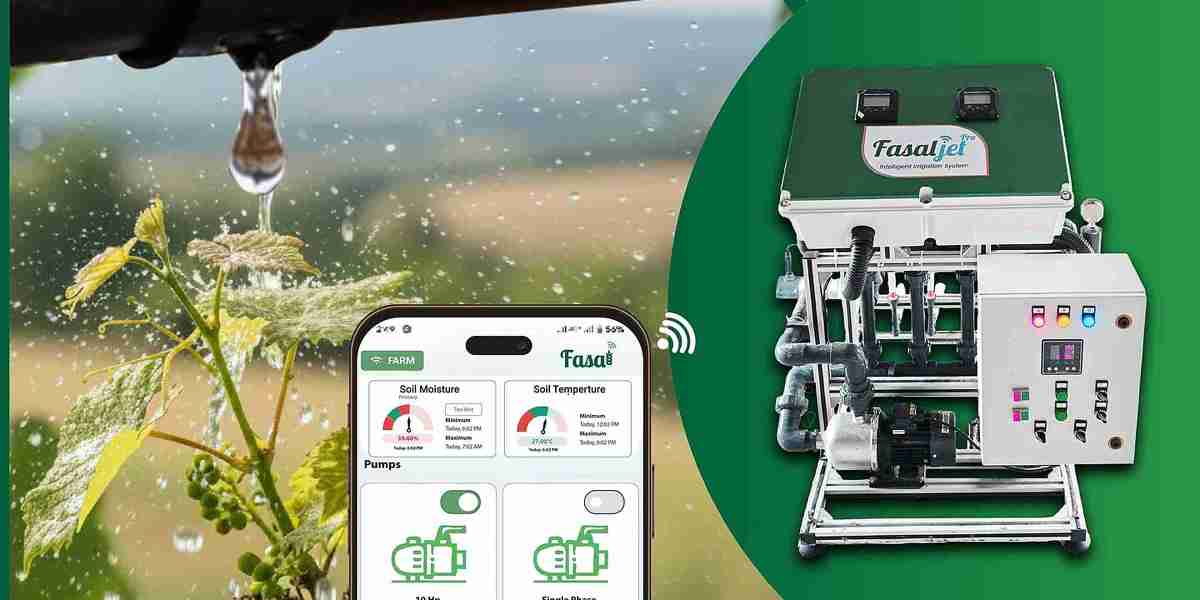
Managing irrigation across multiple plots can become complicated when farmers must coordinate pumps, drip valves, and watering schedules alongside other agricultural activities. An automated irrigation system helps organise these routine operations through planned schedules and remote equipment control, reducing dependence on repeated manual intervention.
For farms using drip irrigation, scheduling is an important starting point. Farmers can plan irrigation cycles according to their crop management requirements instead of manually initiating every operation. Mobile app-based control makes irrigation management more convenient, while automatic and manual modes provide flexibility when adjustments are needed.
Farm infrastructure also matters when selecting an automation solution. Drip valves may be distributed across several plots, making it impractical to bring every valve to one central location. FasalJet supports remote control of decentralised drip valves through an RTU-based setup, helping farmers manage distributed irrigation points according to their system configuration.
Power interruptions can disrupt scheduled operations, too. FasalJet supports automatic resumption of an interrupted irrigation cycle from where it stopped once power returns, reducing the need to restart the operation manually.
Farmers should remember that irrigation automation and field monitoring serve different purposes. Automation manages equipment and scheduled irrigation operations, while monitoring products provide information about field conditions. Fasal's Main Unit is a separate monitoring product, whereas FasalJet focuses on irrigation automation.
Before choosing an automated irrigation system, growers should assess their existing drip network, valve compatibility, pump capacity, electrical supply, and irrigation requirements. Selecting a solution that fits the farm's actual layout helps make implementation more practical.
With suitable planning and appropriate equipment, an automated irrigation system can help farmers manage routine watering operations more efficiently, reduce repeated manual tasks, and maintain better control over irrigation schedules.