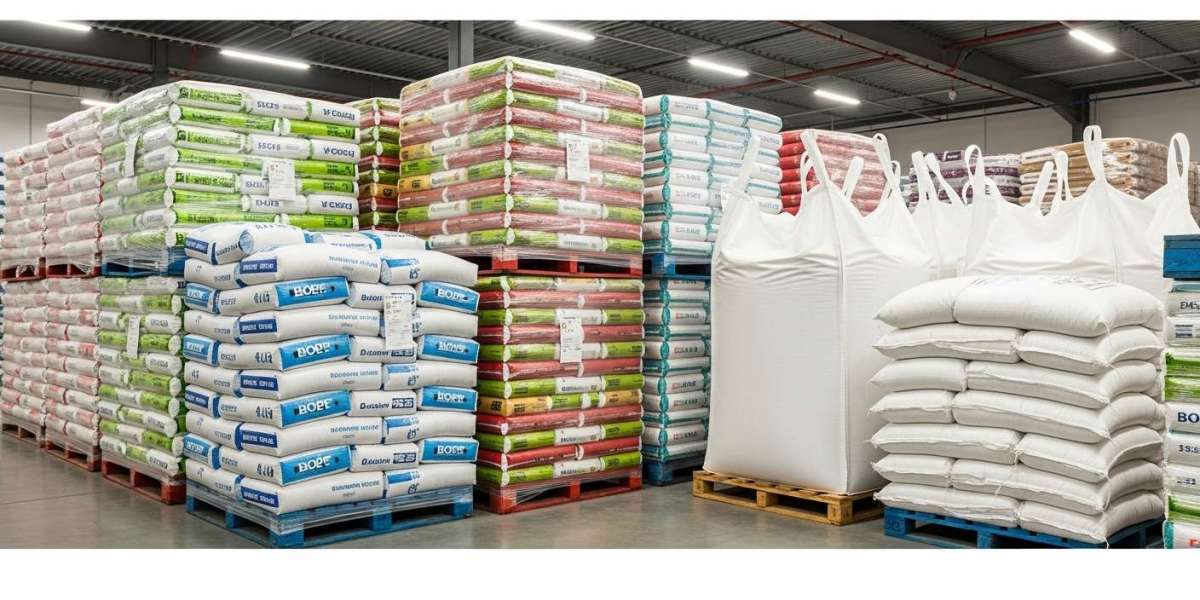
In bulk packaging, the wrong choice doesn’t just affect storage—it affects handling efficiency, product safety, and ultimately cost. Over the years, I’ve seen businesses try to cut corners with cheaper packaging alternatives, only to end up dealing with tearing, moisture damage, or inconsistent supply. That’s exactly why woven polypropylene bags have remained a preferred choice across industries.
They’re not new. In fact, they’ve been around for decades. But what makes them relevant even today is their ability to balance strength, flexibility, and cost in a way very few materials can. Whether you’re packaging agricultural produce, industrial raw materials, or retail-ready goods, these bags tend to do their job without creating additional problems.
What Makes Woven Polypropylene Bags Different
At a basic level, these bags are made by weaving polypropylene tapes into a fabric. That weaving process is what gives them their strength. Unlike regular plastic bags, which rely on thickness alone, woven bags distribute weight across the structure.
In real-world handling—loading, stacking, transport—that difference shows up quickly. Bags don’t tear easily at stress points, and they hold shape better under load. For businesses moving large volumes, that reliability matters more than anything else.
Another thing worth noting is flexibility. These bags can be folded, stacked, and stored efficiently, which is not always possible with rigid packaging solutions
Why Industries Continue to Rely on Them
There’s a reason you’ll find woven polypropylene bags in agriculture yards, warehouses, construction sites, and even retail shelves. It comes down to consistency.
From a business standpoint, a few advantages stand out clearly:
- They handle weight without frequent failure, even in rough conditions
- They are economical when ordered in bulk
- They reduce product loss during transportation
- They adapt easily to different packaging requirements
But beyond these obvious benefits, there’s a more practical reason—they simplify operations. You don’t have to worry about fragile handling, and you don’t need special storage conditions.
Where They Are Most Commonly Used
If you look across industries, the usage is quite broad—but each use case has its own reason.
In agriculture, these bags are almost standard. Grains, seeds, and animal feed need packaging that can handle weight and remain stable during storage. Moisture resistance is also important here, especially in regions with unpredictable weather.
In the construction sector, strength becomes the primary requirement. Materials like cement and sand are heavy, and packaging failure can create both financial loss and operational delays. This is where woven bags perform reliably.
The food industry uses them slightly differently. Here, hygiene and protection matter more, so laminated versions are often preferred to prevent moisture or contamination.
In chemicals and industrial materials, the focus is on containment and safety. Powders and granules need packaging that won’t leak or degrade easily.
And then there’s retail, where appearance starts to matter just as much as performance. This is where advanced versions like BOPP laminated bags come into play.
Understanding the Types of Woven Bags
One mistake I often see is treating all woven bags as the same. In reality, the types of woven bags vary based on application, and choosing the wrong one can create unnecessary issues.
The most basic version is the standard woven bag. It works well for dry products and general-purpose use, but it doesn’t offer much protection against moisture.
Laminated woven bags add a protective layer, which makes them more suitable for food products or materials sensitive to environmental exposure.
Then you have BOPP laminated bags, which are more about presentation and branding. These are commonly used in retail because they allow high-quality printing while still maintaining strength.
Gusseted bags are designed for better capacity and stacking. If your product needs to sit neatly on shelves or pallets, this design helps.
Valve bags are more specialized, used in automated filling systems. You’ll see these in industries like cement, where speed and efficiency matter.
And finally, UV-stabilized bags are used when storage happens outdoors. Without UV protection, even strong materials can weaken over time.
How to Choose the Right Bag for Your Business
This is where experience really matters. There’s no single “best” option—it depends entirely on how and where the bag will be used.
Start with the product itself. Is it heavy? Moisture-sensitive? Perishable? Each of these factors will influence your choice.
Next, consider handling conditions. If the bags will go through multiple loading and unloading cycles, strength becomes critical.
Storage conditions are another factor that’s often overlooked. Outdoor storage, for example, requires UV protection, while humid environments may need lamination.
Then there’s the operational side—how the bags are filled, transported, and stacked. If you’re using automated systems, certain designs like valve bags become more practical.
And of course, branding plays a role if your product is customer-facing. In that case, packaging isn’t just functional—it’s part of your presentation.
Common Mistakes Businesses Make
Even experienced buyers sometimes make decisions that create problems later.
One of the most common is choosing based purely on cost. Cheaper bags may look similar but often fail under load or environmental stress.
Another issue is ignoring the actual use case. A bag that works well for dry grains may not perform the same way for moisture-sensitive products.
Underestimating load capacity is another frequent mistake. When bags are pushed beyond their limits, failures are inevitable.
And then there’s supplier inconsistency. Even a good product can become unreliable if quality varies from batch to batch.
Why the Right Supplier Matters More Than You Think
In packaging, consistency is everything. You don’t just need a good product—you need the same quality every time.
A reliable supplier ensures:
- Uniform strength and material quality
- Timely delivery, especially for bulk orders
- Flexibility in customization
- Clear communication when requirements change
From experience, businesses that invest time in choosing the right supplier face fewer operational disruptions in the long run.
Where the Industry is Heading
Packaging is evolving, but not in a way that replaces woven bags—it’s improving them.
There’s a growing focus on sustainability, with more manufacturers exploring recyclable and eco-friendly materials.
At the same time, printing technology is improving, making these bags more suitable for retail and branding.
Strength-to-weight ratios are also getting better, which means lighter bags without compromising durability.
Final Thoughts
At the end of the day, woven polypropylene bags continue to be widely used for one simple reason—they work. They handle pressure, adapt to different industries, and offer a level of reliability that businesses depend on.
Understanding the different types of woven bags and choosing the right one isn’t just a technical decision—it’s a practical one. It affects how smoothly your operations run, how well your products are protected, and how efficiently your supply chain performs.
And in most cases, the difference between average and effective packaging comes down to paying attention to these details early on, rather than fixing problems later.