From Complaints to Evidence
Road planning often starts with a complaint, such as a queue that never clears or a crossing that feels dangerous. Complaints show where people are unhappy, but they do not show how many vehicles are involved, at what hours, or which movement is causing the delay.
Measured data turns a complaint into a defined problem with numbers attached, and a defined problem is far easier to solve and to fund.
Finding the Real Bottleneck with Automated Traffic Counts (ATC)
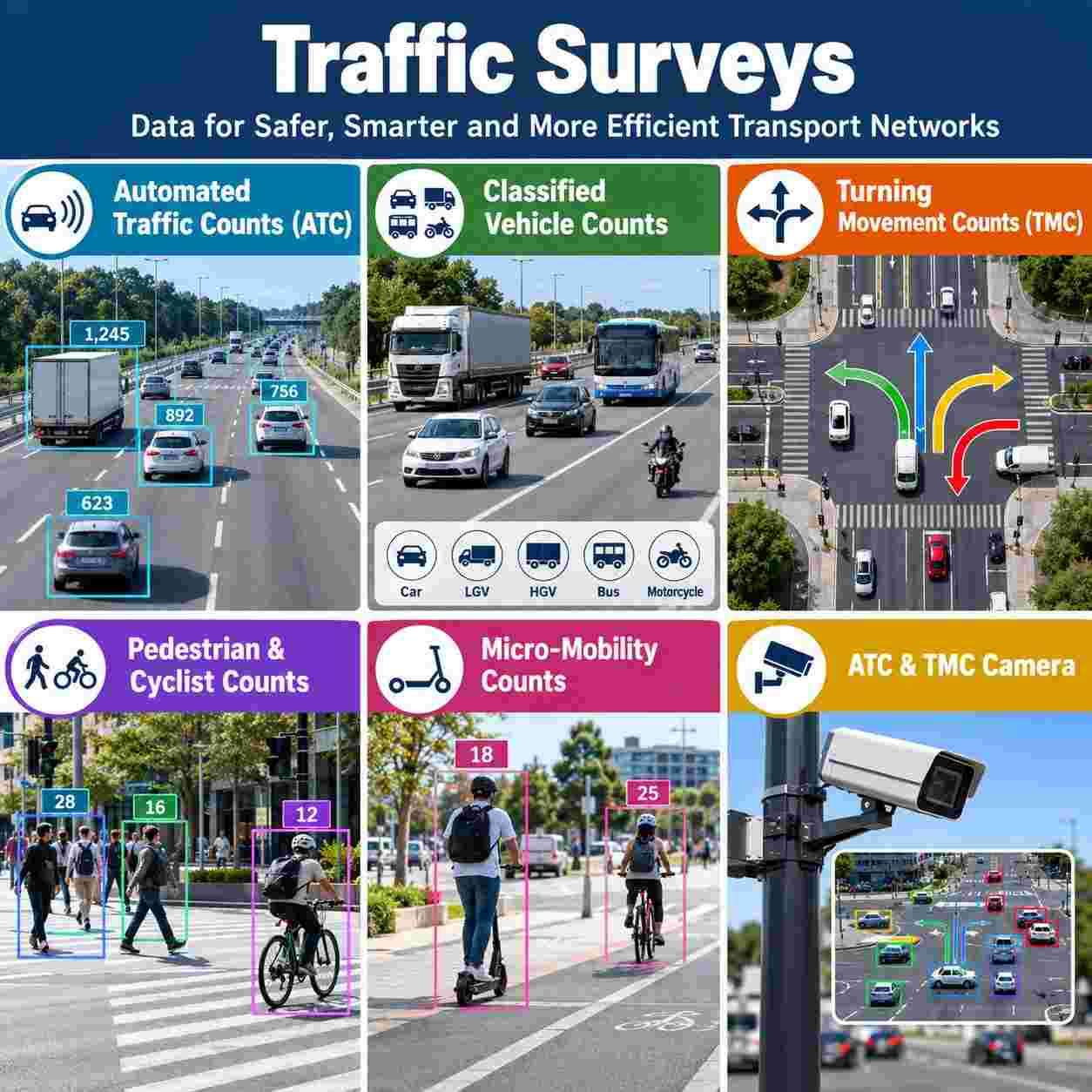
A single morning visit can mislead, because traffic changes by hour, day, and season. Automated Traffic Counts (ATC) record volumes continuously over several days or weeks, showing the true peak, the strength of weekday and weekend patterns, and how quickly a road recovers after the peak ends.
Long records also smooth out one off event such as roadworks, giving planners a baseline, they can defend in front of an approving authority.
Matching Road Design to the Vehicle Mix
A road carrying many trucks and buses needs wider lanes, stronger pavement, and larger turning radii than one carrying only cars. Classified Vehicle Counts separate motorcycles, cars, vans, buses, and heavy goods vehicles, so design standards and maintenance budgets reflect the traffic that really uses the road.
Protecting Residential Streets from Through Freight
When data shows heavy vehicles cutting through a neighbourhood, planners can justify signage, restrictions, or an alternative freight route with facts rather than opinion.
Redesigning Junctions with Confidence
Most delay and many crashes occur at junctions. Turning Movement Counts (TMC) record how many vehicles turn left, go straight, or turn right from each approach, which is the key input for signal timing, turn lane length, and the choice between a signal and a roundabout.
Without this detail, a junction upgrade is mostly guesswork, since total approach volume cannot reveal which single movement is causing the queue.
Planning for People Who Walk and Ride
Road planning that ignores people on foot produces unsafe crossings and empty footpaths. Pedestrian & Cyclist Counts show how many people cross, at what times, and where they choose to cross, guiding the location of signals, shade, footpath width, and bicycle routes.
Counts also reveal unsafe habits, such as mid-block crossing because the nearest crossing is too far away, which supports a targeted fix instead of a generic campaign.
Making Space for Scooters and Shared Bikes
Shared scooters and e bikes have become part of the Emirati street scene, and Micro-Mobility counts show where these devices travel, where they mix with pedestrians and cars, and where protected lanes, parking bays, or speed limits are justified.
Early data helps authorities and operators agree on sensible rules supported by numbers rather than anecdotes.
Safer and More Efficient Fieldwork
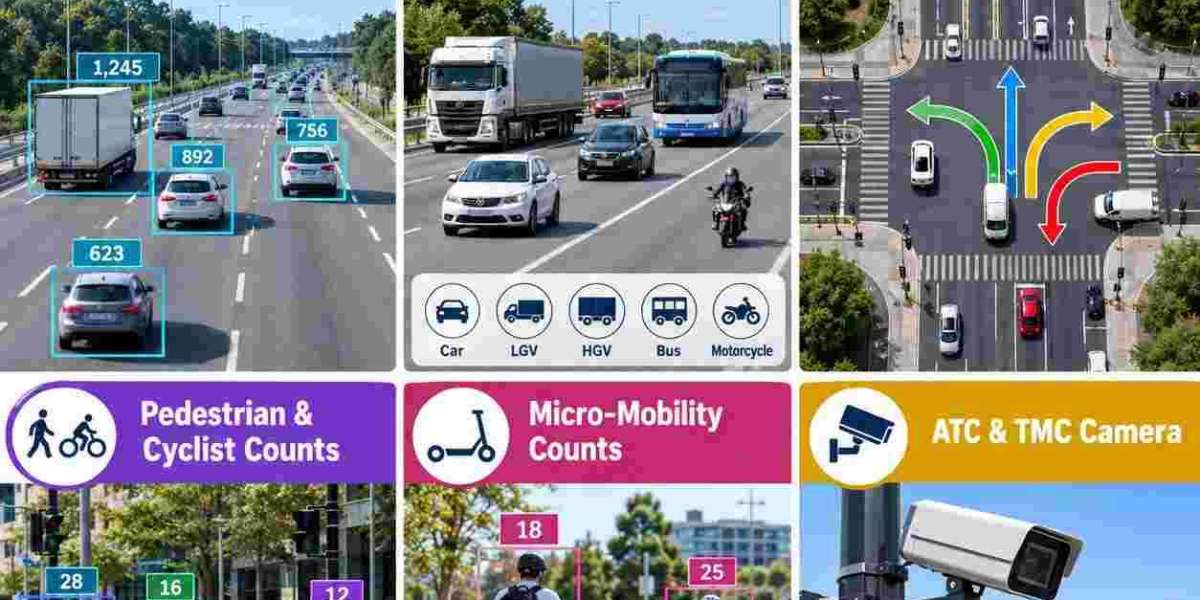
Modern surveys rely on analytics rather than clipboards, and a single ATC & TMC Camera can capture continuous volumes and junction movements together while leaving a video record that can be audited. You can see how this equipment supports road projects on our professional traffic survey services page, where the methods are described in detail.
Camera based collection also keeps staff away from the roadside during peak traffic and summer heat.
Setting Priorities When the Budget Is Limited
No authority can fix every road at once. Survey data lets planners rank locations by delay, crash risk, and the number of people affected, so the first dirham goes to the junction that will deliver the largest benefit rather than the one with the loudest complaint.
A clear ranking also makes funding requests easier, because decision makers can see the evidence behind every proposed project.
Testing Ideas Before Building Them
Survey data feeds transport models and junction simulations, which let planners test a new lane, a changed signal plan, or a bus priority measure before any concrete is poured. A solution that looks sensible on paper often fails in simulation, and finding that early saves money.
The quality of the model depends entirely on the quality of the counts, which is why survey accuracy is the foundation of the whole process.
Checking That the Fix Actually Worked
A repeat survey after a project opens shows whether queues shortened, whether crossings are used, and whether problems moved to a nearby street. This before and after comparison is valued by authorities such as the Roads and Transport Authority in Dubai and the Department of Municipalities and Transport in Abu Dhabi because it shows real results.
Lessons from each project then improve the next one, turning road planning into a continuous learning process.
Road Safety and Crash Reduction
Safety studies depend on exposure data. Knowing how many vehicles, pedestrians, and riders use a location lets analysts compare crash numbers fairly, so a junction with many crashes but huge traffic is not confused with a quiet one that is genuinely dangerous.
Counts taken at the times crashes occur, such as school pick up or late evening, point to the specific measure that will help, whether lighting, signal changes, or a protected crossing.
Supporting Buses, Freight, and Public Transport
Bus priority lanes, truck routes, and metro feeder roads all need numbers to justify them. Surveys show how many buses and trucks use a corridor, how long they are delayed, and how many people cross to reach stops and stations.
That evidence makes it easier to win agreement from residents, businesses, and authorities, because everyone sees the same facts.
Experience and Trust Signals to Look For
Choose providers with completed work across several emirates, trained field crews, written quality assurance steps, and sample reports that show clean tables and clear methods. Those signals matter more than a long equipment list.
Data should be traceable, with survey dates, weather, and unusual events recorded beside the counts so a reviewer years later can understand exactly what the numbers represent.
Selecting Traffic Surveys UAE Teams Wisely
When commissioning Traffic Surveys UAE planners trust, ask how long equipment stays on site, how gaps are handled, how counts are validated against manual samples, and how quickly the final dataset arrives, since late data can delay an approval or a design deadline.
Planning Realities in Dubai
Dubai combines growth, tourism, freight, and dense towers into one network, so Traffic Surveys Dubai projects often need several count types at once and a calendar agreed early with every stakeholder to meet tight review timelines.
Starting early, confirming the report format in advance, and choosing survey days that reflect normal conditions keeps a Dubai road study on schedule.
Conclusion
Better road planning begins with Traffic Surveys, and Automated Traffic Counts (ATC) show the true rhythm of every corridor. Classified Vehicle Counts and Turning Movement Counts (TMC) reveal how vehicles load roads and stress junctions, while Pedestrian & Cyclist Counts and Micro-Mobility Counts keep people and new modes at the center of design. A reliable ATC & TMC Camera keeps the evidence accurate and auditable. For any Traffic Surveys UAE or Traffic Surveys Dubai road project, contact our team today to build your plan on solid data.
FAQs
- How do Traffic Surveys help authorities decide which roads to fix first?
They measure delay, volume, and risk at each location, so projects can be ranked by the benefit they will deliver.
- How long should Automated Traffic Counts (ATC) run on a planning study?
Seven days or more is common, so weekday and weekend patterns are captured and one off events do not distort the average.
- Why are Turning Movement Counts (TMC) needed for a junction upgrade?
Signal timing and lane design depend on how many vehicles want each turn, which total approach volume cannot show.
- What do Pedestrian & Cyclist Counts add to road planning?
They prove actual walking and cycling demand, guiding crossings, shade, footpath width, and bicycle routes in the right places.
- Can an ATC & TMC Camera collect volume and junction data at once?
Yes, one properly mounted camera can record continuous volumes and individual turning movements, reducing equipment and site visits.