
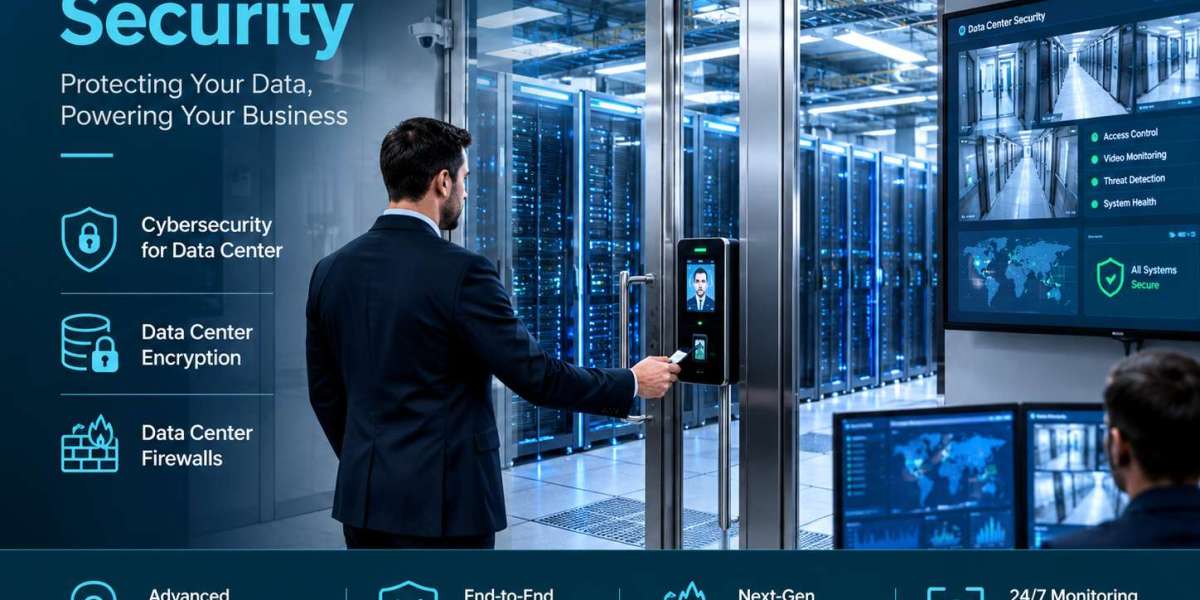
As banks, hospitals, ministries, and cloud providers move more of their operations into Saudi facilities, a single outage or breach can now halt services for millions of people, which is why Data Center Security has become a board level topic across the Kingdom rather than a technical footnote.
Why Data Centers Became Critical National Infrastructure
Saudi Vision 2030 has pushed government services, finance, energy, and education online, and each of those sectors now depends on servers that must run all day and every day. A data hall is no longer a back-office room, it is the engine behind payments, health records, and national platforms.
Global cloud providers and local operators are also building large facilities in Riyadh, Jeddah, and Dammam, which raises both the value of what is stored and the interest of attackers who want to reach it.
The Threat Picture Facing Saudi Operators
Threats arrive from two directions at once. Remote attackers probe networks for weak points, while physical risks include tailgating, stolen credentials, insider misuse, fire, flooding, and power failure. A weakness in either direction can cause the same outcome, which is lost trust and costly downtime.
Ransomware, data theft, and service disruption have all become common headlines, and regulators expect operators to show that they planned for them rather than reacting after the fact.
Building a Layered Defense From the Network to the Door
Strong protection works like an onion. Each layer slows an intruder and gives staff time to respond, so no single failure exposes the whole site. Effective Cybersecurity for Data Center operations combines network controls, identity management, patching discipline, backups, and trained staff who know exactly how to respond to an alert.
Defense in Depth in Practice
Perimeter, building, data hall, rack, and data layers should each have their own controls, and the failure of one layer should never silently disable the next.
Protecting Information at Rest and in Motion
Even if an attacker reaches a storage device or intercepts traffic, strong Data Center Encryption makes the stolen information useless without the matching keys. Good practice covers disks, backups, databases, and the links between sites, with keys stored separately and rotated on a schedule.
Encryption also supports compliance, because it shows a regulator that sensitive records were protected even in the worst case.
Filtering Traffic at Every Boundary
Traffic enters and leaves a facility through many paths, and Data Center Firewalls inspect each flow against defined rules. Modern designs place controls between zones inside the building as well, so a compromised server cannot freely reach the database that holds customer records.
Regular rule reviews matter, since stale exceptions added during a past project quietly become the easiest path for an attacker.
Controlling Who Can Physically Enter
Many serious incidents begin with a person in the wrong room. Data Center Access Control assigns permissions by role, zone, and time, uses strong credentials such as biometrics or mobile credentials, and logs every entry and exit against a named identity.
Mantraps, Anti Tailgating, and Visitor Escorts
Mantraps and anti-tailgating doors ensure one person enters at a time, and visitors should be registered, badged, and escorted so a contractor never wanders unseen between cages.
Seeing What Happens on Site
Cameras turn a guess into evidence. Well placed Data Center Surveillance covers perimeter fences, entrances, corridors, and data halls, with recordings kept long enough for audits. You can review how this fits a complete protection design on our data center security solutions page, including integration with doors and alarms.
Video analytics can flag loitering, unauthorized entry, or an open cabinet door, so operators are alerted within seconds instead of discovering the problem the next morning.
Spotting Break Ins Before They Spread
Detection must work at the network and at the door. Data Center Intrusion Detection watches for suspicious logins, forced doors, and unusual traffic, then raises an alarm so the response team can act before an attacker settles in.
Tuning matters, because a system that raises hundreds of false alarms trains staff to ignore the one that is real.
Joining the Dots with Analytics
Individual alerts rarely tell the whole story. Data Center Threat Detection correlates events from firewalls, servers, cameras, and doors, so a badge used at an odd hour followed by an unusual login is recognized as one connected incident instead of two unrelated notes.
Security teams then respond using written playbooks, which cuts decision time when pressure is highest.
Environmental Safety, Power, and Resilience
Security also includes keeping systems alive. Early smoke detection, clean agent fire suppression, leak sensors, redundant power, and cooling designed for Gulf summers protect hardware as seriously as locks do. Saudi Civil Defense requirements apply to fire protection and escape routes.
Regular generator tests and failover drills prove that the design works under load, which gives both customers and auditors real confidence.
Regulators and Standards Shaping Saudi Requirements
Operators in the Kingdom work under expectations from the National Cybersecurity Authority, including its Essential Cybersecurity Controls and Cloud Cybersecurity Controls, together with the Personal Data Protection Law overseen by SDAIA and the cloud rules of the Communications, Space and Technology Commission. Many facilities also pursue ISO 27001 certification and Uptime Institute tier ratings.
Documented policies, regular audits, and evidence of tested controls make each of these reviews smoother and shorter.
Experience and Trust Signals for Saudi Buyers
Our engineering team has delivered access, surveillance, and security projects across Saudi Arabia, the UAE, Qatar, Bahrain, and Kuwait, giving direct field knowledge of Gulf climate, approval routes, and regional compliance rather than assumptions borrowed from other markets.
Each project is handed over with drawings, configuration records, test results, and training, so operators and auditors can verify exactly how the site was secured.
Selecting Data Center Security KSA Partners Wisely
When comparing offers for Data Center Security KSA projects, buyers should weigh regional references, integration across physical and network layers, quality of local support, and willingness to document every control, and should treat price as one factor among several instead of the deciding point.
Lessons from the Wider Gulf Including Riyadh
Operators with sites in several countries benefit from consistent standards, and experience with Data Center Security Riyadh projects shows how dense free zones, strict audits, and tight delivery schedules shape design choices that Saudi teams can also apply.
A common policy framework across borders reduces training cost and makes it easier to compare sites during an internal review.
Conclusion
Data Center Security now protects the services that Saudi society depends on, and Cybersecurity for Data Center operations must work together with Data Center Encryption and Data Center Firewalls. Data Center Access Control and Data Center Surveillance keep every person and every movement accountable inside the building. Data Center Intrusion Detection and Data Center Threat Detection give teams the early warning they need to stop incidents before they spread. For Data Center Security KSA and Data Center Security Riyadh projects, regional experience and documented controls decide long term success. Contact our team today to plan a secure and resilient facility.
FAQs
- What does Cybersecurity for Data Center operations include beyond firewalls?
It includes identity management, patching, backups, monitoring, staff training, and tested incident response plans that work together as one program.
- Why is Data Center Encryption important even when the building is well guarded?
Encryption protects information if a disk is removed or traffic is intercepted, because the data stays unreadable without the correct keys.
- How does Data Center Access Control reduce insider risk?
It limits each person to the zones they need and records every entry, so unusual movement is visible and can be investigated.
- What does Data Center Intrusion Detection monitor at a site?
It watches networks for suspicious activity and doors or fences for forced entry, then alerts staff so they can respond quickly.
- How does Data Center Threat Detection improve response times?
It links alerts from networks, cameras, and doors into a single incident view, so analysts see the whole picture and act sooner.