
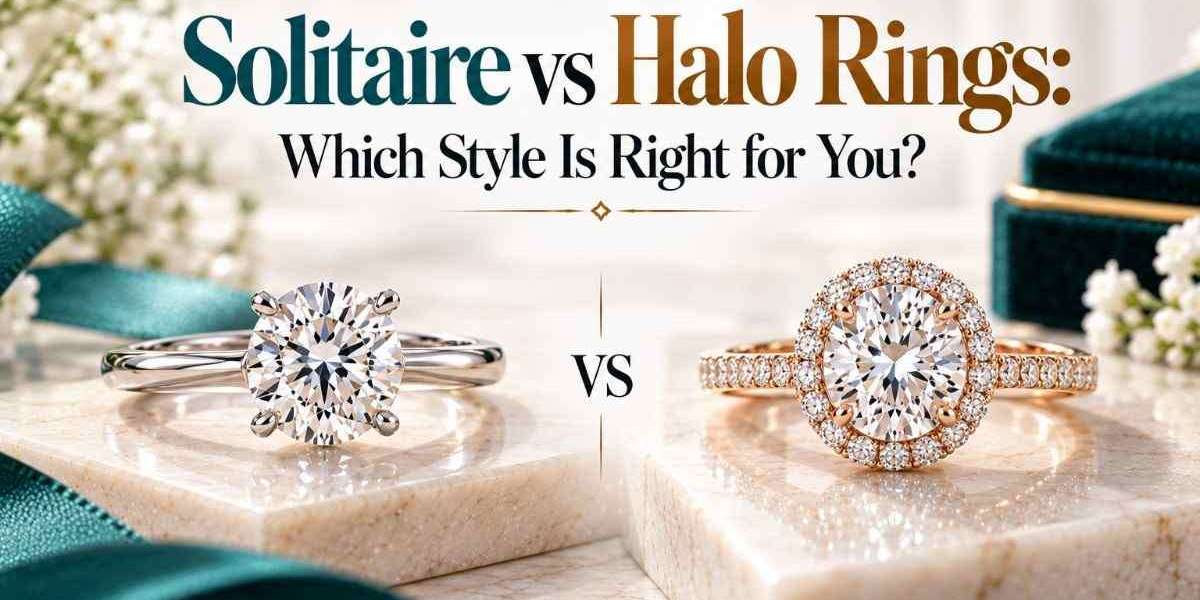
Comparison charts can tell you how solitaire and halo rings differ. They can't tell you which one you'll still love in ten years. That depends on how you live, what you reach for in your jewelry box, and what you want the ring to say when someone notices it. This guide skips the spec sheet and helps you work out your own answer through six honest questions.
How to Use This Guide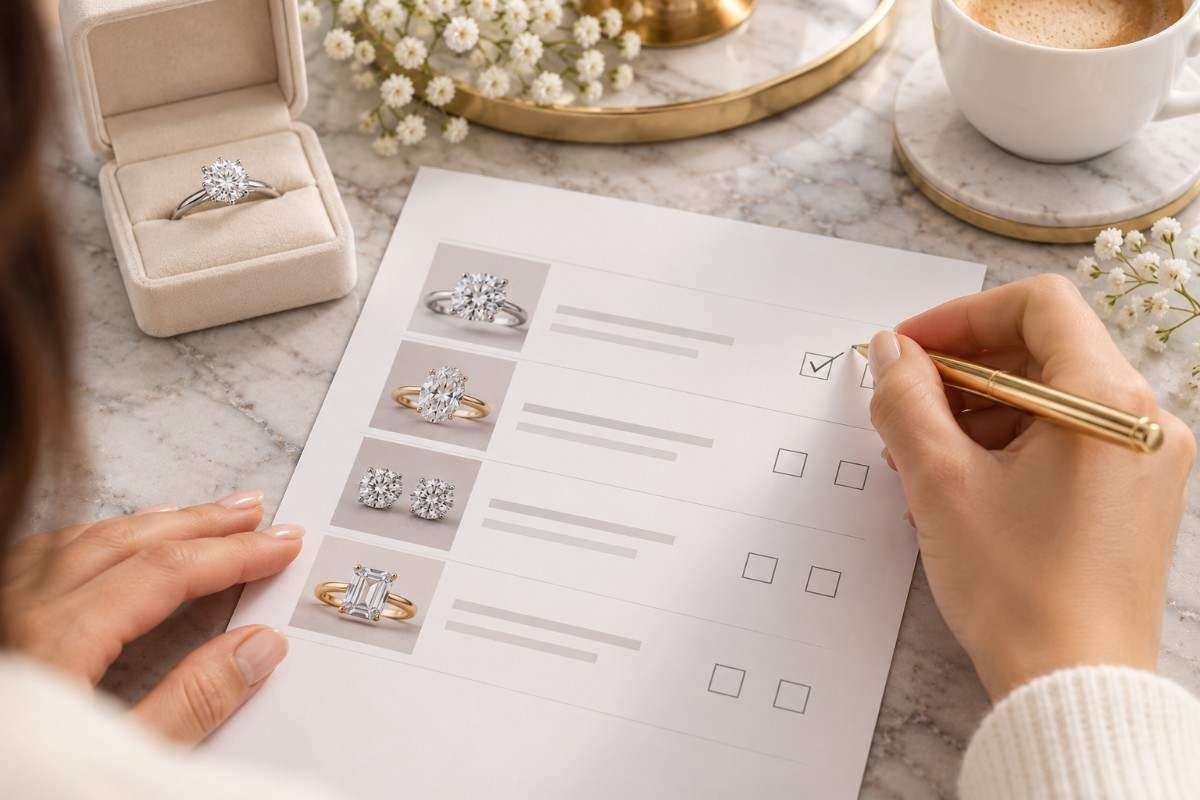
Read each question and note which answer feels most like you, not which one sounds most sensible. Tally your answers at the end. Most people land clearly on one side. If you end up split, there's a section below for that too.
Question 1: How Would You Describe Your Everyday Style?
- Clean and simple. I prefer fewer pieces, and I like things that go with everything. B. Polished, with a little extra. I like details that catch the light. C. Bold and expressive. I enjoy pieces people comment on.
Mostly A points to a solitaire. C points to a halo. B could go either way, so keep reading.
Question 2: What Do You Want People to Notice First?
- The diamond itself, its shape and sparkle. B. The overall effect, a ring that looks bright and substantial. C. I'm not sure I want people to notice it at all. It's personal.
A leans solitaire. B leans halo. C often suits a solitaire, or a hidden halo, which keeps the extra sparkle subtle.
Question 3: How Do You Feel About Upkeep?
- I want something easy. A quick rinse now and then is my limit. B. I don't mind a regular cleaning habit if the result is worth it. C. I'm happy to care for a piece properly, including regular check-ups.
A favors a solitaire, which has fewer prongs and surfaces to clean. B and C are comfortable with a halo, which typically benefits from cleaning every week or two.
Question 4: How Does Your Budget Break Down?
- I'd rather put as much as possible into the center diamond's quality. B. I want the most visual impact I can get for my budget. C. I have flexibility, and I want to balance both.
A points to a solitaire, where nearly the whole budget goes into the stone. B points to a halo, since the surrounding stones add visual size without requiring a larger center diamond. C can go either way.
Question 5: How Active Is Your Daily Life?
- Very hands-on. I work with my hands, exercise often, or just don't baby my jewelry. B. Moderately active, with the usual mix of daily tasks. C. Mostly low-impact. My hands rarely take much of a beating.
A favors a solitaire in a secure, lower-profile setting. B and C can wear either comfortably.
Question 6: What Matters Most When You Imagine Wearing It in Ten Years?
- That it still feels timeless and understated. B. That it still feels special and eye-catching. C. That it still feels like me, whatever that looks like by then.
A leans solitaire. B leans halo. C is a reminder that personal fit matters more than any category.
Your Results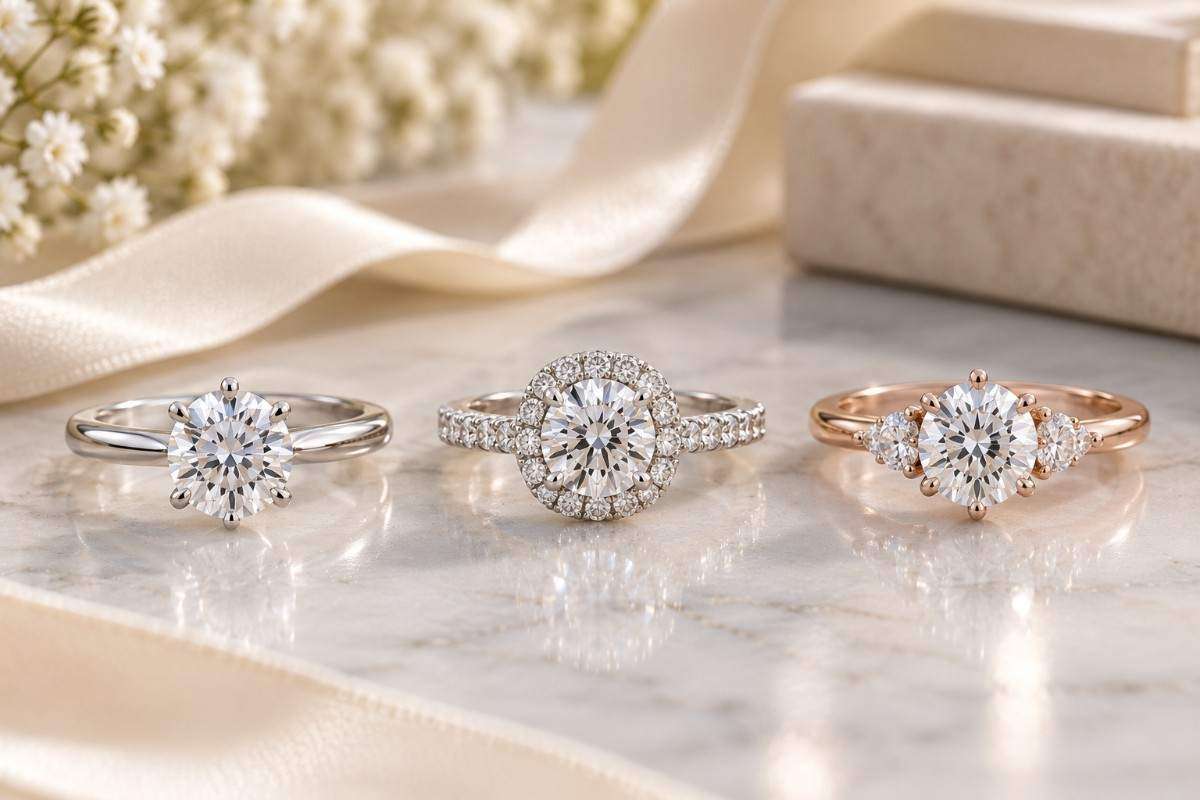
Mostly A answers: you're a solitaire person. You value simplicity, easy care, and showcasing the diamond honestly. Prioritize cut quality above everything else, since a solitaire has no surrounding stones to compensate for a less brilliant cut, and choose a setting that suits your daily activity.
Mostly B answers: you're a halo person. You want visual impact, extra brilliance, and a fuller look for your budget. Think about whether you want a traditional halo, where the accent stones are obvious, or a smaller, more refined version, and plan for slightly more frequent cleaning.
Mostly C answers or a mix: you're in the middle. Plenty of people are. That's not indecision. It usually means you value both simplicity and a touch of extra sparkle, and there are options built for exactly that.
If You Landed in the Middle
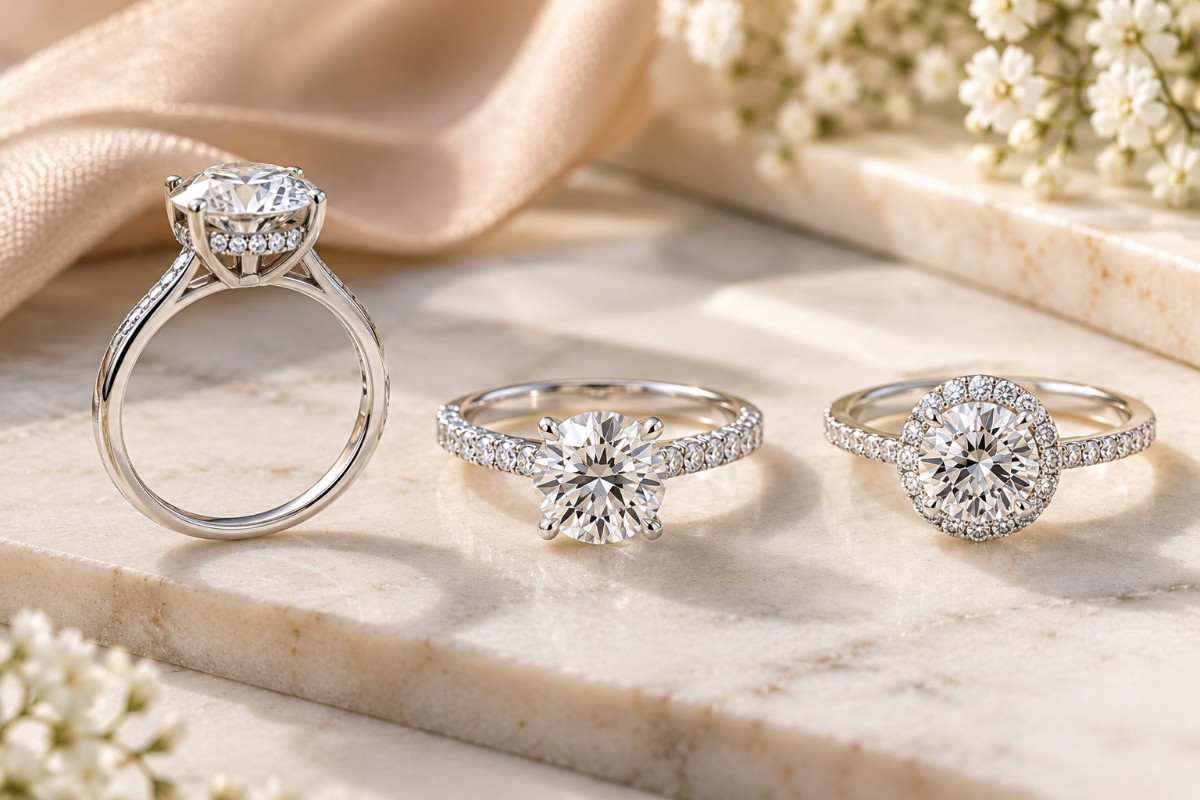
A few designs sit comfortably between the two styles.
A hidden halo tucks accent stones beneath the center diamond, so the ring reads as a clean solitaire from the front while still carrying extra brilliance from the side. It offers a personal detail without an obvious design statement.
A solitaire with a pavé band keeps the center stone uncluttered while adding sparkle along the band, giving you extra brilliance without surrounding the main diamond.
A smaller, refined halo uses delicate accent stones that add brightness without the dramatic, ring-of-sparkle effect of a larger traditional halo.
If you're drawn to the simplicity of a solitaire but want to see how it looks in practice, you can browse Buy solitaire rings and compare how different shapes and settings feel to you.
A Few Honest Reality Checks
Trends shouldn't decide this. Both styles have stayed popular for years, so you're not choosing between a classic and a fad. You're choosing between two well-established looks.
Seeing both helps more than reading about both. If you can, look at a solitaire and a halo using the same center stone size. The difference in presence is easier to feel than to describe.
Your hand matters. The same ring can look quite different on different fingers, so trying on or viewing on-hand photos is worth the effort.
Making the Final Call
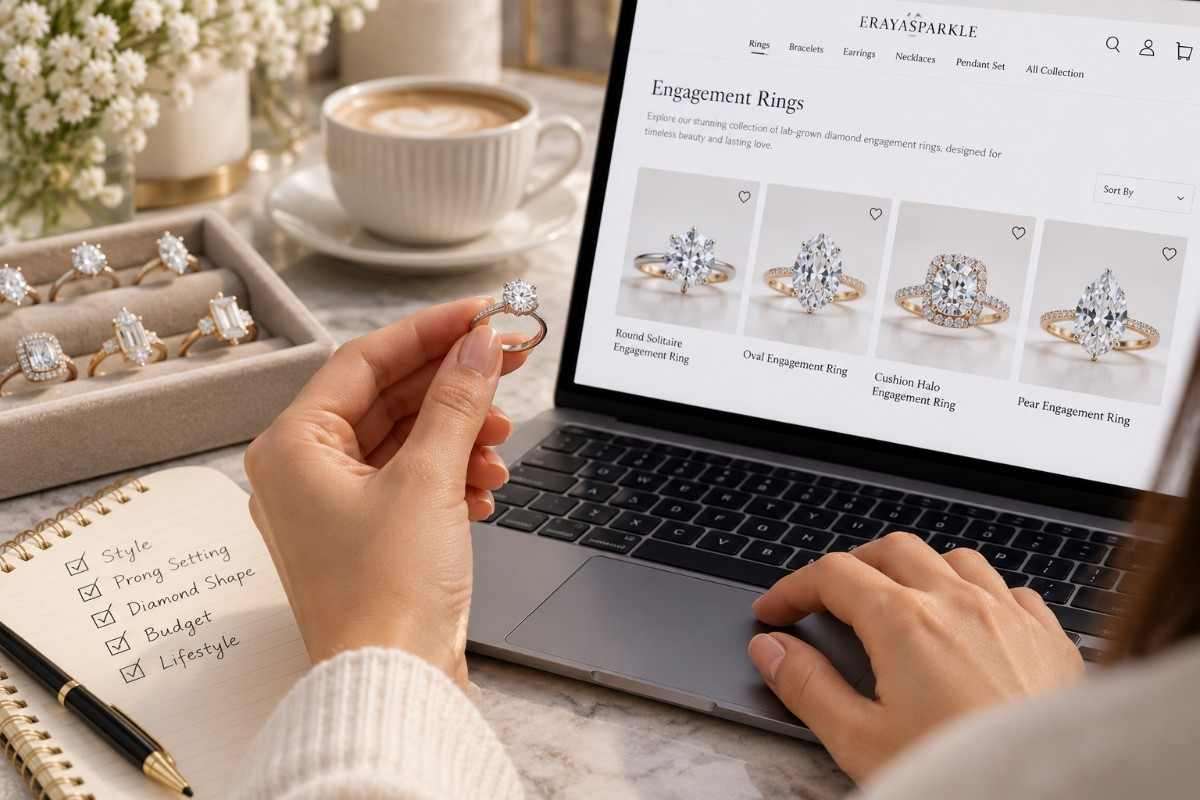
Once your answers point in a direction, test the decision. Look at a few real rings in that style and ask whether you'd be happy seeing it on your hand every day. If the answer is a quick yes, you've found your style. If you hesitate, revisit the questions where your answers were mixed, since that's usually where your real priority hides.
When you're ready to compare actual options, you can Buy engagement ring online with a much clearer idea of what you're looking for. Check the return and resizing policy first, since this is a decision that benefits from seeing the real piece.
Frequently Asked Questions
1. How do I know whether a solitaire or a halo suits me better?
Ans. Consider your everyday style, how much upkeep you're comfortable with, and whether you'd rather spend your budget on the center stone or on overall visual impact. Solitaires suit simplicity and diamond-focused budgets, halos suit buyers who want more visual presence.
2. Is a halo ring harder to take care of than a solitaire?
Ans. Slightly. A halo has more accent stones and prongs, which collect buildup faster and benefit from more frequent cleaning, usually every week or two, while a solitaire typically needs less frequent attention.
3. Which style looks bigger?
Ans. A halo usually looks bigger than a solitaire with the same center diamond, because the surrounding accent stones add visual size, while a solitaire shows the center stone's true size.
4.What if I can't decide between the two?
Ans. Consider a hybrid such as a hidden halo, which looks like a solitaire from the front but carries extra brilliance from the side, or a solitaire with a pavé band for sparkle along the band.
5.Will either style go out of fashion?
Ans. Both have remained popular for many years, and solitaires are generally seen as especially timeless. Choosing the one that genuinely fits your taste matters more than predicting trends.
The Bottom Line
The right choice between a solitaire and a halo isn't about which is objectively better. It's about which one matches how you live and what you want your ring to feel like every day. Answer the six questions honestly, notice where your answers cluster, and test the result against real rings. If you land in the middle, a hidden halo or a pavé-band solitaire may give you the best of both.