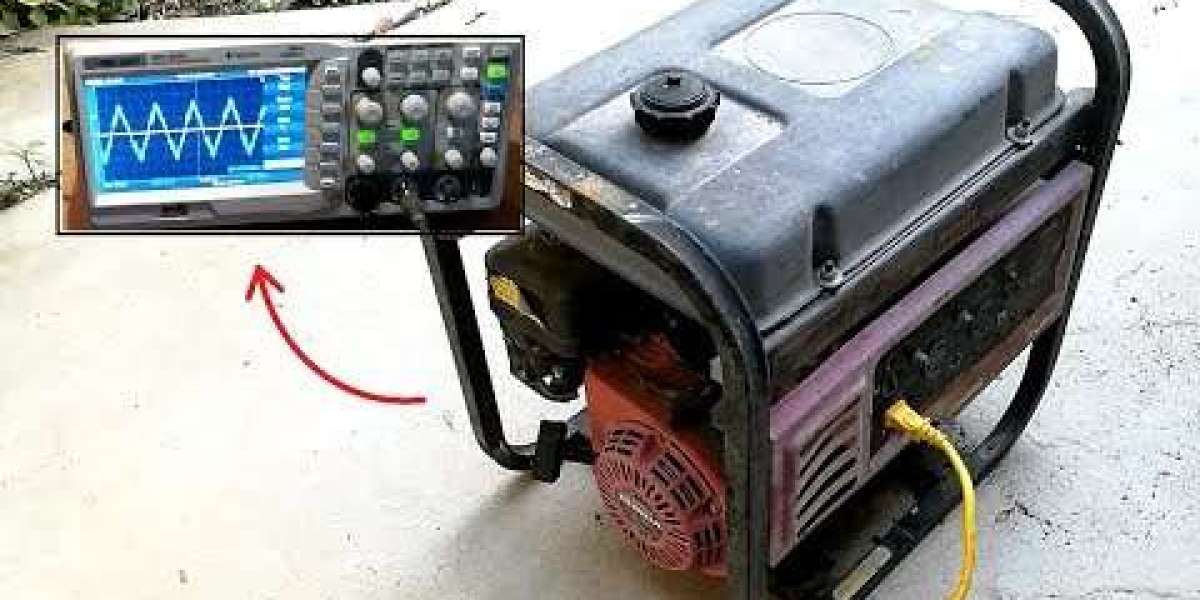
Back in the day, backup power was simple. You just needed to keep the lights on and the motors turning. If the voltage flickered, the bulbs dimmed for a second and the heavy gear didn't even notice. But in 2026, the stuff we run on-site—server racks, diagnostic tools, and PLC systems—is a lot more "picky." Modern electronics are packed with microscopic parts that can be toasted by a split-second surge or scrambled by a minor sag in the frequency. To see the kind of high-spec engineering needed to produce "clean" power that won't kill your gear, checking out the builds at garpen.com.au is a good move. They focus on the heavy-duty "grunt" and the advanced regulation systems that keep the power steady when things get messy.
When you’re running high-value electronics, "power" isn't enough. You need stable power. Here’s what’s actually happening behind the scenes.
1. The "Dirty Power" Problem: Sags and Spikes
Most people think a power failure is just a total blackout. But for a circuit board, a "brownout" or a voltage spike is way more dangerous.
- Voltage Sags: This happens when a massive motor (like a big pump or an AC unit) kicks in. It sucks a huge amount of current, causing the voltage to "sag" for everyone else. For a computer, that usually means an instant reboot and corrupted files.
- Voltage Spikes: This is the opposite. It’s a sudden jump in voltage that "fries" microchips. They are built for a tiny window of tolerance; push it 10% too high and the board is toast.
- Harmonic Distortion: Think of this as "static" in the electricity. A heater doesn't care, but a medical device or a high-end sensor will glitch out if that electrical wave isn't smooth.
2. The Brain of the Machine: Digital AVRs
The first line of defense is the AVR (Automatic Voltage Regulator). In cheap units, these are slow, mechanical parts. They can't keep up with modern demands.
- Digital Regulation: You want a Digital AVR. It checks the output thousands of times every second. If it sees a drop because a saw started up, it instantly tweaks the alternator to keep the voltage flat.
- Tight Tolerances: You’re looking for a machine that stays within 1% of its target. If your generator is swinging 5% or 10% every time the load shifts, you’re basically "beating up" your sensitive gear.
3. Why Frequency Matters (The 50Hz Standard)
Voltage is only half the battle. In Australia, our gear expects the power to pulse exactly 50 times a second (50Hz).
- The Engine Speed Link: In most industrial sets, frequency is tied to engine speed. If the engine "bogs down" under a heavy load, the frequency drops.
- The Glitch: A lot of electronics use that 50Hz pulse as a clock. If it drifts, your sensors give false readings and some UPS systems will refuse to even "take" the power because they think it's too poor to be safe.
4. Industrial "Inertia" vs. Cheap Alternatives
You’ve seen those little plastic inverter generators for camping. They’re clean, but they have zero "grunt" for a real site.
- The Heavy-Duty Advantage: For a business, you need a diesel unit with a high-quality alternator and a solid governor. A big diesel engine has "spinning mass"—inertia. It doesn't slow down easily when a small load hits, which keeps your frequency rock-steady.
5. Don't Forget the UPS (Uninterruptible Power Supply)
If you’re running a server room, the generator shouldn't be your only layer.
- Double-Conversion UPS: These units take the generator power, turn it into battery power (DC), and then "re-create" a perfect wave from scratch.
- The Buffer: A generator takes a few seconds to fire. The UPS covers those 10 seconds, but it also acts as a filter that scrubs any minor wobbles once the generator is running.
6. Wiring and the "Silent" Killers
You can have the best generator on earth, but if your site wiring is rubbish, your stability will be too.
- Grounding: Sensitive gear hates "stray voltage" on the ground line. If the earthing isn't right, you’ll get "ghost errors" on your equipment that are a nightmare to track down.
- Cable Gauge: If you run a high-end laser cutter off a long, thin extension cord, the "voltage drop" over that distance will make the machine underperform or just fail to start.
7. Testing Under Real Stress
A generator might look fine when it’s just running a few lights. The real test is when it’s at 80% capacity.
- Load Banking: Once a year, get a tech to hook up a load bank. It forces the machine to work at full tilt while a computer tracks the voltage and frequency. It proves the AVR can handle the "grunt" without letting the power wobble.
Summary
Powering a modern business isn't just about raw horsepower; it’s about precision. If you rely on computers, PLCs, or diagnostic gear, you can't treat your power like an afterthought. Focus on digital regulation and engine inertia. When the grid goes dark, you want a machine that doesn't even make your equipment "blink."