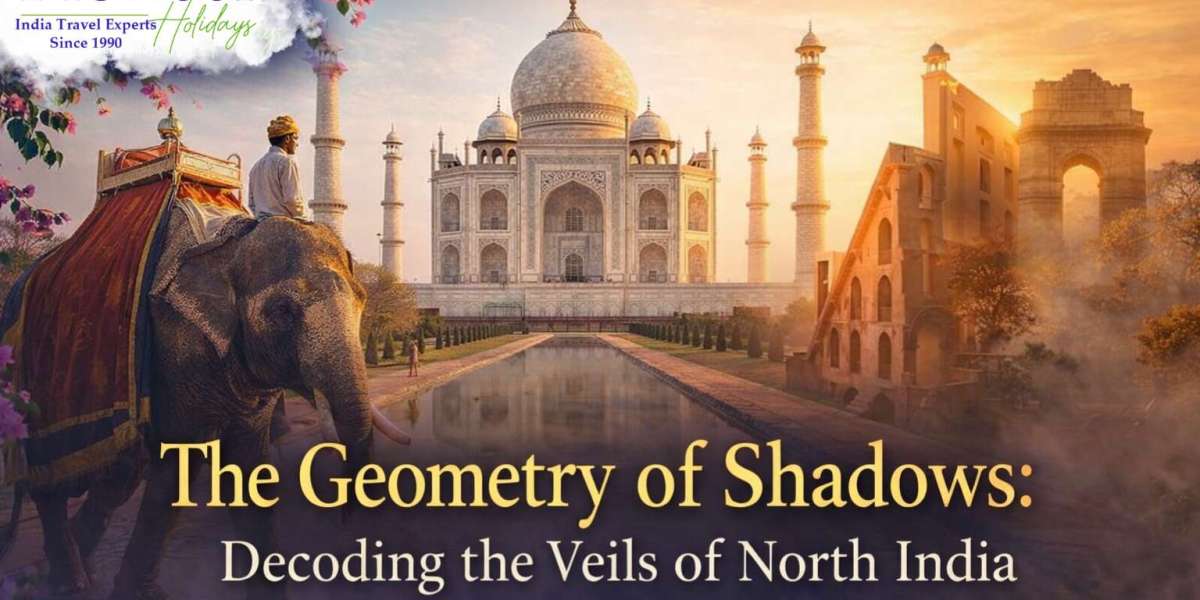
If you were to stand atop the rugged ramparts of an abandoned fortress at dawn, watching the dust motes dance in the first light of the subcontinental sun, you would realize that India is a riddle written in stone and spirit. It is a land where geography is merely a backdrop for the grand theater of human existence. The true essence of this region doesn't lie in the monuments themselves, but in the spaces between them—the silence of a jungle clearing, the vibration of a temple bell, and the steam rising from a clay cup of tea on a cold Delhi morning.
To traverse this landscape is to engage in a dialogue with time. We don't just move from city to city; we move through layers of consciousness. From the calculated precision of Mughal architects to the raw, unscripted laws of the wilderness, and finally to the threshold of the eternal, this journey is a triptych of the human experience.
The First Layer: The Triangle of Triumphs
The starting point of this odyssey is a geometric phenomenon. Delhi, Agra, and Jaipur form a circuit that has become the world’s window into India. But to see them through a fresh lens, one must look past the postcards.
Delhi: The Urban Palimpsest
Delhi is often criticized for its chaos, but that chaos is its lifeblood. It is a city of seven ancient capitals, each built over the ruins of the last.
The Sufi Resonance: While most head to the Red Fort, the real magic of Delhi is found in the narrow alleys of Nizamuddin Basti. On Thursday evenings, the air here becomes electric with Qawwali. It’s a place where the 13th-century poet Amir Khusrau still feels alive through the voices of modern singers.
The Architectural Whisper: Humayun’s Tomb is not just a precursor to the Taj; it is a garden of paradise on earth. The Persian four-garden layout (Charbagh) is a physical representation of the afterlife, designed to bring peace to the bustling city that surrounds it.
Agra: The Alchemy of White Marble
Agra is a city that lives for the sunrise. The Taj Mahal is a chameleon; it absorbs the colors of the sky. In the blue hour before dawn, it looks like a ghostly apparition, only to turn into a glowing ember as the sun climbs higher.
The Overlooked Masterpiece: Across the river, the Mehtab Bagh offers a perspective of the Taj that most miss. Here, the monument is reflected in the Yamuna, away from the crowds, allowing for a moment of quiet reflection on the emperor’s grief and his genius.
Jaipur: The Grid of the Maharajas
Jaipur was a revolution in 1727. While Europe was still struggling with medieval city planning, Sawai Jai Singh II was using astronomical principles to lay out his "Pink City."
The Cosmic Clock: The Jantar Mantar is not just a collection of stone structures; it is a giant, functioning scientific laboratory. The Samrat Yantra can tell the time to within two seconds, a feat of 18th-century precision that humbles our modern digital age.
The Second Layer: The Untamed Borderlands
When the geometry of the city begins to feel too rigid, the soul craves the unpredictability of the wild. This is where the journey takes a sharp turn toward the Aravalli hills. This transition into the rugged heart of Rajasthan is what makes the golden triangle tour with ranthambore a masterclass in contrast.
Ranthambore: Where Ruins Breathe
Ranthambore is not just a national park; it is a living painting of "History Reclaimed." Nowhere else on earth does a predator like the Bengal Tiger use a 10th-century fort as its hunting ground.
The Predator’s Path: In the dry, deciduous forest of Ranthambore, the tiger is a shadow. Tracking it is an exercise in mindfulness. You learn to listen to the "jungle telegraph"—the frantic bark of a Chital deer or the sharp whistle of a Langur. When the tiger finally emerges, it doesn't just walk; it flows through the grass.
The Fortified Wilderness: The Ranthambore Fort sits like a crown atop the hills. From its heights, you can see the entire park spread out—the lakes like shimmering jewels and the forest a sea of dhok trees.
A golden triangle tour with ranthambore offers a rare psychological shift. You go from the hyper-social environment of Jaipur’s markets to the primal silence of the jungle, reminding you that man is only a guest in the natural world.
The Third Layer: The Threshold of Eternity
The final transition is the most profound. From the physical thrill of the jungle, we move toward the metaphysical depth of the river. This is the moment where a golden triangle tour with varanasi transforms from a holiday into a pilgrimage.
Varanasi: The City Outside Time
Varanasi (Kashi) is the city that never sleeps because it doesn't believe in time. To the residents of this ancient settlement, the past, present, and future are all happening at once on the banks of the Ganges.
The Ritual of Fire: As dusk falls, the Dashashwamedh Ghat transforms. The Ganga Aarti is a choreographed symphony of light and sound. The synchronized movements of the priests with massive brass lamps are not a show; they are an offering. The vibration of the conch shells and the rhythmic chants create a physical pressure in the air.
The Morning of the Soul: To take a boat on the Ganges at 5:00 AM is to witness the birth of a civilization every single day. You see life in its rawest form—people praying, washing, laughing, and mourning—all within a few yards of each other.
The Silence of Sarnath: Just a few miles from the intensity of the ghats lies the tranquil ruins of Sarnath. Standing before the Dhamek Stupa, where Buddha gave his first sermon, provides the necessary silence to process the sensory explosion of the city.
Choosing a golden triangle tour with varanasi is an act of courage. It is an encounter with the cycle of life and death that few other places on earth can facilitate so beautifully.
The Sensory Map: Flavors of the Odyssey
A journey of this scale is incomplete without a culinary deep-dive. Every region on this map has a signature that lingers on the palate long after the trip ends.
In Delhi: The "Daulat ki Chaat" is a winter miracle—frothy, light as air, and topped with saffron. It’s a dessert that disappears on the tongue before you can even describe it.
In Agra: Seek out the "Bedai" with spicy potato curry, a breakfast that has fueled this city for generations.
In Jaipur: The "Gatte ki Sabzi" (gram flour dumplings in yogurt gravy) represents the resourcefulness of the desert people.
In Ranthambore: Try the "Ker Sangri," a dish made from dried desert beans and berries, bursting with tanginess.
In Varanasi: The "Malaiyo" in winter and the "Banarasi Paan" as a digestive ritual are non-negotiable experiences.
Designing the Journey: Practical Wisdom for 2026
Traveling through North India requires a strategy that balances comfort with authenticity.
The Logistics of Light: Between Delhi, Agra, and Jaipur, the best way to travel is by private vehicle or the high-speed Vande Bharat trains. For the extensions, flights are the most time-efficient way to connect Rajasthan to Varanasi.
The Cultural Code: India is a country of nuances. While photography is welcomed almost everywhere, it is vital to ask for permission before clicking pictures of people, especially in the sensitive cremation ghats of Varanasi.
Sustainability: In 2026, responsible travel is at the forefront. Opt for stays in heritage homestays or eco-resorts that support local communities and conservation efforts in Ranthambore.
Frequently Asked Questions (FAQs)
1. Is it possible to see a tiger in a single safari? Wildlife is unpredictable. While Ranthambore has a high tiger density, we recommend at least 3 to 4 safari drives across different zones to maximize your chances of a sighting.
2. Is Varanasi too intense for children? It can be, but it's also a great educational experience. We suggest focusing on the boat rides and the Sarnath ruins, which are more spacious and calm, while keeping the walks through the narrow inner alleys brief.
3. What is the best season for this specific itinerary? The window between October and March is the "Golden Period." The weather is pleasant for walking in the cities, and the national park is open for safaris.
4. How do I manage the diet while traveling? Always drink bottled or purified water. Stick to freshly cooked, hot food. Most luxury and heritage hotels offer a mix of Continental and Indian cuisines to suit every palate.
5. Do I need a guide for every city? While you can explore on your own, having a knowledgeable guide in places like Old Delhi, the Ranthambore Fort, and the Varanasi Ghats adds immense value. They don't just show you sights; they tell you stories that aren't in the history books.
Conclusion: The Horizon Calls
The beauty of North India is that it never reveals itself fully on the first visit. It is a relationship that grows with every mile you cover. Whether you find yourself lost in the mirrored halls of a Rajasthani palace, staring into the amber eyes of a tiger, or floating on the sacred Ganges at dawn, you are participating in a story that is much older than yourself.
The transition from the royal to the wild, and finally to the spiritual, is the most complete way to see this land. It is a journey that moves from the outside in—from the grandeur of empires to the quietude of the soul.
To embark on your own chapter of this grand story and explore India with the precision and passion it deserves, visit us PioneerHolidays.