In food and beverage production, the operator terminal is part of the hygienic environment. It stands next to filling machines, mixers, cutting lines and packaging systems, it is touched with gloved hands many times per shift, and it is cleaned together with the line, often daily, with water, foam and cleaning agents.
A standard industrial panel PC is rarely made for this. Painted or aluminium housings, open gaps, visible screws, ventilation openings and unsealed connectors become places where moisture and residues collect. Every cleaning cycle is a risk for the electronics, and every gap is a risk for hygiene.
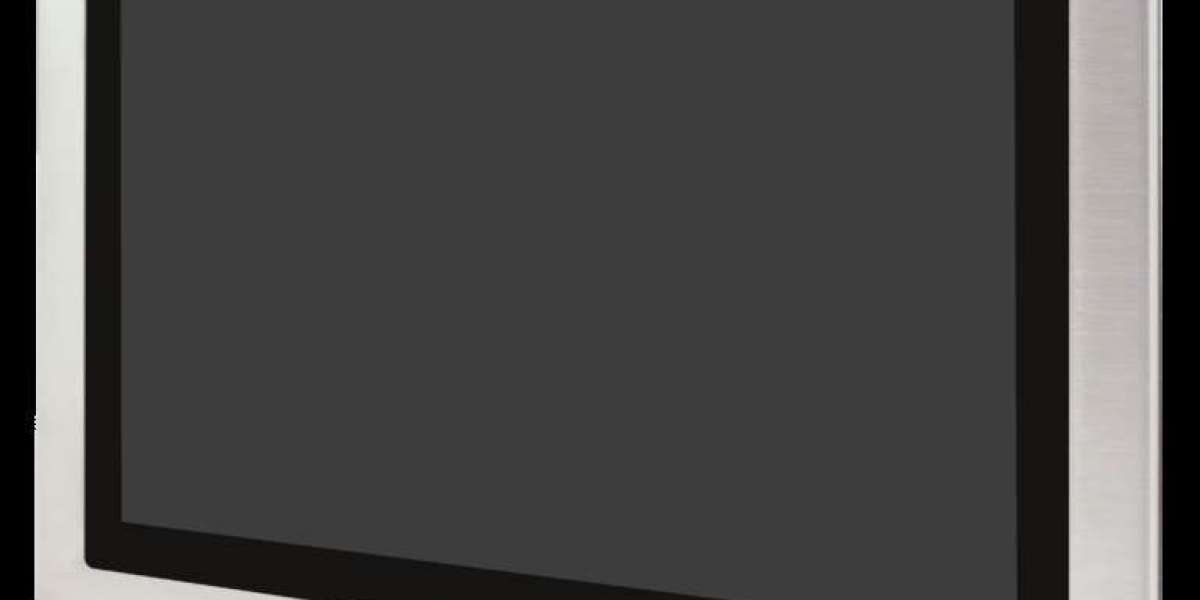
A hygienic stainless steel panel PC is designed for exactly this environment: a sealed stainless steel housing, a smooth, easy-to-clean front and protection against high-pressure cleaning. This article explains the requirements in food and beverage production, the design features that make a panel PC hygienic, typical applications and what to check before you buy.
What food and beverage production demands
Hygiene zones
Hygiene standards for food machinery distinguish between areas with different requirements: the food area, where surfaces touch the product; the splash area, where product or cleaning liquid can reach surfaces and run back; and the non-food area. An operator panel at the machine is usually in the splash area or close to it. It does not touch food, but it must not become a source of contamination and must withstand the same cleaning as the surrounding equipment.
Cleaning
Daily wet cleaning is standard in many food and beverage plants: rinsing with water, foam cleaning with alkaline or acidic agents, disinfection and, depending on the area, high-pressure or hot-water cleaning. Every device in the area must survive this routine without water entering and without residues collecting in gaps.
Standards and guidelines
Several frameworks shape hygienic equipment design in Europe:
- Machinery Directive 2006/42/EC: materials in contact with food must be cleanable before each use.
- EN 1672-2: hygiene requirements for food processing machinery.
- EN ISO 14159: hygiene requirements for the design of machinery.
- EHEDG guidelines: practical design guidelines from the European Hygienic Engineering & Design Group.
- On the process side: HACCP and food safety management systems such as ISO 22000, which require risks from equipment to be assessed and controlled.
For a panel PC, this means: the device should be designed for easy, complete cleaning, should not create hiding places for residues and must withstand the cleaning process used in your plant.
What makes a panel PC hygienic
Design feature | Why it matters in food production |
Fully enclosed stainless steel housing | Withstands moisture and cleaning agents on all sides, not only at the front |
IP69K protection | Withstands high-pressure, high-temperature cleaning (tested with 80 °C water at 80–100 bar) |
Smooth, closed front glass | No gaps or edges at the display, easy to wipe and disinfect |
Projected capacitive touch | Touch sensor sits behind the glass, so the front stays closed |
No ventilation openings, fanless design | No openings for water or dust, no air flow that spreads particles |
Few, sealed cable entries | Connectors are typical weak points for water ingress |
Suitable stainless steel grade | AISI 316 offers more resistance to chlorides and salty media than AISI 304 |
Hygienic mounting | Stands or arms without hard-to-clean gaps, ideally with sloped surfaces so water runs off |
Two points deserve special attention:
- IP ratings are tested with water. Compatibility with your foam and disinfectant cleaners must be confirmed separately with the manufacturer.
- "Hygienic" is not a protected term. If certified hygienic design is required for your area, ask for the specific certificate or test report, for example under EHEDG guidelines.
Typical applications along the production line
- Machine operation: operating and monitoring filling machines, mixers, cookers, cutting and slicing lines directly at the machine.
- Dairy processing: operator stations in areas with frequent wet cleaning and humidity.
- Meat and poultry processing: terminals in cold, wet rooms with intensive cleaning and salty media.
- Beverage production: operating points at filling and bottling lines, often with high humidity.
- Packaging lines: HMI and production data entry at packaging machines that are cleaned wet.
- MES and traceability: recording batch data, quality checks and production orders directly at the line.
- Recipe and order management: displaying recipes, work instructions and checklists for operators.
Choosing the screen size: a compact 10" panel is enough for machine operation with a few screens. For MES, traceability, detailed visualisation or work instructions, an 18.5" Full HD display shows much more information at once and is easier to read from a distance.
Buying checklist for food and beverage plants
- Cleaning process: Which cleaning method, pressure, temperature and agents are used in the area? Ask the supplier to confirm compatibility.
- Protection class for the complete housing: IP69K for high-pressure cleaning, plus IP66 or IP67 for water jets or immersion.
- Stainless steel grade: AISI 304 or AISI 316, depending on salt and chloride exposure.
- Front design: closed glass front, no protruding edges or exposed gaps around the display.
- Touch operation: test with the gloves your operators wear and with wet hands.
- Screen size: 10" for compact machine operation, 18.5" for MES, traceability and detailed visualisation.
- Interfaces: Ethernet, USB and serial ports for scanners, printers, scales and controllers, with sealed cable entries.
- Power supply: DC input range that fits your machine or cabinet.
- Operating temperature: check against cold rooms and warm areas near ovens or cookers.
- Software and lifecycle: operating system edition, support period and spare-part availability.
- Documentation: datasheet, IP test confirmation, declaration of conformity and, if required, hygienic design certificates.
Two sizes for food and beverage production: Pericom ST198 and ST108
Pericom offers fully enclosed stainless steel panel PCs in two sizes, both with PCAP touch, an Intel Celeron J6412 processor and IP69K protection:
Feature | ||
Display | 18.5" TFT, 1920 × 1080 (Full HD) | 10.1" TFT, 1280 × 800 |
Touch | Projected capacitive | Projected capacitive |
Processor | Intel Celeron J6412 | Intel Celeron J6412 |
Memory | 32 GB RAM | Up to 32 GB RAM |
Protection class | IP66 / IP69K | IP67 / IP69K |
Housing | Stainless steel (SUS304/316), fully enclosed | Stainless steel (SUS304/316), fully enclosed |
Interfaces | 2 × Gigabit LAN, 4 × USB, 4 × COM, HDMI, line-out | Gigabit LAN, 2 × USB, 1 × COM |
Power supply | 12–28 V DC | 9–36 V DC |
Operating system | Windows 10 IoT | Windows 10 IoT |
ST198 is designed for hygiene-critical environments such as food and beverage, dairy and meat processing and packaging lines with wet cleaning. Its large Full HD display and the four serial ports make it a strong fit for MES, traceability and connecting scanners, scales and printers.
ST108 is the compact option for operating points directly at the machine, where space is limited and a 10" screen is sufficient.
For operating temperature, mounting options and compatibility with your cleaning agents, request the datasheet or speak to the Pericom team.
Frequently asked questions
What makes a stainless steel panel PC hygienic?
A fully enclosed stainless steel housing, a closed and smooth front, no ventilation openings, sealed cable entries and protection against high-pressure cleaning. Together, these features prevent residues from collecting and allow the device to be cleaned with the line.
Is IP69K required in the food industry?
Not by law in every case, but it is the right rating for areas cleaned with high-pressure or hot water. In dry areas, a lower rating can be sufficient.
AISI 304 or AISI 316 for food production?
AISI 304 is suitable for many food applications. AISI 316 contains molybdenum and is more resistant to chlorides, which makes it a better choice for salty products, brine and chloride-containing cleaning agents.
Can I use foam cleaners and disinfectants on a stainless steel panel PC?
Usually yes, but IP ratings only cover water. Ask the manufacturer to confirm compatibility with your specific cleaning agents, and rinse aggressive agents such as hypochlorites thoroughly.
Does a panel PC in the food industry need EHEDG certification?
It depends on your area and your internal requirements. Panel PCs are usually installed outside the food contact area, but many plants still prefer hygienic design. If certification is required, ask the supplier for the specific certificate.
Which screen size should I choose?
10" for compact machine operation, 18.5" Full HD for MES, traceability, recipes and detailed visualisation.
Read More: https://tecsysproductguides.blogspot.com/2026/10/hygienic-stainless-steel-panel-pc-for.html