The UAE is positioning itself as a regional hub for cloud, artificial intelligence, and digital government, and that ambition rests on buildings full of servers that must never fail or be compromised. Traditional Data Center Security relied on guards, fences, and fixed rules written years ago. Today's threats move faster than any human team can watch, which is why operators are turning to artificial intelligence to see patterns, spot anomalies, and respond in seconds.
Tektronix designs and installs security systems for critical facilities across the UAE, and its data center perimeter security solutions combine physical protection with intelligent monitoring. This article explains where AI adds real value, which layers every facility still needs, and what operators in Dubai and Abu Dhabi should expect from a supplier.
Why Rule Based Security Is No Longer Enough
A fixed rule can only catch what its author anticipated. A motion sensor triggers on any movement, so wind blown dust or a passing animal creates a false alarm, while a patient intruder who moves slowly may never cross the threshold. A fixed login rule blocks a known bad address but misses a stolen credential used at a strange hour from a new device. AI systems learn what normal looks like for a particular facility, then highlight what does not fit, which reduces both missed events and nuisance alarms.
Cybersecurity for Data Center Operations in the Age of AI
Cybersecurity for Data Center environments now depends on analytics that process enormous volumes of logs, network flows, and device signals. Machine learning models can establish a baseline for each system and flag deviations, such as a server contacting an unfamiliar address or an administrator account behaving differently from its history. These tools do not replace skilled analysts, but they help small teams focus on the few events that truly matter among millions of routine ones.
Data Center Encryption for Data at Rest and in Transit
Data Center Encryption protects information stored on disks and backups as well as traffic moving between servers, sites, and customers. Even if equipment is stolen or a network link is intercepted, properly encrypted data stays unreadable. The most common weakness is key management, so operators should keep keys separate from the data, rotate them on a schedule, and maintain records of every access to them. AI can assist by noticing unusual key usage patterns.
Data Center Firewalls and Intelligent Segmentation
Data Center Firewalls control which traffic can enter, leave, or cross between zones. Modern designs divide the network into small segments so that a breach in one tenant area cannot spread, and they inspect traffic for attack signatures instead of only opening and closing ports. Analytics can suggest rule clean ups by showing which permissions are never used, helping teams remove the old exceptions that quietly widen exposure over time.
Data Center Access Control from the Gate to the Rack
Data Center Access Control decides who may enter the site, which hall they can reach, and which cabinet they may open. Strong designs use layered verification, such as a card and a face match at the entrance, a mantrap that admits one person at a time, and locked cabinets for each tenant. Every event is logged, and analytics can flag a credential used at an unusual time, in two places at once, or after repeated failures that suggest probing.
Data Center Surveillance with Video Analytics
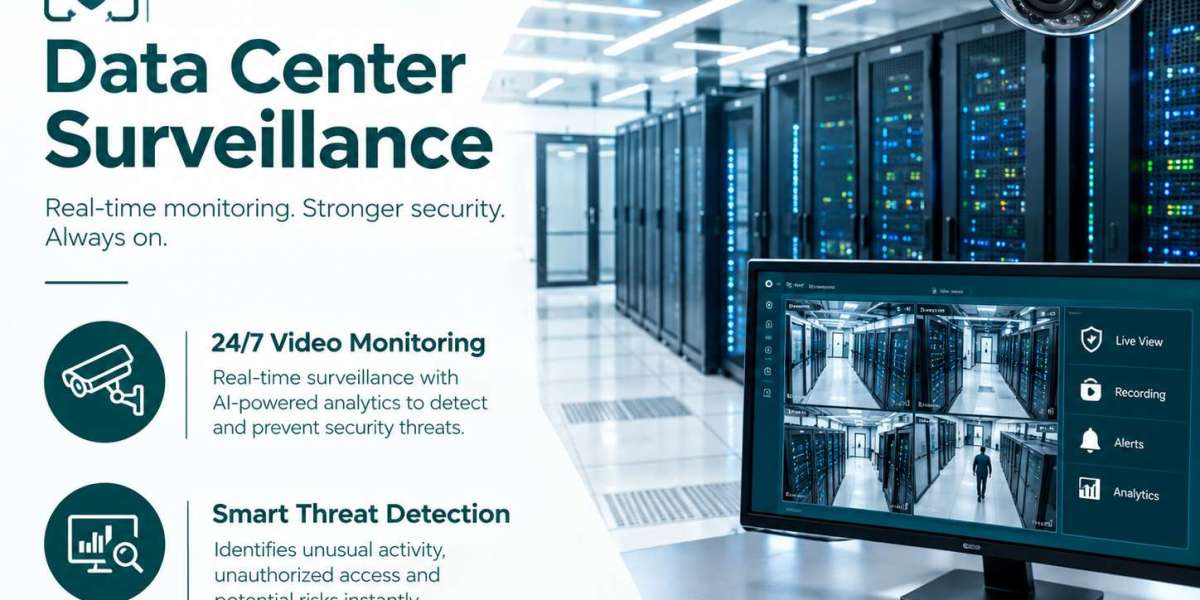
Data Center Surveillance covers the perimeter, car parks, loading bays, corridors, and server halls. Video analytics turn passive recording into active detection by recognizing people, vehicles, and behaviours, such as loitering near a fence, a vehicle stopping where it should not, or a door left open too long. Operators gain a smaller number of higher quality alerts, and recordings become easier to search when an investigation is needed.
Perimeter Protection and Early Warning
The earliest chance to stop a threat is at the boundary of the site. Layered perimeter protection combines fencing, vehicle barriers, lighting, thermal cameras that see through darkness and dust, and sensors that detect climbing or cutting. AI analysis reduces false triggers from sand, birds, and heat shimmer, which are common in the UAE, so that security staff react to real approaches rather than constant noise. A well-designed perimeter buys the time needed to verify and respond before anyone reaches the building.
Data Center Intrusion Detection on Both Fronts
Data Center Intrusion Detection works in two worlds. Physically, sensors on fences, doors, and windows raise alarms when someone attempts unauthorized entry. Digitally, monitoring tools watch for traffic patterns that suggest scanning, lateral movement, or data theft. The greatest benefit comes when both feeds reach one operations centre, because a door alarm and a suspicious login in the same hour tell a much clearer story than either signal alone.
Data Center Threat Detection and Correlation
Data Center Threat Detection looks for patterns across time and across systems. A badge used outside the usual schedule, a cabinet opened without a maintenance ticket, and an unusual burst of outbound data may each look harmless on their own. Correlated, they can reveal a developing attack. AI makes this correlation practical at scale, which allows facilities to catch problems at the reconnaissance stage rather than after an attacker has gained a foothold.
Data Center Security UAE: Standards and Expectations
Operators in the Emirates work within a growing framework of national and emirate level requirements for information security, personal data, and critical infrastructure. Data Center Security UAE programs therefore need documentation as well as technology, including evidence of physical controls, access logs, encryption practices, and incident response exercises. International customers hosting data locally frequently ask for this evidence during due diligence, and operators that prepare it early close contracts faster.
Data Center Security Abu Dhabi: Government and Hyperscale Growth
The capital is home to large government workloads and major technology partnerships. Data Center Security Abu Dhabi projects often involve campuses with multiple halls, strict segregation of tenants, and heightened scrutiny of who can reach sensitive systems. Scalability matters here, because capacity expands in phases and the security platform must grow with each new building without a costly redesign.
Data Center Security Dubai: Colocation and Connectivity
Dubai's strength as a connectivity and business hub has produced busy colocation facilities with many customers sharing one building. Data Center Security Dubai deployments therefore emphasise tenant separation, visitor and contractor control, and clear audit trails that each customer can review for its own space. Heat and humidity add environmental stress, so equipment must be rated for demanding conditions as well as for security performance.
Governing AI Responsibly Inside a Secure Facility
AI tools are only as trustworthy as the way they are managed. Operators should know what data each model uses, where it is processed, how often models are updated, and how alerts are reviewed by trained staff. Models trained on a different environment may produce poor results in local conditions, so tuning on site footage and logs is essential. Human oversight remains vital, because automated alerts must be judged in context before major actions are taken.
Integration, Resilience, and Planning for Growth
Security systems should be commissioned together with power, cooling, and fire protection so that conflicts are found before go live. Platforms that scale by adding doors, cameras, and users without replacing the core, and that accept remote updates, keep a facility secure as it expands. Maintenance agreements with fast response and local spare parts keep protection consistent across the life of the site.
Environmental Challenges Unique to the Emirates
Sand, dust, humidity, and extreme summer heat shape every design decision in a UAE facility. Outdoor cameras need sealed housings and wipers or coatings that cope with dust, sensors must tolerate temperature swings, and cooling systems run near their limits during peak months. Security equipment that fails in these conditions creates blind spots at exactly the wrong time, so specifications should state operating ranges and ingress protection ratings clearly, and suppliers should be able to show field experience in similar climates.
Preparing Staff and Procedures
Technology succeeds only when people know how to use it. Operators should train security and operations staff on alert handling, run regular exercises that combine physical and cyber scenarios, and review procedures after every real or simulated incident. Clear escalation paths, defined roles, and written playbooks for common events such as an unrecognized visitor or a door forced open allow teams to respond calmly and consistently instead of improvising under pressure.
Measuring Security Performance Over Time
Useful measures include the average time from alert to response, the share of alerts that prove genuine, the number of access exceptions granted each month, and the time taken to remove credentials after staff or contractors leave. Reviewing these figures regularly shows whether AI tuning is improving results and where procedures need attention. Operators that track performance can also demonstrate improvement to auditors and customers, which strengthens trust and supports renewals of hosting contracts.
Engineering Experience and Trust Behind Every Deployment
Tektronix has engineered and commissioned security infrastructure for critical facilities across the UAE for many years. An in-house engineering team handles site surveys, network integration, and system configuration rather than passing installation to a subcontractor unfamiliar with the platform, and regional support and spare parts help keep a failed component from leaving a sensitive area unprotected for long.
Technical documentation covering perimeter options, integration paths, and monitoring capabilities is available through the company's data center security page for the UAE, giving operators and compliance teams specific detail to review rather than a marketing summary alone.
Choosing the Right Security Partner for a UAE Facility
Selecting a supplier is as much about proven experience across physical and digital layers as about any single product. Operators should ask about past data center projects, how AI models are tuned and supervised, how physical and network events are correlated, and how quickly local engineers can respond. Organizations that want one accountable partner across the whole stack can review Tektronix's full range of perimeter and access security for data centers before finalizing a shortlist.
Conclusion
Modern Data Center Security combines physical protection with AI that learns what normal looks like and flags what is not. Cybersecurity for Data Center operations, Data Center Encryption, and Data Center Firewalls protect the information and the network around it. Reliable Data Center Access Control and analytic Data Center Surveillance show who entered and what happened onsite. Data Center Intrusion Detection and Data Center Threat Detection catch small anomalies before they become serious incidents. Operators planning Data Center Security UAE, Data Center Security Abu Dhabi, and Data Center Security Dubai projects should choose a partner like Tektronix with proven regional engineering.
FAQs
- Does AI replace security staff in a data center?
No, AI reduces noise and highlights the events that matter, but trained staff still review alerts in context and decide how to respond, so the technology supports people rather than replacing them.
- How does AI reduce false alarms at the perimeter?
Models learn to tell people and vehicles from wind blown sand, animals, and heat shimmer, so security teams receive fewer nuisance alerts and can react faster to genuine approaches.
- Can physical security events be linked with network alerts?
Yes, modern platforms correlate a door or camera event with network activity on the same rack, giving security teams one combined picture instead of separate systems.
- Is encryption still needed if the building is physically secure?
Yes, because encryption protects data if a drive, backup, or network link is ever compromised, so physical and digital controls support each other rather than replace each other.
- What should an operator check when auditing a security supplier?
A thorough review looks at past data center projects, evidence of access logs and recording retention, key management practices, results of testing across systems, and the speed of local support.