In today’s hyper-connected retail and commerce ecosystem, seamless order fulfillment across digital and physical touchpoints is no longer optional—it is mission-critical. QKS Group’s Omnichannel Order Management System (OMS) Market Research delivers a comprehensive analysis of the global OMS market, uncovering emerging technological advancements, evolving market trends, and the future outlook shaping next-generation commerce operations.
This research equips technology vendors with strategic intelligence to refine growth strategies and strengthen market positioning, while empowering enterprises to evaluate vendor capabilities, innovation benchmarks, and competitive differentiation in a rapidly evolving ecosystem.
What is an Omnichannel Order Management System (OMS)?
According to an Analyst at QKS Group:
“An Omnichannel Order Management System (OMS) is a comprehensive solution designed to streamline and manage the entire order fulfillment lifecycle—from order capture to allocation, orchestration, fulfillment, and post-purchase management. As vendors strive to deliver customer experiences across multiple sales channels, OMS solutions play a critical role in ensuring operational efficiency, inventory accuracy, and seamless order execution.”
An Omnichannel OMS acts as the digital backbone of modern retail and B2B commerce operations by unifying:
- Order capture across web, mobile, marketplaces, and stores
- Real-time inventory visibility
- Intelligent order routing and orchestration
- Distributed fulfillment management
- Returns and post-purchase experience optimization
Key Market Trends Shaping the Omnichannel OMS Landscape
QKS Group’s research highlights several transformative trends driving the OMS market in 2026 and beyond:
- AI-Driven Order Orchestration
Advanced analytics and AI-powered decision engines are enabling intelligent order routing based on cost, location, service-level agreements (SLAs), and customer preferences.
- Real-Time Inventory Synchronization
Retailers are investing in unified commerce platforms to ensure accurate, real-time inventory visibility across warehouses, stores, and third-party logistics providers.
- Microservices and Cloud-Native Architecture
Modern OMS platforms are increasingly built on composable, API-first architectures, enabling scalability, flexibility, and seamless integration with ERP, CRM, and WMS systems.
- Enhanced Post-Purchase Experience
Automated returns, proactive notifications, and seamless refund management are becoming competitive differentiators in customer experience strategies.
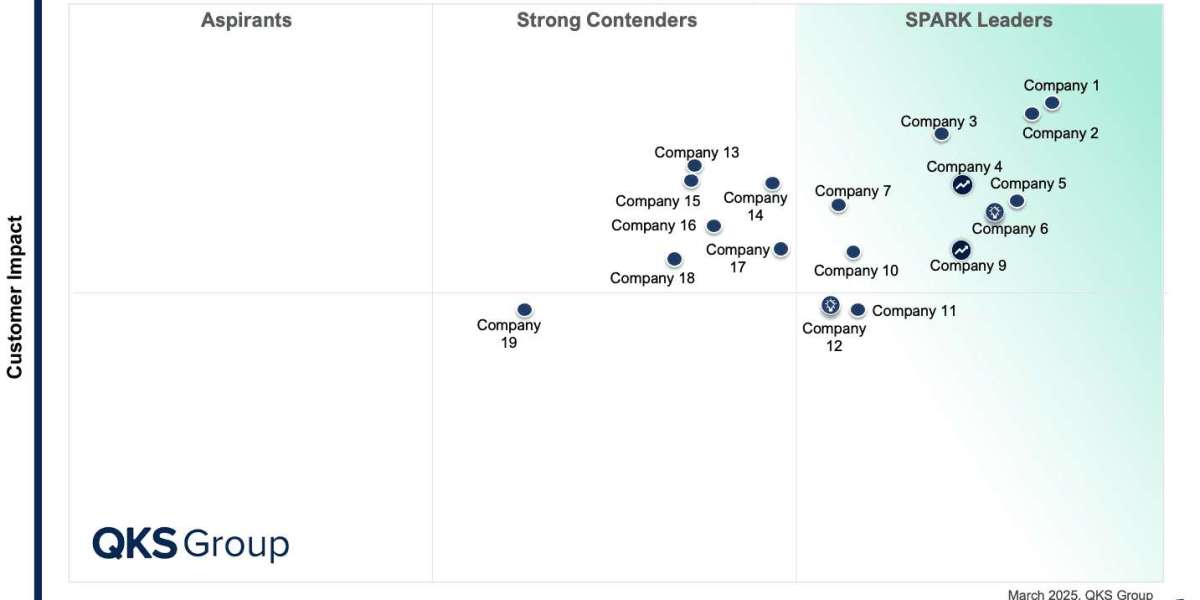
Competitive Analysis with the SPARK Matrix™
The research includes an in-depth competitive analysis and vendor evaluation using the proprietary SPARK Matrix™ framework. This structured methodology evaluates vendors based on:
- Global impact
- Market positioning
- Technological innovation
- Product capabilities
- Customer value proposition
The SPARK Matrix™ provides a comparative ranking of leading Omnichannel Order Management System vendors, offering enterprises clarity in vendor selection and strategic alignment.
Leading Vendors Evaluated in the Study
The analysis covers key global vendors, including: Aptos, Blue Yonder, Deck Commerce, Deposco, Fluent Commerce, IBM, Infios (Körber), Kibo Commerce, Manhattan Associates, OneStock, Oracle, Orckestra, Radial, Salesforce, Softeon, Tecsys, Vinculum, and KBRW.
Each vendor is assessed across multiple performance dimensions, helping organizations identify innovation leaders, strong performers, and emerging disruptors.
Strategic Benefits for Technology Vendors
For technology providers, this research offers:
- Insight into evolving customer expectations
- Competitive benchmarking against industry leaders
- Identification of innovation gaps and growth opportunities
- Market positioning strategies aligned with enterprise demand
Strategic Advantages for Enterprises
Enterprises can leverage this research to:
- Evaluate OMS platforms based on real-world performance metrics
- Assess integration capabilities across existing IT ecosystems
- Understand vendor differentiation and long-term viability
- Make data-driven investment decisions
Future Outlook: The Evolution of Omnichannel OMS
As digital commerce ecosystems grow more complex, OMS platforms will evolve beyond order processing engines into intelligent commerce orchestration hubs. Integration with AI, predictive analytics, IoT-enabled inventory systems, and real-time supply chain visibility platforms will redefine operational excellence.
Organizations that invest in scalable, composable OMS solutions will gain competitive advantages in:
- Faster order fulfillment
- Reduced operational costs
- Improved customer satisfaction
- Greater supply chain resilience
Conclusion
QKS Group’s Omnichannel Order Management System Market Research serves as a strategic guide for navigating the competitive and rapidly transforming OMS landscape. Through its proprietary SPARK Matrix™ framework and comprehensive vendor analysis, the study provides actionable intelligence for both technology vendors and enterprises.
In an era where customer expectations demand speed, accuracy, and personalization, selecting the right Omnichannel Order Management System is not just a technology decision—it is a strategic business imperative.