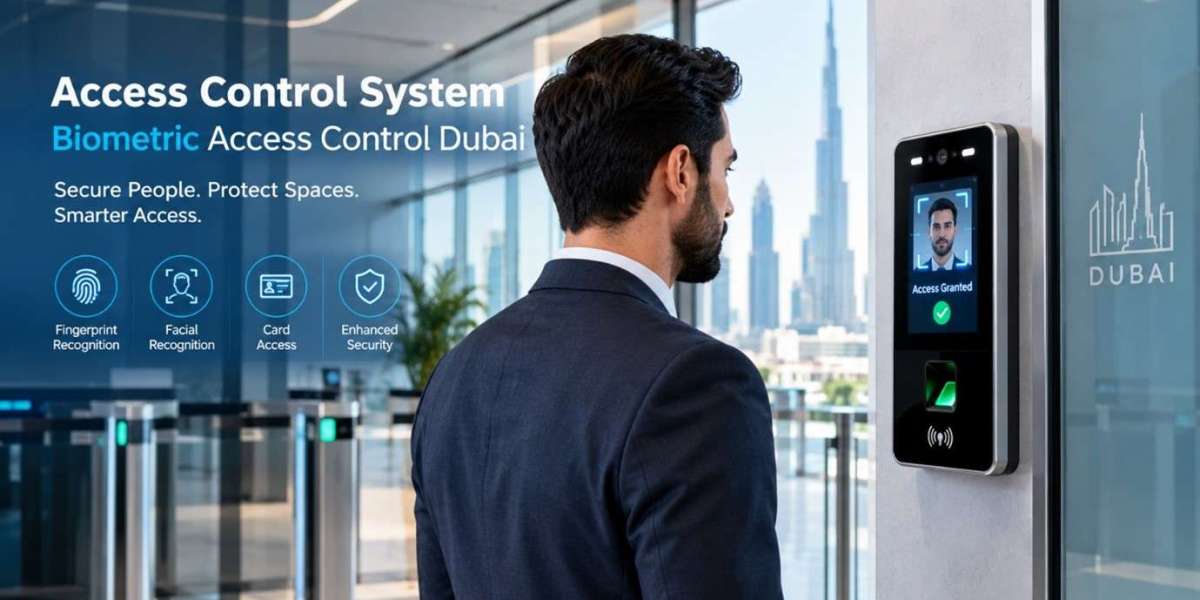
From glass towers in Dubai to industrial campuses in Abu Dhabi, every enterprise must decide who may enter, when, and where. A modern Access Control System replaces mechanical keys with encrypted credentials, biometric checks, and real time reporting, giving UAE organizations precise control over every door, gate, and floor.
This guide explains how current technology works, which capabilities matter most, how data protection rules shape deployment, and how Tektronix LLC supports enterprises across the Emirates. Whether you protect an office headquarters, a hospital, a logistics hub, or a data center, the following sections will help you plan with confidence.
Readers and Controllers
Every credential is read at the door by a reader, which passes the data to a controller that makes the decision. A single Access Control Device such as a reader, keypad, or biometric terminal may look simple, but its encryption support, environmental rating, and firmware update path determine how well it will perform over a decade of daily use. Controllers that store rules locally keep doors working even if the network is interrupted.
Software, Policies, and Reporting
Management software defines who belongs to which group, which doors each group may use, and at what times. Administrators issue and cancel credentials centrally, schedule temporary access, and generate reports for audits. Alerts for forced doors, doors held open, and repeated failed attempts allow security teams to respond before a minor event becomes a serious one.
Locks and Door Hardware
The decision made by the controller is carried out by electric strikes, magnetic locks, motorized locks, turnstiles, or speed gates. A complete Door Access Control System must also consider door position sensors, request to exit buttons, and fire alarm release so that life safety is never compromised. Careful coordination with fire engineers and civil defence requirements is essential in every UAE project.
How to Evaluate and Implement the Right Solution
Key Evaluation Questions
Begin by defining the number of doors, user groups, and security tiers. Then ask whether the platform supports open standards, mobile credentials, biometric readers, offline operation, scalable licensing, and detailed reporting. Confirm the support model, spare parts availability, and response times, because a failed door at a main entrance cannot wait for days.
Phased Implementation Roadmap
A phased rollout lowers risk. Start with a pilot on one floor or building, gather feedback from administrators and users, refine rules, and then extend to additional areas. Clear communication helps employees adopt mobile credentials and biometric enrolment smoothly. For deeper guidance, learn more about the service and speak with a specialist about your premises.
Measuring Return on Investment
Value appears in fewer lost key incidents, faster onboarding and offboarding, reduced guard patrol workload, and stronger audit readiness. Tracking credential issuance time, door fault rates, and the number of unresolved alarms each month demonstrates progress to leadership and guides future investment.
Conclusion
A trusted Access Control System gives every enterprise precise control over who enters each door, floor, and gate. An Advanced Access Control System with encrypted readers and mobile credentials keeps pace with changing threats and growing workforces. Reliable Biometric Access Control Dubai technology and a strong Security Access Control System add speed, assurance, and audit ready records. A dependable Door Access Control System, a durable Access Control Device, and flexible Access Control Solutions simplify daily operations for security teams. With a proven Access Control System UAE partner, organizations in Access Control System Dubai and Access Control System Abu Dhabi can protect people, assets, and reputation with confidence.