
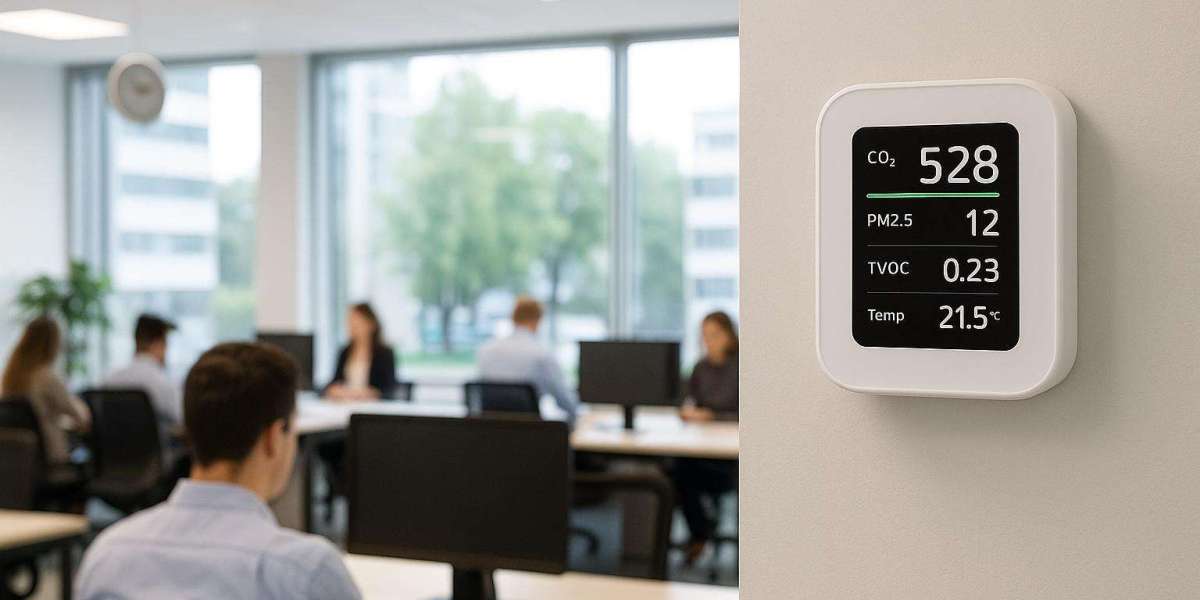
Indoor air quality is an important consideration for offices, schools, commercial buildings, and industrial facilities. Poor ventilation, indoor pollutants, changing occupancy levels, and unsuitable temperature or humidity conditions can affect the indoor environment. For building owners and facility managers, choosing the right air quality monitoring solution is a practical step towards understanding these conditions and making informed decisions.
However, not every building needs the same monitoring system. The right solution depends on the type of building, the pollutants that need to be measured, the existing ventilation system, and how the collected data will be used.
This guide explains the key factors to consider when selecting an indoor air quality monitoring solution for your building.
- Understand Your Building's Air Quality Requirements
Before purchasing an air quality monitoring system, identify the purpose of monitoring. A system designed for a small office may not meet the requirements of a manufacturing facility or a large commercial building.
Start by considering the building's main activities, occupancy patterns, ventilation arrangements, and potential sources of indoor pollutants.
For example, offices and meeting rooms may benefit from CO₂ monitoring to help assess ventilation patterns. Schools can use continuous CO₂ measurements to understand how indoor conditions change throughout the day. Industrial facilities may require more specialised sensors depending on their processes and the substances present.
A clear understanding of your requirements helps you avoid purchasing unnecessary sensors or overlooking important measurements.
- Choose the Right Air Quality Parameters
One of the most important purchasing decisions is determining which parameters the system should measure. Different sensors detect different substances or environmental conditions, so a single monitor cannot provide a complete picture of indoor air quality.
Carbon dioxide (CO₂)
CO₂ monitoring is commonly used to help assess ventilation conditions in occupied spaces. Concentrations can change with occupancy, activity, and the supply of outdoor air. Monitoring trends over time can help facility managers identify rooms where ventilation may need further investigation.
However, CO₂ is not a direct measurement of every aspect of ventilation or overall air quality. It should be interpreted alongside other relevant information.
Volatile organic compounds (VOCs)
VOCs are gases released by various materials and products, including paints, cleaning products, furnishings, and industrial processes. Depending on the environment, VOC monitoring may help identify changes that require further investigation.
The type of VOC sensor matters because different technologies respond to different compounds and may not identify individual chemicals separately.
Temperature and relative humidity
Temperature and humidity measurements help building managers understand indoor comfort conditions and identify environmental changes. Persistently high humidity may also indicate a need to investigate moisture-related issues.
Particulate matter and other pollutants
In buildings affected by dust, combustion, outdoor pollution, or specific industrial activities, monitoring particulate matter or other relevant pollutants may be necessary. Specialised applications may also require dedicated sensors for particular gases.
Buying tip: Select sensors according to the pollutants and conditions relevant to your building, rather than choosing a device based only on the number of parameters it advertises.
- Consider the Building Type and Application
Air quality monitoring requirements differ across building environments.
Offices and meeting rooms: CO₂, temperature, and humidity monitoring can help facility managers understand changes in occupied spaces and review ventilation performance.
Schools and educational buildings: Continuous monitoring can reveal how indoor conditions vary between classrooms, lesson periods, and occupancy levels.
Commercial buildings: Multiple monitoring points may be useful across floors, meeting areas, reception spaces, and shared facilities.
Industrial facilities: Sensor selection should be based on the processes, potential contaminants, operating conditions, and applicable safety requirements. Standard indoor air quality monitors should not automatically be treated as industrial gas safety systems.
Buildings with automated HVAC systems: Monitoring equipment that can communicate with existing controls may help integrate measured conditions into ventilation and climate management.
Defining the application first makes it easier to compare systems on relevant technical and operational criteria.
- Check Sensor Accuracy, Range, and Maintenance Requirements
Sensor specifications are important when comparing air quality monitoring solutions. Review the measurement range, stated accuracy, response time, operating temperature, and humidity range.
Check whether the manufacturer provides calibration instructions, recommended maintenance intervals, and information about sensor lifespan. Ask how frequently the device should be inspected or recalibrated and whether sensors can be replaced individually.
Installation also affects measurement quality. A sensor placed directly beside a ventilation outlet, open window, or local pollutant source may produce readings that do not represent the wider occupied area. Follow the manufacturer's installation guidance and consider the airflow and activity patterns in the room.
A suitable monitoring system should provide measurements appropriate to the intended application and remain practical to maintain throughout its operating life.
- Decide Whether You Need Standalone Monitoring or System Integration
Some buildings only need local displays or basic monitoring. Others require information from several rooms to be collected in a central dashboard.
A standalone air quality monitor may be sufficient for a small space or an initial assessment. Larger buildings may benefit from networked sensors, central data logging, remote access, alerts, and historical reporting.
If you intend to connect sensors to a building management system or HVAC controls, check compatibility before buying. Confirm supported communication interfaces and protocols, power requirements, installation constraints, and the capabilities of the existing control equipment.
Integration can help facility managers use air quality data more effectively. For example, CO₂ trends may inform ventilation adjustments, while temperature and humidity readings may support indoor climate management. Any automated response should be configured appropriately for the building and its ventilation design.
- Compare Total Cost, Not Just Purchase Price
The initial price is only one part of the cost of an air quality monitoring solution.
Consider the number of sensors required, installation work, wiring or network infrastructure, software subscriptions, calibration, maintenance, replacement sensors, and ongoing technical support.
A low-cost device may be appropriate for basic observation, while a more advanced system may be better suited to multiple locations, long-term data collection, or integration with building controls.
Compare suppliers on technical suitability, documentation, warranty terms, availability of replacement parts, and after-sales support. A system that fits your operational requirements and can be maintained reliably may provide better long-term value than one selected primarily on price.
- Ask These Questions Before Buying
Before making a final decision, ask potential suppliers:
- Which air quality parameters does the system measure?
- Are the sensors suitable for our building and intended application?
- What are the measurement range, accuracy, and response time?
- Can the system record historical data and provide alerts?
- Is integration with our existing HVAC or building management system possible?
- What calibration and maintenance are required?
- Are replacement sensors and technical support available?
- What are the total installation and operating costs?
Requesting clear answers helps you compare suppliers and identify a solution that meets both current and future requirements.
- Work with a Supplier That Understands Your Application
Selecting an air quality monitoring solution involves more than choosing a sensor. The complete system should match the building's environmental conditions, monitoring objectives, installation requirements, and future plans.
A supplier with relevant technical expertise can help you identify the appropriate measurement parameters, assess integration requirements, and compare available technologies. For complex buildings or industrial environments, a site assessment or consultation with an experienced specialist may be appropriate.
T&O Electronic Solutions provides air quality-related solutions through its Air Quality business area, covering areas such as CO₂ measurement, VOC measurement, and indoor climate and ventilation management.
If you are evaluating equipment for a commercial building, office, school, or industrial application, explore the available options and identify which measurement and control functions suit your requirements.
Conclusion
The right air quality monitoring solution starts with understanding what you need to measure and why. Consider the building type, relevant pollutants, sensor performance, installation location, system integration, and long-term maintenance costs before making a purchase.
For many occupied buildings, CO₂, temperature, and humidity are useful starting points. Other environments may require VOC, particulate matter, or application-specific sensors. The best solution is the one that provides relevant, reliable information and supports appropriate action based on the results.
Read More: https://tecsysproductguides.blogspot.com/2026/10/how-to-choose-right-air-quality.html