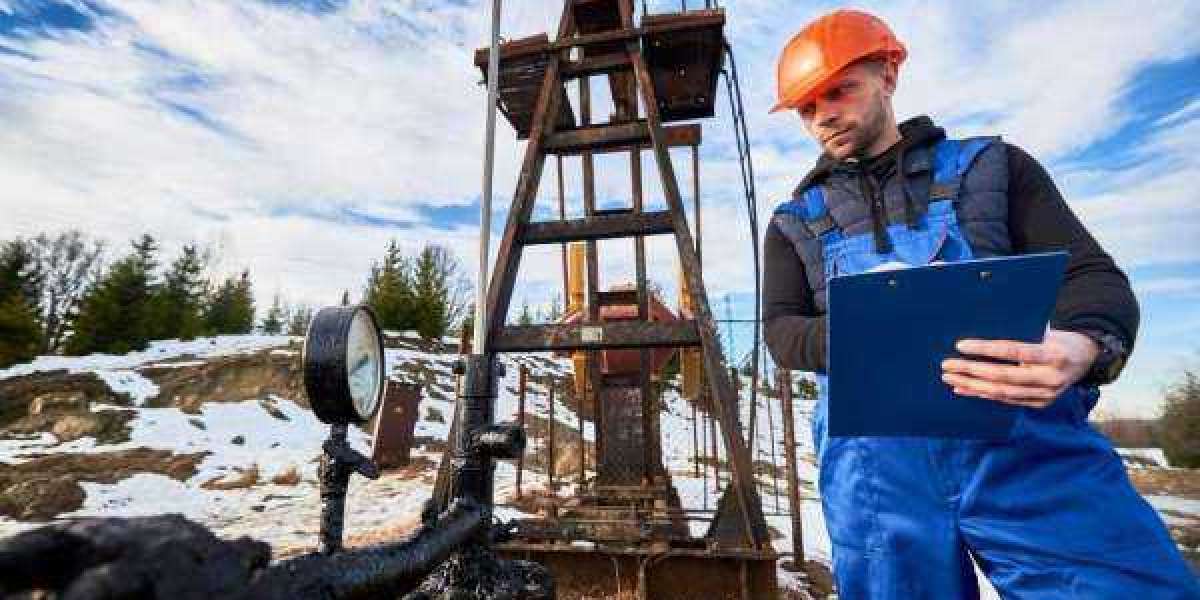
The Energy Industry Is Evolving and So Must Professionals
The global energy sector is undergoing a profound transformation driven by digitalization, data-driven decision-making, energy transition strategies, and efficiency-focused operations. As oil, gas, and alternative energy companies adapt to changing economic, environmental, and technological pressures, the demand for highly skilled subsurface professionals continues to rise. Among these roles, petrophysicists remain central to asset evaluation, reservoir characterization, and sustainable resource development.
We recognize that building a resilient career in energy today requires more than traditional geological knowledge. Petrophysics courses provide a future-ready skill set that equips professionals to remain relevant, competitive, and indispensable across evolving energy landscapes.
Understanding Petrophysics as a Strategic Career Skill
Petrophysics integrates physics, geology, mathematics, and data analytics to evaluate subsurface rock and fluid properties. Through advanced interpretation of well logs, core data, and reservoir parameters, petrophysicists support critical decisions that directly influence exploration success and production efficiency.
By enrolling in structured, industry-aligned petrophysics courses, we gain expertise in:
Porosity, permeability, and saturation analysis
Formation evaluation and lithology identification
Well log interpretation and calibration
Reservoir quality assessment
Integration of geological, geophysical, and engineering data
These competencies are not limited to oil and gas alone. They are increasingly transferable to carbon capture and storage (CCS), geothermal energy, hydrogen storage, and underground energy systems.
Why Petrophysics Courses Are Critical for Long-Term Career Stability
High Demand Across the Energy Value Chain
Petrophysics expertise remains one of the most sought-after skills in upstream and subsurface domains. Operators, service companies, and energy consultancies consistently require professionals who can translate raw subsurface data into actionable insights.
Petrophysics courses prepare us for roles such as:
Petrophysicist
Formation Evaluation Specialist
Reservoir Analyst
Subsurface Data Scientist
Energy Transition Technical Advisor
This broad applicability significantly reduces career risk during market downturns.
Alignment With Digital and Data-Driven Energy Workflows
Modern petrophysics training emphasizes advanced software platforms, machine learning-assisted interpretation, and automated log processing workflows. These capabilities align perfectly with the industry’s push toward digital oilfields and smart reservoirs.
Through comprehensive courses, we master tools such as:
Petrel
Techlog
Interactive Petrophysics
Python-based subsurface analytics
AI-assisted log interpretation
This ensures we remain relevant as traditional workflows evolve into high-performance digital ecosystems.
Petrophysics and the Energy Transition
Expanding Beyond Oil and Gas
Petrophysics courses no longer focus solely on hydrocarbon reservoirs. Advanced curricula now address energy transition applications, positioning professionals for future-proof opportunities.
Key transition-focused applications include:
Carbon Capture, Utilization, and Storage (CCUS)
Geothermal reservoir characterization
Underground hydrogen storage
Saline aquifer evaluation
Reservoir integrity and monitoring
By understanding rock-fluid interactions at a fundamental level, petrophysicists play a vital role in enabling low-carbon energy solutions.
Supporting Sustainability and Regulatory Compliance
Energy companies face increasing regulatory scrutiny and sustainability expectations. Accurate petrophysical analysis is essential for resource accountability, risk mitigation, and environmental compliance.
Petrophysics training equips us to:
Quantify storage capacity and containment security
Evaluate formation integrity
Support environmental impact assessments
Improve resource efficiency and recovery
These skills ensure long-term employability in a sustainability-driven energy economy.
Career Growth and Salary Advantages of Petrophysics Expertise
Professionals with strong petrophysics credentials consistently command higher compensation and faster career progression. The technical complexity and decision-critical nature of the discipline elevate its strategic importance within organizations.
Benefits include:
Premium salary packages
Global mobility and international roles
Leadership pathways in subsurface teams
Consulting and advisory opportunities
Resilience during industry cycles
Petrophysics courses act as a powerful career accelerator, particularly for geologists, reservoir engineers, and geoscientists seeking specialization.
Petrophysics Courses as a Gateway to Multidisciplinary Excellence
Integration With Reservoir Engineering and Geoscience
One of the strongest advantages of petrophysics education is its multidisciplinary integration. Courses emphasize collaboration between geology, geophysics, drilling, and reservoir engineering.
We develop the ability to:
Bridge static and dynamic reservoir models
Improve field development planning
Optimize well placement and completion strategies
Enhance recovery factor predictions
This integrative mindset is highly valued in modern asset teams.
Practical, Industry-Focused Learning
High-quality petrophysics courses prioritize real-world datasets, case studies, and hands-on interpretation exercises. This ensures immediate applicability in professional environments.
Course structures typically include:
Real well logs and core datasets
Field-based reservoir case studies
Software-driven interpretation workflows
Industry-standard reporting practices
This practical exposure significantly reduces the gap between learning and execution.
Future-Proofing Against Automation and Industry Disruption
While automation and AI are transforming energy workflows, petrophysics remains automation-resistant due to its reliance on interpretation, judgment, and subsurface uncertainty management.
Petrophysics courses strengthen our ability to:
Interpret ambiguous or incomplete data
Apply physics-based reasoning
Validate AI-generated outputs
Make high-impact technical decisions
Rather than being replaced by automation, petrophysicists increasingly guide and supervise intelligent systems, securing their relevance in future energy operations.
Who Should Invest in Petrophysics Courses
Petrophysics training delivers long-term value for professionals across multiple career stages:
Graduates seeking specialization and employability
Geologists transitioning into subsurface evaluation
Reservoir engineers enhancing formation understanding
Energy professionals pivoting into transition sectors
Consultants expanding technical service offerings
The versatility of petrophysics makes it a strategic investment regardless of career trajectory.
Building Global Career Mobility Through Petrophysics
Energy projects operate worldwide, and petrophysics skills are globally standardized and transferable. Courses aligned with international best practices enable professionals to work across regions, basins, and energy systems.
This global relevance supports:
International assignments
Remote consulting roles
Cross-border energy projects
Long-term career security
Petrophysics acts as a passport skill in the global energy workforce.
Conclusion: Petrophysics as a Career Insurance Policy
We view petrophysics courses not as optional training, but as career insurance in an industry defined by uncertainty and transformation. By mastering subsurface evaluation, embracing digital workflows, and aligning with energy transition goals, professionals secure a future-ready position in the evolving energy ecosystem.
Petrophysics education delivers technical depth, career resilience, and strategic relevance—ensuring long-term success regardless of how the energy landscape evolves.