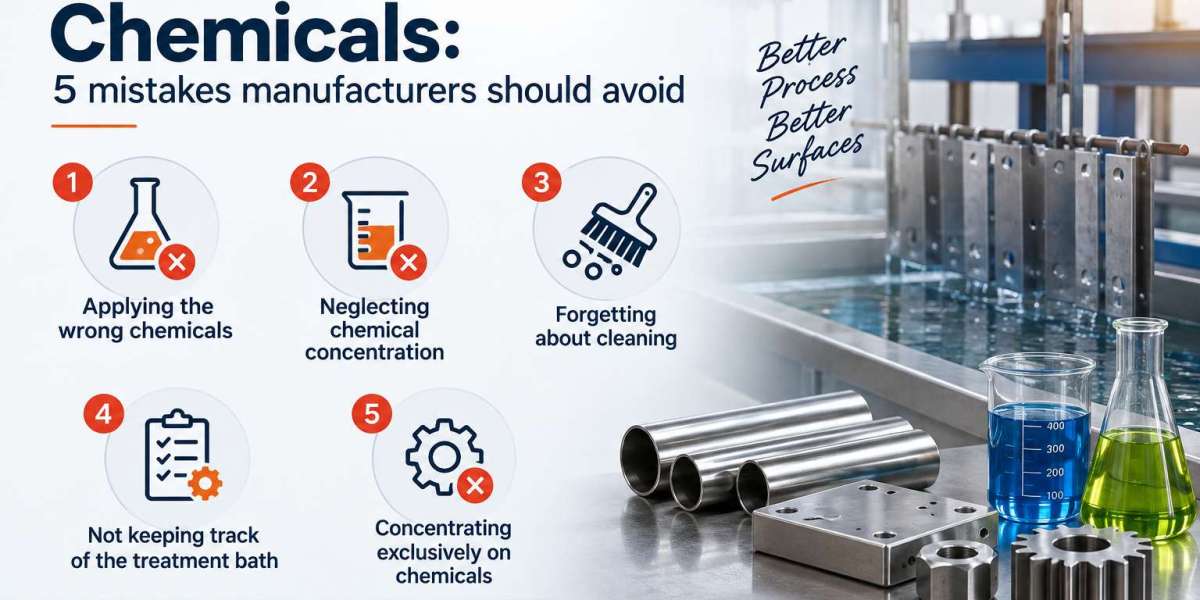
Metal Treatment Chemicals: 5 mistakes manufacturers should avoid
Metal surfaces have to undergo suitable treatments to make them work effectively. When it comes to cleaning, removing grease, pickling, phosphating, or any other pre-treatment procedure, the chemicals utilized can impact the quality of the surface obtained. However, businesses may encounter difficulties as a result of simple errors made during the process
Here are five mistakes that need to be avoided by manufacturers.
- Applying the wrong chemicals.
Not all metal surfaces undergo the same treatment. Using the incorrect chemical may affect the quality and efficiency of the process.
In order to select the right metal treatment chemicals, manufacturers should consider:
- Metal type
- Surface state
- Wanted finish
- Treatment procedure
- Need for production
Choosing the right chemicals is the initial step to ensuring successful process performance.
- Neglecting Chemical Concentration
The concentration levels of chemicals are crucial for metal treatment processes. If the concentration is too low, the treatment won't work as intended.
On the other hand, too much concentration leads to excessive consumption of chemicals and may disrupt the metal surface.
Thus, by controlling and maintaining chemical concentration, manufacturers can obtain consistent results.
- Forgetting about Cleaning
The metal surface has to be cleaned properly before the treatment process. Remaining oil, grease, dirt, and other impurities may influence the forthcoming treatment processes.
Poor cleaning may lead to:
- Uneven treatment
- Poor adhesion of coating
- Surface imperfections
- Uneven finish
That is why cleaning and degreasing should be considered seriously.
- Not Keeping Track of the Treatment Bath
Merely adding chemicals after an issue arises is not sufficient. Manufacturers must ensure the treatment bath is monitored regularly so that metal treatment consistently has the desired outcome. Since the bath is continuously being used, the chemical composition may change. There may be contaminants that accumulate with time, which will influence the quality of the treatment.
Among the important parameters to check are:
- Concentration of chemicals
- pH
- Temperature
- Contamination rates
- Condition of the bath
- Duration of the process
Regular checking of the bath allows manufacturers to know how it is being altered and when corrective action is needed.
Checking the bath also helps eliminate such problems as non-uniform surface treatment, low quality of the finish, high consumption of chemicals, as well as unpredictable manufacturing process changes. Instead of waiting for defects to occur, manufacturers can regularly check the bath.
- Concentrating Exclusively on Chemicals
Proper treatment of metals involves more than simply selecting appropriate chemical substances. The whole procedure plays a role.
The surface preparation process, the concentration of chemicals, the temperature, the time of treatment, the rinsing, and the control of the procedure may all affect the outcome.
It is sufficient for just one stage to be conducted carelessly for the high-quality chemical to fail to meet the requirements.
How Can Metal Treatment Enhance the Efficiency of Manufacturers?
When considering the treatment, manufacturers need to view the entire process and not just rely on a specific chemical or step.
Constant observation of the process can identify the following:
- High chemical use
- Irregularity of surface
- Ineffective treatment
- Contaminated bath
- Variations in the process
With better control of processes, the manufacturers can achieve greater consistency and save unnecessary chemicals.
Final Thought
Metal Treatment involves a mix of the necessary chemical processes, adequate preparation, controlled conditions, and consistent monitoring.
Avoiding these prevalent mistakes allows more manufacturers to achieve better surface quality, more consistent results, and a more effective manufacturing process.
That is not all what matters is not just using more chemicals in the process but controlling the process better.