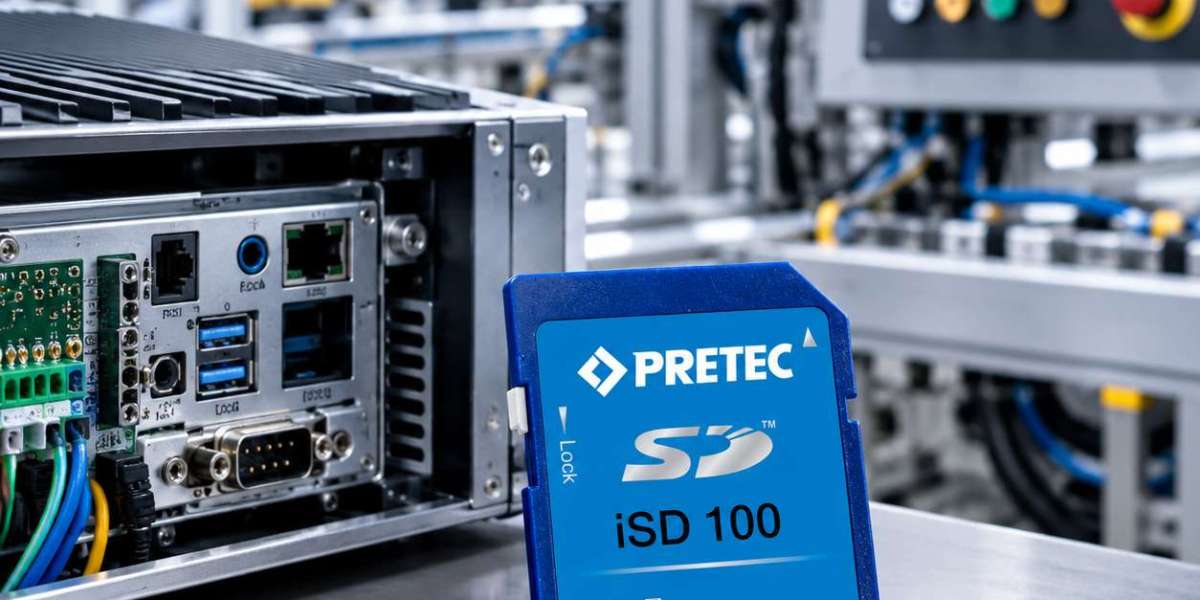
Industrial SD memory cards are widely used in automation systems, embedded computers, industrial PCs, machine controllers, and data logging equipment. They provide storage for firmware, configuration files, operating data, and other information required by industrial devices.
However, selecting the right industrial SD memory card involves more than choosing a storage capacity. Compatibility, operating temperature, write endurance, data integrity, and long-term availability can all affect the suitability of a card for a particular application.
Whether you are an OEM, machine manufacturer, system integrator, or maintenance professional, understanding these factors can help you choose a suitable storage solution and avoid unnecessary replacement costs.
- Understand Your Application Requirements
The first step is to identify how the SD memory card will be used. Different industrial applications have different storage requirements.
For example, an industrial controller may use an SD card to store firmware and configuration files, while a monitoring system may continuously record sensor readings and operating data. These applications place different demands on the memory card.
Before purchasing, determine the required capacity, supported SD standard, operating environment, read and write workload, and expected service life.
You should also check the equipment manufacturer's documentation. Some industrial devices support only specific card capacities, interfaces, or file systems.
Understanding these requirements helps narrow down the available options and reduces the risk of purchasing an incompatible card.
- Choose the Right Storage Capacity
Storage capacity is one of the most important factors when selecting an industrial SD memory card. The appropriate capacity depends on the amount and type of data your equipment needs to store.
Lower-capacity cards may be suitable for older industrial controllers, firmware storage, and equipment designed around legacy memory specifications. Higher-capacity cards may be more appropriate for systems that store larger amounts of operating data or application files.
However, a larger card is not always a better choice. Older industrial devices may have capacity limitations or specific formatting requirements that prevent them from recognising newer cards.
Before ordering, verify the supported capacity of your equipment and consider future storage requirements. Choosing a compatible capacity can help avoid unnecessary upgrades and simplify replacement.
- Check the SD Standard and Equipment Compatibility
Industrial SD memory cards are available in different standards and configurations. A card's physical size alone does not guarantee that it will work in your equipment.
Check whether your device supports the required SD standard, interface, capacity, and file system. If the card is used to boot an industrial computer or controller, confirm that the system supports the card's specifications and expected boot configuration.
Compatibility is particularly important when replacing memory cards in older machinery. A newer card may offer greater capacity or performance but still be unsuitable for equipment designed around an earlier specification.
If you are unsure, compare the existing card's part number and technical specifications with the replacement product. Consult the equipment manufacturer or supplier before making a purchase.
- Consider Operating Temperature and Environmental Conditions
Industrial equipment may operate in environments where temperatures fluctuate significantly. Machinery installed near production processes, outdoors, or inside industrial cabinets can experience conditions that differ from those in consumer electronics applications.
When comparing industrial SD memory cards, review the manufacturer's rated operating temperature range and confirm that it matches your installation environment.
Also consider exposure to vibration, humidity, and other environmental conditions that may affect the overall system. The card's specifications should be evaluated alongside the design of the equipment in which it will be installed.
Do not assume that every industrial SD card offers the same environmental protection. Check the individual product datasheet before selecting a card for demanding operating conditions.
- Evaluate Write Endurance and Data Integrity
Not all industrial applications use memory cards in the same way. Some devices primarily read stored configuration files, while others continuously write operational data, measurements, or machine logs.
For applications involving frequent writes, review the card's endurance specifications and confirm that they match the expected workload. Relevant factors include write frequency, data volume, temperature, and the way the host system manages storage.
Some industrial memory cards also include error correction code (ECC) or other data integrity features designed to help manage memory errors. These features can be useful in applications where dependable data storage is important.
However, no memory card can eliminate every risk of data loss. Applications that store critical information should also use appropriate backup, monitoring, and recovery procedures.
- Compare Industrial and Consumer SD Memory Cards
Consumer SD cards are commonly used in cameras, personal electronics, and general-purpose storage devices. Industrial SD memory cards may offer specifications designed for particular industrial environments, workloads, or equipment requirements.
The differences depend on the specific products being compared. Some industrial models may provide extended temperature ratings, defined endurance characteristics, or features intended for industrial data storage.
When comparing cards, review the technical datasheets rather than relying solely on the product category or label. A consumer card should not automatically be considered suitable for an industrial application, especially where the equipment operates under demanding conditions or requires long-term product availability.
Likewise, not every application needs the most specialised storage product. The correct choice depends on the operating environment, compatibility requirements, write workload, and consequences of storage failure.
- Consider Long-Term Availability and Replacement Needs
Industrial equipment can remain in operation for many years, making long-term memory card availability an important purchasing consideration.
If you manufacture machines or maintain existing industrial systems, replacing a card with a different model may require compatibility checks and additional testing. Changes in capacity, interface, or formatting can affect how the equipment recognises and uses the replacement.
Before purchasing, check product availability, manufacturer documentation, and options for repeat orders. For equipment that depends on a specific card, maintain records of the approved model and its specifications.
If the original card is discontinued, identify a potential replacement and test it in a controlled environment before deploying it across production equipment.
This approach can help reduce sourcing risks and avoid replacing an entire machine when only the storage component needs attention.
- Compare Price and Supplier Support
Price is important when purchasing industrial SD memory cards, particularly for bulk orders and recurring production requirements. However, the lowest purchase price does not always provide the best overall value.
Compare cards with equivalent specifications, including capacity, supported SD standard, operating temperature, and endurance. Consider shipping costs, minimum order quantities, availability, and potential testing requirements.
Supplier support is also valuable. A supplier that provides clear datasheets, accurate model information, and assistance with compatibility questions can make product selection easier.
Before requesting a quotation, prepare your technical requirements and expected order quantity. This helps suppliers recommend relevant products and allows you to compare offers more accurately.
For specialised applications, confirm all important specifications before placing an order rather than relying on a product description alone.
- Where to Buy Industrial SD Memory Cards
If you are sourcing storage for industrial automation, embedded computers, machine controllers, or existing industrial equipment, start by identifying the required capacity, SD standard, operating temperature, and write workload.
Review the technical specifications of each product and verify compatibility with your equipment before purchasing. If you need a replacement for an existing machine, compare the original card's model and specifications with the proposed replacement.
Selecting a suitable product based on documented requirements can help simplify procurement and reduce the risk of compatibility problems.
Conclusion
Choosing the right industrial SD memory card requires careful consideration of capacity, compatibility, operating temperature, write endurance, data integrity, and long-term availability.
For OEMs, system integrators, and industrial maintenance teams, the best choice is the card that meets the equipment's requirements and provides suitable specifications for its intended workload.
Before ordering, review the technical datasheet, compare equivalent products, and confirm compatibility with the target device. Explore the TecSys Industrial SD Card range to find storage options for your application and evaluate the available specifications before making a purchasing decision.
Read More: https://tecsysproductguides.blogspot.com/2026/10/how-to-choose-right-industrial-sd.html