Access Control System UAE projects in 2026 look very different from the keypad-and-key-card setups of a decade ago. Today, a modern platform verifies identity, records every entry, and protects people, data, and assets around the clock, from Business Bay towers in Dubai to corporate campuses on Al Maryah Island in Abu Dhabi.
This guide reflects the practical viewpoint of the security engineering team at Tektronix LLC, a UAE-based provider of security and low-current systems, drawing on lessons from site surveys, installation, and commissioning in hot, high-density commercial environments. It is written for facility managers, building owners, IT heads, and procurement teams who need entry technology that is secure, compliant with local regulations, and simple to manage for years to come.
Why Commercial Buildings in the UAE Are Moving Beyond Keys and Cards
Commercial properties across the Emirates operate under a demanding mix of conditions. Multi-tenant towers must separate public lobbies from private floors. Free zones such as DIFC and ADGM expect strict security and data-handling discipline. Hotels, retail podiums, car parks, plant rooms, and data rooms each need different rules for different people at different times of day. Mechanical keys cannot deliver any of this: a lost key forces cylinder replacement, a departing employee may keep a copy, and nobody can say who entered a restricted room at 2 a.m.
Electronic entry control replaces those weaknesses with measurable safeguards. A credential can be issued, scheduled, restricted, or cancelled in seconds from a central dashboard, and every event is time-stamped for audit. Landlords gain faster tenant onboarding, tenants gain confidence that sensitive floors stay protected, and insurers and auditors gain trustworthy evidence. With hybrid work patterns, shared workspaces, and rising tailgating risks, centrally managed entry rules have become a baseline expectation rather than a luxury.
How Modern Entry Control Works: Core Architecture
Every professional deployment, whatever its size, rests on three layers: the identity credential, the door-level hardware, and the management software. Understanding each layer helps buyers compare proposals on substance instead of price alone.
Credentials and Identity Verification
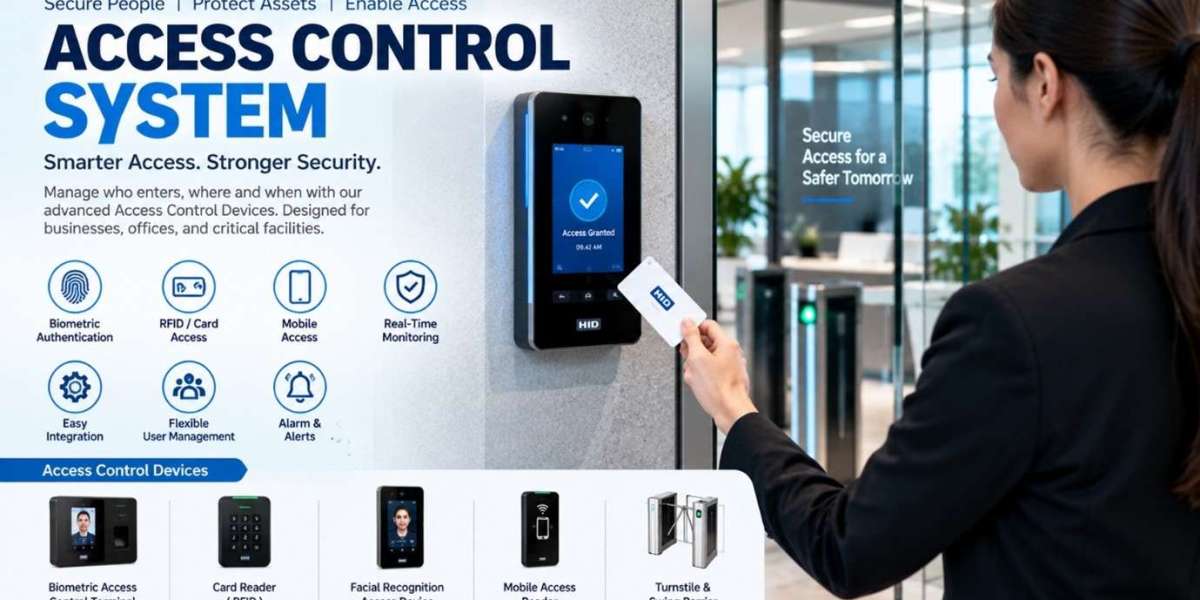
Credentials include RFID proximity and smart cards, PIN codes, smartphone credentials over Bluetooth Low Energy or NFC, and biometric traits. Best practice is to layer two factors at sensitive doors, for example a mobile credential plus a fingerprint, while keeping low-risk doors on a single factor to avoid daily friction. Legacy 125 kHz proximity cards are easy to clone and should be phased out in favour of encrypted smart-card formats.
Readers, Controllers, and Door Hardware
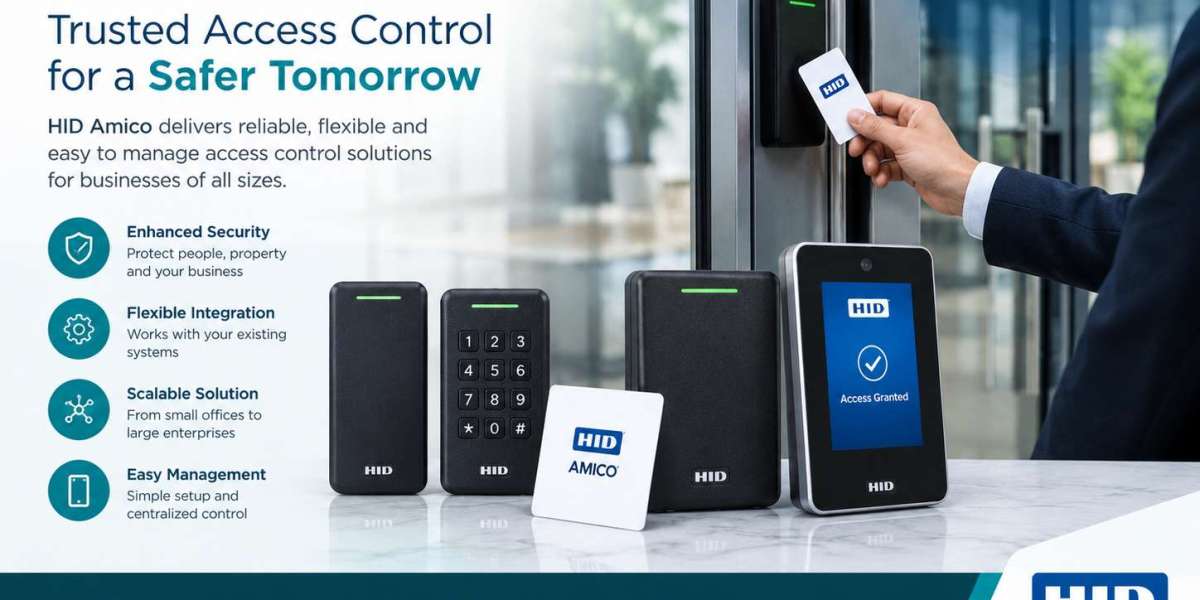
At each opening, the reader captures the credential, the controller decides whether to grant entry, and the lock, magnetic bolt, or turnstile carries out the decision. Door position sensors and request-to-exit devices report the true state of the door. Controllers should store permissions locally so doors keep working during a network outage, and readers should communicate over OSDP (Open Supervised Device Protocol), which supports encryption and supervision, instead of older Wiegand wiring that can be tapped. Outdoor hardware in the UAE should carry an IP65 or higher rating and be built for extreme heat, humidity, and dust.
Conclusion
A well-planned Security Access Control System turns every entrance into a verified, recorded, and manageable checkpoint. Owners who combine biometrics, mobile credentials, and life-safety-compliant door hardware gain strong protection without slowing daily movement. For any Access Control System Dubai project, an early site survey prevents costly redesigns and compliance surprises. Choosing a capable partner and scalable Access Control Solutions keeps your investment secure, supported, and ready for future technology.
Contact Tektronix LLC today to design an entry strategy that fits your building, budget, and regulatory needs.