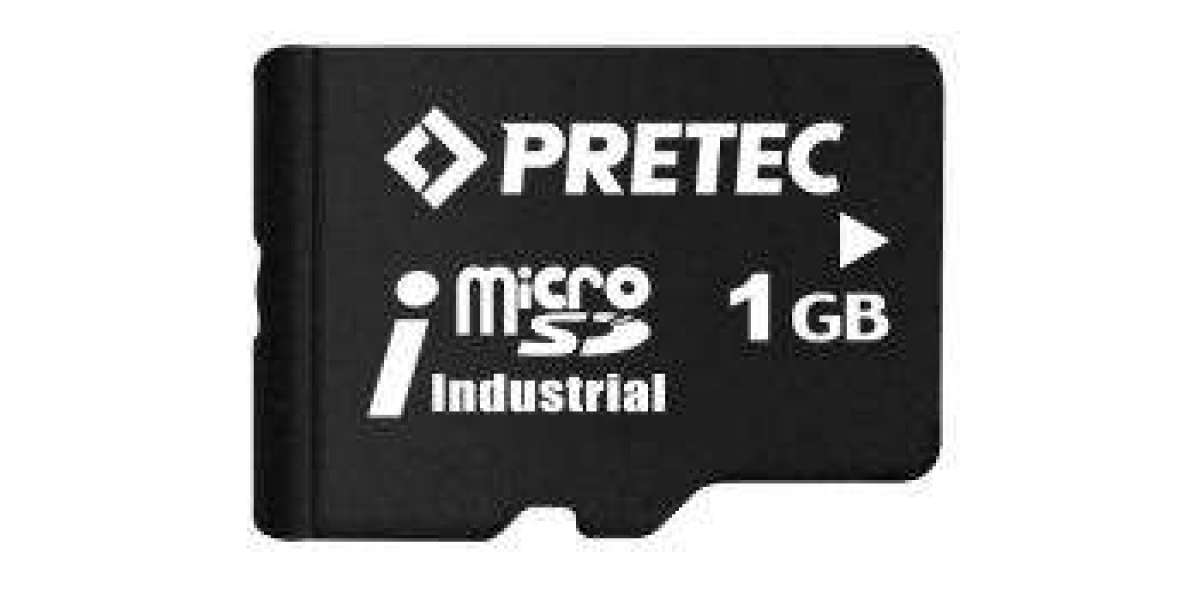
An industrial microSD card and a consumer microSD card look identical. They have the same format, fit the same slot and often show the same capacity on the label. Yet one is designed for a smartphone or camera in a living room, and the other for a data logger in a cold outdoor cabinet, an HMI running 24/7 or an embedded controller that must boot reliably for years.
The difference lies inside the card: in the flash memory, the controller, the firmware, the temperature range and the way the product is managed over its lifetime. For an industrial device, these details decide whether the card works for years or fails after months, often with data loss and an unplanned service call.
This article explains the technical differences, when a consumer card is acceptable and when an industrial card is the safer choice, and which questions to ask before buying.
Seven differences that matter
- Temperature range
Consumer cards are typically rated for a moderate temperature range, often around 0 °C to +70 °C, and many manufacturers do not publish detailed ratings at all. Industrial cards are specified and tested for wide temperature ranges, commonly -40 °C to +85 °C. In an outdoor cabinet, a vehicle or a machine next to a heat source, this difference decides whether the card operates within its specification.
- Flash memory type
Consumer cards are optimised for capacity per euro and mostly use high-density flash such as 3D TLC. Industrial cards use flash types chosen for endurance and data retention, such as SLC, pSLC (pseudo-SLC) or industrial-grade MLC. Fewer bits per memory cell mean more write cycles and more robust data storage.
- Endurance under continuous writing
A camera writes a few hundred photos and then sits idle. A data logger, HMI or embedded controller may write log files, parameters or process data around the clock. Write endurance, often specified as program/erase cycles or total bytes written, is therefore a key specification for industrial use. Consumer cards rarely publish it; industrial cards specify it in the datasheet.
- Controller, ECC and firmware
The controller manages how data is stored. Industrial cards use firmware features such as error correction (ECC), wear leveling to spread writes evenly, bad block management and, depending on the product, health monitoring that shows how much life is left. These functions keep data consistent as the flash ages.
- Behaviour during power loss
Industrial devices are switched off by main switches, emergency stops or power failures, often while data is being written. Industrial cards are designed with measures to reduce the risk of corruption during sudden power loss. Consumer cards are not designed for this scenario.
- Fixed bill of materials
Consumer cards can change controller, flash or firmware during production without notice, while the product name stays the same. For an industrial device that has been qualified and certified with a specific card, this is a risk. Industrial cards are typically sold with a fixed bill of materials (BOM) and product change notifications (PCN) before changes are made.
- Testing, documentation and support
Industrial cards come with datasheets, defined test procedures and technical support. Consumer cards come with a label and a warranty for private use. For a product that must be documented, qualified and supported for years, this difference is as important as the hardware.
Side by side
Criterion | Consumer microSD | Industrial microSD |
Designed for | Phones, cameras, tablets | Embedded systems, HMIs, data loggers, IoT and vehicle devices |
Temperature range | Moderate, often around 0 °C to +70 °C, frequently not published | Wide, commonly -40 °C to +85 °C |
Flash type | Mostly high-density TLC, optimised for capacity and price | SLC, pSLC or industrial-grade MLC/TLC, optimised for endurance |
Write endurance | Rarely specified | Specified in the datasheet |
ECC, wear leveling, bad block management | Present, but not documented for industrial loads | Documented and designed for continuous operation |
Power-loss behaviour | Not designed for sudden power loss | Measures to reduce corruption during power loss |
Bill of materials | Can change without notice | Fixed, with change notifications |
Documentation and support | Label and consumer warranty | Datasheet, test data, technical support |
Price per card | Lower | Higher |
Cost of a failure in the field | Low for private use | Service call, downtime and data loss |
The key point is the last line. The card's price is small compared with the cost of a technician visit, machine downtime or lost process data. That is why the price per gigabyte is the wrong measure for industrial storage.
When is a consumer card enough?
A consumer card can be acceptable for:
- prototypes and lab setups that run for a short time
- devices in an office-like environment with stable temperatures
- applications that mostly read data and rarely write
- data that is not critical and can be restored easily
When do you need an industrial card?
An industrial card is the safer choice when one or more of these apply:
- temperature extremes: outdoor cabinets, vehicles, cold storage, machines near heat sources
- continuous writing: data loggers, HMIs with trend recording, event logs, operating systems with frequent writes
- boot media: the card holds the operating system or firmware of an embedded device
- unexpected power loss: devices that are switched off without a controlled shutdown
- long product lifecycles: series devices that must use the same, qualified card for years
- costly failures: devices installed at remote sites, where every failed card means a service visit
As a rule of thumb: if a failed card would cause downtime, a service call or loss of important data, the extra cost of an industrial card pays for itself the first time it prevents a failure.
Seven questions to ask before buying
- What temperature range is the card specified for, and is it the operating or only the storage temperature?
- Which flash type is used, and what write endurance does the datasheet specify?
- How much data does your application write per day? Compare this with the specified endurance to estimate the card's lifetime in your device.
- How does the card handle sudden power loss?
- Is the bill of materials fixed, and will you be informed before changes?
- Is a datasheet available, and is there technical support for qualification questions?
- How long will the card be available for your series production and spare parts?
One more practical point: capacity. Industrial applications often need only a few gigabytes for an operating system, firmware or log files. A smaller, robust card is often a better choice than a large consumer card with a less suitable flash type.
Industrial microSD cards from TecSys
The SD3.0 industrial microSD card in the TecSys shop is designed for exactly these applications:
Feature | SD3.0 industrial microSD |
Capacities | 4 GB and 8 GB |
Temperature range | -40 °C to +85 °C |
Data protection | ECC (error correction) |
Compatibility | microSD / microSDHC |
Typical uses | Embedded systems, HMIs, data loggers, industrial and outdoor devices |
The compact capacities suit applications that store an operating system, firmware, parameters or log files, where reliability matters more than gigabytes.
Frequently asked questions
Can I use a consumer microSD card in an industrial device?
For short tests or non-critical applications in a stable environment, often yes. For continuous operation, temperature extremes, boot media or devices in the field, an industrial card is the safer choice.
Why are industrial microSD cards more expensive?
They use flash types and controllers selected for endurance, are tested for wide temperature ranges, have a fixed bill of materials and come with documentation and support. The higher price is small compared with the cost of a failure in the field.
Why do industrial cards often have small capacities?
Many industrial applications only need space for an operating system, firmware, parameters or logs. Smaller capacities can use more robust flash configurations, and the focus is on reliability rather than storage space.
What does ECC mean on a memory card?
Error correction code. The controller detects and corrects bit errors that occur in flash memory, especially as it ages. It is one of the basic functions that keep data consistent.
How do I estimate the lifetime of a card in my device?
Measure or estimate the amount of data your application writes per day and compare it with the write endurance specified in the card's datasheet. Ask your supplier for support if the endurance values are not clear.
Why is a fixed bill of materials important?
If the controller, flash or firmware of a card changes without notice, a device that was qualified with that card can behave differently. A fixed BOM and change notifications protect your qualification and series production.
Read More: https://tecsysproductguides.blogspot.com/2026/10/industrial-vs-consumer-microsd-cards.html