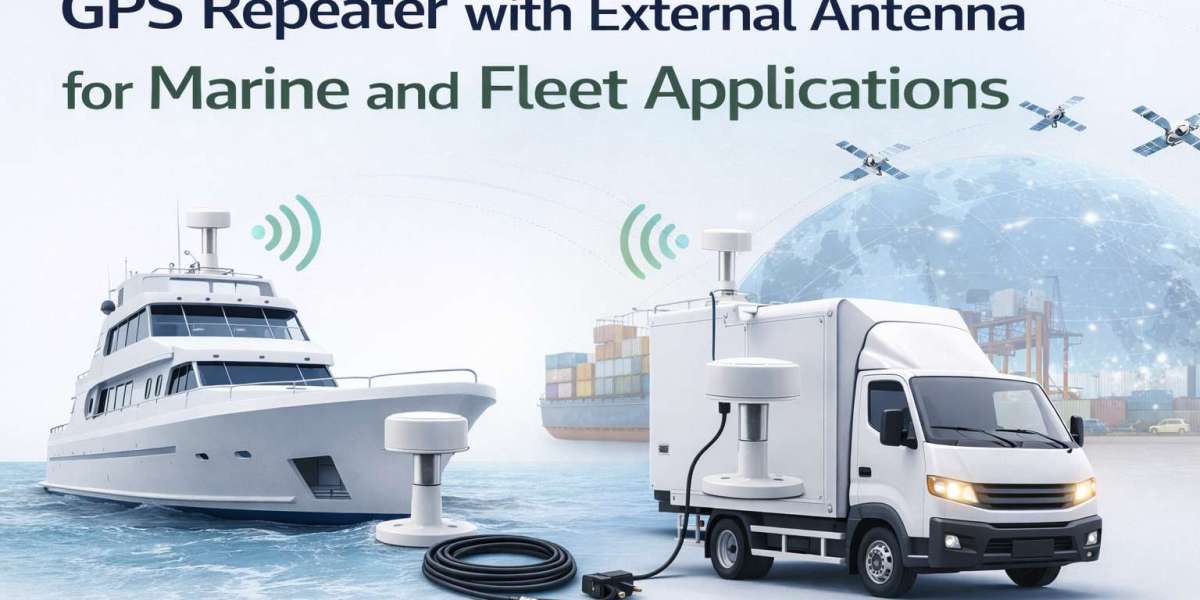
Reliable GPS positioning is critical for marine vessels and fleet vehicles operating in challenging environments. Whether navigating offshore waters, managing logistics fleets, or operating emergency response vehicles, uninterrupted GPS signal access ensures safety, efficiency, and compliance.
However, GPS signals are often weakened or blocked inside cabins, engine rooms, metal enclosures, or large vehicles. This is where a GPS repeater with external antenna becomes essential.
Why GPS Signals Fail in Marine & Fleet Environments
GPS satellites transmit relatively weak signals that can be easily obstructed by:
- Ship cabins and metal hull structures
- Container cargo and enclosed fleet vehicles
- Underground parking or loading docks
- Reinforced building materials
- Tinted or coated glass
In marine and fleet applications, even short GPS signal interruptions can cause:
- Navigation inaccuracies
- Fleet tracking errors
- Delays in route optimization
- Safety compliance risks
- Communication system disruptions
A GPS repeater with external antenna solves this issue by capturing strong outdoor signals and redistributing them indoors.
What Is a GPS Repeater with External Antenna?
A GPS repeater system typically consists of:
- External Antenna – Installed outside the vessel or vehicle to capture a strong GPS signal.
- Amplifier / Repeater Unit – Boosts and transfers the signal.
- Internal Re-radiating Antenna – Rebroadcasts the GPS signal inside the enclosed area.
This setup ensures that GPS-dependent devices function reliably inside:
- Ship cabins
- Navigation rooms
- Fleet vehicle dashboards
- Equipment enclosures
- Monitoring stations
Marine Applications of GPS Repeaters
- Commercial Shipping Vessels
Cargo ships often have enclosed bridge rooms where GPS signals are weakened. A repeater ensures:
- Stable navigation data
- Accurate chart plotting
- Reliable AIS (Automatic Identification System) performance
- Yachts & Private Boats
Luxury vessels use multiple GPS-based systems including autopilot and onboard monitoring. A GPS repeater with external antenna ensures:
- Continuous signal reception
- Improved onboard navigation accuracy
- Seamless device synchronization
- Offshore Platforms
Oil rigs and offshore facilities rely on precise GPS timing and positioning. Repeaters help maintain signal integrity in control rooms and interior compartments.
Fleet Applications of GPS Repeaters
- Logistics & Delivery Fleets
Fleet management systems rely on GPS for:
- Real-time vehicle tracking
- Route optimization
- Fuel efficiency monitoring
- Delivery time accuracy
In large trucks or metal-bodied vehicles, signals can degrade. A repeater ensures uninterrupted tracking.
- Emergency Response Vehicles
Ambulances, fire trucks, and police vehicles require:
- Reliable navigation
- Accurate dispatch coordination
- Real-time location updates
A GPS repeater enhances signal reliability in high-speed and high-pressure situations.
- Construction & Heavy Equipment
Bulldozers, cranes, and mining vehicles often operate in remote areas. GPS repeaters help maintain positioning accuracy even within enclosed operator cabins.
Key Features to Look for in a GPS Repeater with External Antenna
When selecting a GPS repeater for marine or fleet use, consider:
✔ High Sensitivity External Antenna
Ensures strong signal capture even in challenging weather conditions.
✔ Weatherproof & Corrosion-Resistant Design
Especially important for marine environments exposed to saltwater and humidity.
✔ Wide Coverage Area
Capable of covering larger cabins or vehicle interiors.
✔ Easy Installation
Flexible mounting options for vessels and fleet vehicles.
✔ Compliance with Local Regulations
Some regions regulate GPS signal repeaters. Always ensure legal compliance before installation.
Benefits for Marine & Fleet Operators
✅ Improved Navigation Accuracy
Consistent GPS signals reduce navigation errors and route deviations.
✅ Increased Operational Efficiency
Reliable tracking improves dispatch coordination and logistics planning.
✅ Enhanced Safety
Stable positioning reduces risks during marine navigation and emergency fleet operations.
✅ Reduced Downtime
Prevents signal-related system failures in critical equipment.
✅ Better Asset Monitoring
Ensures real-time visibility of fleet vehicles and marine assets.
Installation Best Practices
To maximize performance:
- Mount the external antenna in a clear, open-sky location.
- Avoid placing antennas near large metal obstructions.
- Ensure secure cable routing to prevent signal interference.
- Test signal strength before finalizing installation.
For marine vessels, professional installation is often recommended to ensure waterproof sealing and corrosion protection.
When Should You Invest in a GPS Repeater?
Consider installing a GPS repeater with external antenna if:
- GPS devices lose signal inside cabins or vehicle interiors
- Fleet tracking data shows inconsistencies
- Marine navigation systems experience signal dropouts
- You operate in metal-heavy or enclosed environments
If GPS reliability impacts safety or operational performance, a repeater system becomes a smart long-term investment.
Final Thoughts
For marine operators and fleet managers, consistent GPS signal strength is not optional—it’s mission-critical. A GPS repeater with external antenna ensures uninterrupted navigation, improved tracking accuracy, and enhanced operational efficiency across demanding environments.
By choosing a high-quality repeater designed for marine and fleet applications, you can significantly reduce signal disruptions and maintain reliable positioning—no matter where your operations take you.
Read More: https://tecsysproductguides.blogspot.com/2026/02/gps-repeater-with-external-antenna-for.html