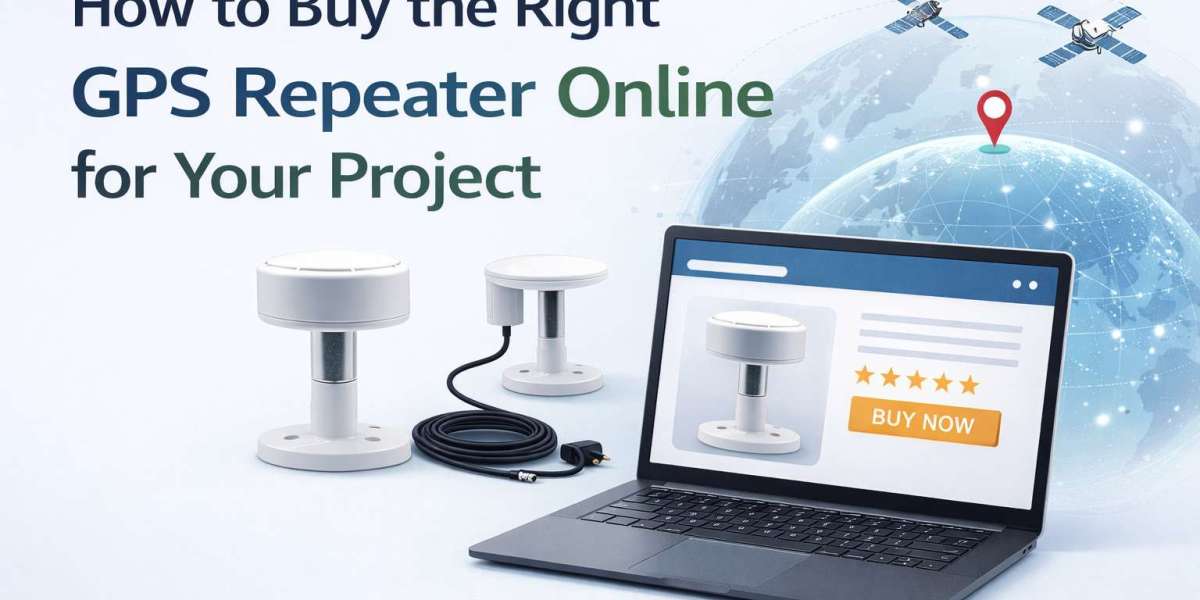
If your project suffers from weak or blocked GPS signals inside buildings, vehicles, tunnels, warehouses, or industrial facilities, a GPS repeater can provide a reliable solution.
However, not all GPS repeaters are the same. Choosing the wrong device can result in poor signal amplification, installation issues, or compliance problems.
This guide will help you buy the right GPS repeater online by understanding key features, compatibility factors, and buying considerations — so you can make a confident purchasing decision.
What Is a GPS Repeater?
A GPS repeater receives GPS signals from an external antenna and retransmits them indoors or in signal-blocked environments.
It is commonly used in:
- Industrial facilities
- Warehouses
- Underground parking areas
- Construction machinery
- Mining operations
- Fleet vehicles
- Marine systems
- Testing laboratories
If your project requires consistent GPS positioning in areas where signals are weak, a repeater is often the most practical solution.
Step 1: Identify Your Application Environment
Before buying a GPS repeater online, clearly define your project:
Indoor Industrial Use
- Warehouses
- Manufacturing plants
- Research labs
Look for stable indoor signal coverage and appropriate antenna cable length.
Vehicle or Fleet Installation
- Trucks
- Construction equipment
- Emergency vehicles
Choose compact, vibration-resistant models.
Harsh Environments
- Mining
- Outdoor construction
- Marine applications
Select rugged GPS repeaters with durable enclosures.
Step 2: Check Signal Coverage & Gain
One of the most important factors when buying online is signal gain and coverage area.
Compare:
✔ Coverage radius
✔ Signal strength (gain level)
✔ Noise figure
✔ Amplification stability
Buying a repeater with insufficient gain may result in weak indoor coverage.
Step 3: Verify Compatibility
Before checkout, confirm compatibility with:
- Your GPS receiver
- GNSS systems (GPS, GLONASS, Galileo if required)
- Antenna type
- Power supply requirements
Not all repeaters support multi-constellation GNSS systems. If your project requires broader satellite coverage, choose a compatible model.
Step 4: Consider Installation Requirements
When buying a GPS repeater online, review installation needs:
- External antenna placement
- Cable length
- Indoor antenna positioning
- Mounting options
- Power source (USB, DC input, etc.)
Make sure your installation environment supports proper signal routing.
Step 5: Check Regulatory Compliance
GPS repeaters must comply with local regulations in certain regions.
Before purchasing:
✔ Confirm regulatory approval
✔ Verify frequency compliance
✔ Ensure legal usage in your country
Buying from a specialized supplier reduces compliance risks.
Step 6: Compare Industrial vs Consumer Models
Consumer-grade GPS repeaters may work for home or car use but are not suitable for industrial projects.
Industrial-grade models offer:
- Better shielding
- Stable amplification
- Higher durability
- Long-term availability
- Technical documentation
For professional applications, reliability is more important than low price.
Step 7: Choose a Trusted Online Supplier
When buying a GPS repeater online, select a supplier that provides:
✔ Clear product specifications
✔ Technical documentation
✔ Transparent pricing
✔ Industrial support
✔ Reliable shipping
Avoid vague listings with limited technical details.
Common Project Use Cases
✔ Warehouse Navigation Systems
Ensure forklifts and indoor tracking systems maintain GPS positioning.
✔ Construction Site Equipment
Improve signal reception in cabins and control rooms.
✔ Marine & Transport Systems
Enhance onboard navigation reliability.
✔ Laboratory & Testing Environments
Enable GPS testing inside shielded facilities.
Final Buying Checklist
Before placing your order, confirm:
- ✔ Correct signal coverage
- ✔ GNSS compatibility
- ✔ Installation suitability
- ✔ Regulatory compliance
- ✔ Industrial-grade reliability
If all criteria are met, you’re ready to buy with confidence.
Conclusion
Buying the right GPS repeater online requires more than selecting the lowest price. You need a solution tailored to your project’s environment, compatibility needs, and long-term reliability requirements.
By carefully evaluating signal strength, installation factors, and supplier credibility, you can ensure stable GPS performance and avoid costly downtime.
Read More: https://tecsysproductguides.blogspot.com/2026/02/how-to-buy-right-gps-repeater-online.html