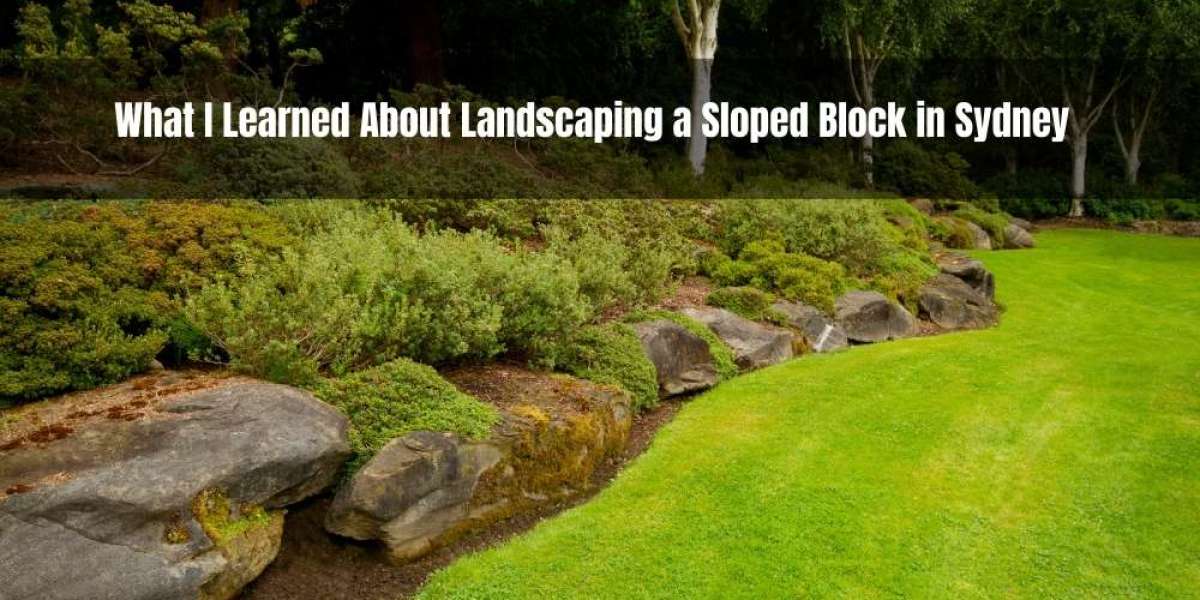
In Sydney, a flat backyard can feel like a luxury. Many homes sit on blocks that rise sharply from the street or fall away behind the house. At first glance, that slope might seem like a design opportunity — better views, interesting levels, something different from the standard rectangle of lawn.
In reality, it changes everything.
When you start thinking seriously about landscaping a sloped block, you realise very quickly that it’s less about plants and more about physics. Water runs downhill. Soil moves. Gravity doesn’t negotiate.
The first surprise: water always wins
On a flat block, rain can be inconvenient. On a slope, it’s influential. During heavy Sydney downpours, water gathers speed. It finds the lowest point and often carries soil with it.
That’s why drainage tends to sit at the centre of any serious sloped landscaping discussion. Before anyone talks about paving or turf varieties, there needs to be a clear idea of where water goes — and where it shouldn’t go.
It’s not just about protecting your own yard. Redirecting runoff onto neighbouring properties can create bigger issues. Good planning looks at the whole path of water from top to bottom, especially around downpipes and paved areas.
Flatten it — or work with it?
One of the early decisions is philosophical as much as practical: do you fight the slope, or do you adapt to it?
Some homeowners choose terracing. By cutting the slope into smaller, level platforms, you can create usable zones — perhaps a lawn area, a seating space, or defined garden beds. Terracing often involves retaining walls, which means thinking carefully about stability and drainage behind those walls.
Others prefer to work with the existing gradient. Instead of carving out large flat sections, they introduce stepped pathways, small resting points and layered planting that follows the natural fall of the land. It can feel more organic and sometimes less intrusive.
There’s no universal right answer. It depends on how you want to use the space and how steep the block actually is.
When landscaping becomes structural
Retaining walls are common on sloped blocks, but they’re not decorative features alone. They hold back soil, and that makes them structural.
In NSW, certain types of structural landscaping work require appropriate licensing. That’s an important distinction. Once soil is being retained or significant earthworks are involved, the project moves beyond simple garden design.
Even modest walls need proper footing and a way to relieve water pressure. Without that, walls can lean or crack over time. Often, the visible issue appears months or years after installation, which makes early planning even more important.
Soil, plants and holding things in place
Planting on a slope serves a purpose beyond aesthetics. Groundcovers and shrubs can help stabilise soil. Roots knit the surface together, reducing erosion during heavy rain.
That said, plants aren’t a substitute for structural support where it’s needed. On steeper blocks, planting usually complements retaining and drainage solutions rather than replacing them.
Mulch is another detail that behaves differently on a slope. Spread too thickly without edging, it can shift downhill in a storm. Small practical decisions — like how beds are contained — can make a noticeable difference over time.
Access changes the cost conversation
One thing many homeowners don’t consider at first is access. A steep backyard with limited side entry affects how materials are delivered and removed. Excavated soil has to go somewhere. Retaining materials have to get in.
Sometimes the layout of the block influences the design more than the slope itself. A narrow side passage can shape decisions about wall systems or paving materials simply because of how they need to be transported.
Thinking in stages
Landscaping a sloped block often benefits from a staged approach.
First comes assessment: understanding levels, drainage paths and soil conditions. Then structural elements — retaining, steps, pathways — are addressed. Only after those foundations are settled do planting and finishing details come into play.
Reversing that order can lead to rework. It’s frustrating to install garden beds only to disturb them later while fixing drainage.
For those comparing Sydney landscaping services for sloped blocks, it can be helpful to look at how providers describe their process. An overview of integrated level planning, retaining and planting can be seen through Sydney landscaping services for sloped blocks.
The details of any individual project will vary, but the underlying principles remain similar: understand the land first, design second.
A different way of seeing a slope
It’s easy to view a sloping block as a problem to solve. But with careful planning, it can become an advantage. Tiered gardens can feel more dynamic than flat lawns. Elevated seating areas can capture breezes. Layered planting can add depth and privacy.
The key is respecting the realities of the site. Water needs a path. Soil needs support. Structures need to be appropriate for their load.
When those elements are considered early, the result is often a yard that feels intentional rather than improvised.
A slope doesn’t prevent a functional outdoor space in Sydney. It simply asks for more thought at the beginning — and rewards it later.
Key Takeaways
- Sloped blocks require early attention to drainage and water flow.
- Terracing can create usable areas but introduces structural considerations.
- Working with natural contours may reduce excavation and disruption.
- Retaining walls on sloped sites are structural elements, not just features.
- A staged approach — structure before planting — helps avoid costly rework.