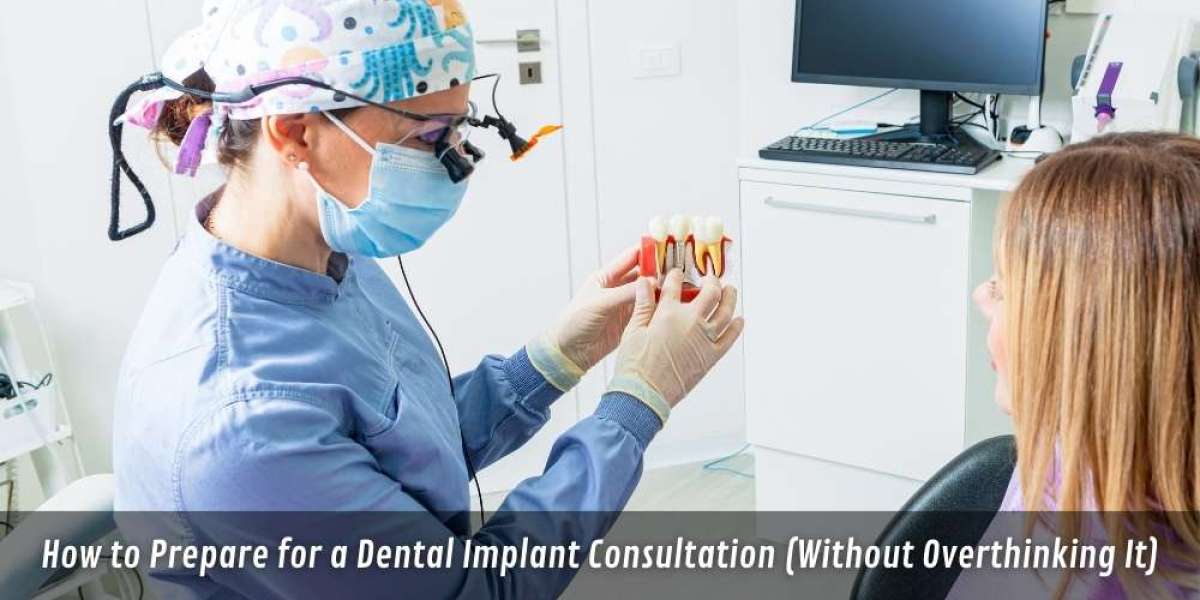
If you’re booking a dental implant consult, you’re probably not doing it for fun.
It’s usually after months (sometimes years) of “I’ll deal with it later”, a tooth that won’t behave, or a bite that’s slowly becoming a daily annoyance.
A consultation is where things stop being vague and start becoming a plan.
Not a promise. Not a hard sell. A plan.
What the consult is actually meant to do
A good consult isn’t a pass/fail moment.
It’s the appointment where you find out what’s realistic for your mouth, your health, your budget, and your calendar.
Some people walk in thinking they’ll leave with a final decision.
Often, the better outcome is leaving with clarity: what needs checking, what your options are, and what the next step would look like if you choose to proceed.
If you feel like you’re being rushed to “lock it in” on the day, that’s worth noticing.
Treatment planning should feel clear, not urgent.
The simple stuff to bring (so you don’t waste the visit)
You don’t need a binder.
You do need a few basics that help the conversation stay grounded.
Bring a quick health summary.
Anything that affects healing, bleeding, or medications matters more than people expect (and it’s easy to forget under pressure).
Write down what you take regularly—prescription meds, over-the-counter pain relief, supplements.
Even “just vitamins” can be relevant.
If you’ve had dental work recently, note what it was and when.
If you’ve got scans or reports, it’s fine to ask in advance whether they’re worth sending through.
And do yourself a favour: jot down your constraints.
Work travel, school runs, a big event coming up, anxiety about procedures, financial limits—these aren’t side details. They shape the plan.
Questions that tell you whether the plan is solid
The goal isn’t to grill anyone.
It’s to make sure the recommendation comes from a process you understand.
Start with the full sequence.
“What happens first, and what happens after that?” is a simple question that reveals a lot.
Then ask what’s being assumed.
Is the plan based on today’s exam only, or is it waiting on imaging or other checks?
Ask what could complicate things.
Not because you want scary stories—because you want honesty. Good clinicians can explain uncertainties without drama.
Get clear on aftercare early.
What will the first week look like in real life: eating, cleaning, sleeping, work, and follow-up visits?
And one that people forget: who do you contact if something feels off?
Knowing how support works after hours or between appointments matters.
If you like having a prompt list so you don’t walk out thinking “I forgot to ask the main thing”, this High Dental Implants Melbourne consultation guide can help you organise questions and priorities before the appointment for dental implant consultations in Melbourne CBD.
Common mistakes (and why they cause headaches later)
A big one is comparing price before comparing what’s included.
Two numbers can look similar while covering totally different steps, reviews, or temporary solutions.
Another is treating the consult like a one-time audition.
For many people, it’s a staged decision: confirm suitability, understand options, then choose a path once you’ve had time to think.
People also underestimate lifestyle factors.
Grinding at night, smoking, inconsistent cleaning, a job that makes appointments hard—these can change what the “best” option is.
And here’s a quiet mistake: not clarifying who does what.
Some practices have different clinicians involved at different stages, and that can be fine—so long as communication and continuity are clear.
Decision factors when choosing an approach or provider
You don’t need to pick “the fanciest” option.
You need the option you can actually follow through on.
Look for clarity over confidence.
Clear explanations, plain language, willingness to answer the same question twice — those are good signs.
Pay attention to how risk is discussed.
If everything is framed as “easy” and “guaranteed”, that’s not reassurance; it’s a lack of nuance.
Ask how follow-ups work.
Do they schedule reviews proactively? What happens if you’re uncomfortable? Who triages issues?
And be honest about your practical limits.
If you can’t manage lots of appointments because of work or family, say so. A good plan should fit your life, not fight it.
Practical Opinions
If you can’t explain the plan back in your own words, pause and ask for a simpler breakdown.
If two options feel close, choose the one with fewer “moving parts” in the aftercare.
If you felt rushed, treat that feeling as information, not something to ignore.
A simple 7–14 day plan (so you feel in control)
Day 1–2: Write your top three goals and top three constraints.
Keep it blunt and practical.
Day 2–4: Pull together your health info and medication list.
If you’re unsure what matters, include it anyway and let the clinician sort relevance.
Day 4–6: Draft your questions.
Aim for 10-ish: timeline, options, risks, aftercare, costs/inclusions, and support.
Day 6–10: If you’re comparing, compare the process.
How they explain steps and follow-ups will matter longer than a glossy pitch.
Day 10–14: After your consult, take 24–48 hours to review.
If anything is unclear, ask for clarification before committing.
Operator Experience Moment
The people who seem most comfortable in these consults usually aren’t “experts”.
They’re just prepared to say, “I’m not following — can you walk me through that again?”
When the response is calm and clear, it’s a good sign the rest of the process will be handled the same way.
Local SMB Mini-Walkthrough (Sydney, NSW)
If you’re running a business in Sydney, start by matching likely appointment steps to your trading rhythm.
Lock in buffer time around key visits, especially if you do client-facing work.
Plan at least one “lighter” day after longer appointments, just in case you feel worn out.
Keep aftercare basics at work so you’re not scrambling mid-shift.
If you drive into the CBD or rely on trains, think through how you’ll get home comfortably after the appointment.
Put all notes and dates in one place (one phone note is enough) so nothing gets lost.
Key Takeaways
- A consult is for clarity and planning — not pressure or instant decisions.
- Bring health/medication info and real-life constraints so the plan fits your schedule.
- Compare what’s included and how follow-ups work, not just the headline price.
- Choose an approach you can maintain with consistent aftercare.
Common questions we hear from businesses in Sydney, NSW, Australia
Q1: What should I expect to leave the consultation with?
Usually, you’ll leave with a proposed sequence (what happens first/next), what needs confirming, and a clearer sense of whether you’re a straightforward case.
A practical next step is to ask for a short summary of the plan in plain language so you can review it later.
In Sydney, it also helps to confirm whether imaging and discussion can happen in the same visit so you’re not adding extra trips.
Q2: Is it a red flag if I’m told I need more appointments before deciding?
It depends — sometimes it’s necessary for proper planning, sometimes it’s just how that clinic runs.
A practical next step is to ask what information they’re waiting on and what could change once they have it.
If you’re juggling staff rosters and peak periods, request an estimated schedule early so you can plan around your busiest weeks.
Q3: How do I compare two treatment plans without getting overwhelmed?
In most cases, turning each plan into a simple timeline makes differences obvious: steps, number of visits, follow-ups, and what’s included.
A practical next step is to ask each clinic, “What would make this plan change?” and write the answers down.
For Sydney CBD logistics, the number of visits and timing windows can matter as much as the clinical detail.
Q4: What if the plan sounds okay, but I still feel uneasy?
Usually, that’s your cue to slow down, not to push through.
A practical next step is to request answers to your top concerns in dot points (even a quick email summary) before you commit.
Given how busy Sydney weeks get, giving yourself 24–48 hours to think outside the appointment can make your decision a lot steadier.