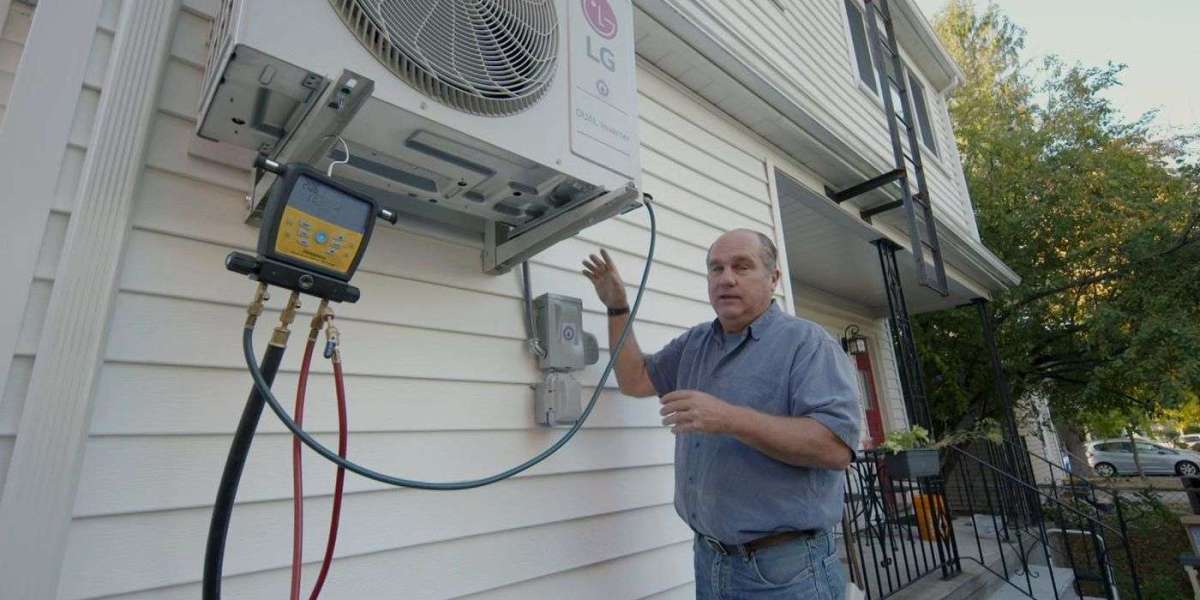
A room that is too warm in July and too cold in January can make an otherwise comfortable home frustrating to live in. For many homeowners, Mini Splits installation offers a practical way to control temperatures in individual rooms without extending traditional ductwork. From our perspective at Action Heating and Air Conditioning, the right system starts with the home itself, not simply the equipment.
What Mini Splits Installation Means for Montoursville Homes
A mini split is a heating and cooling system made up of an outdoor condenser and one or more indoor air-handling units. Refrigerant lines connect the indoor and outdoor components through a small wall opening, eliminating the need for large supply ducts.
This setup works particularly well for spaces that are difficult to serve with a central HVAC system. A finished attic, converted garage, home office, bedroom addition, or older room with limited duct access can often benefit from this type of equipment.
In Montoursville, we've noticed that most homeowners are not necessarily trying to replace their entire HVAC system. Many are looking for better temperature control in one or two areas of the house. A properly sized mini split can address that problem without requiring major changes to existing walls, ceilings, or ductwork.
Ductless mini split installation in Montoursville also gives homeowners the option of using multiple indoor units connected to one outdoor condenser. Each indoor zone can have its own temperature setting, which can be useful for households where different family members prefer different comfort levels.
Proper sizing matters just as much as the equipment itself. A system that is too large may cycle on and off frequently, while an undersized unit may struggle during extreme temperatures. A professional assessment should consider room dimensions, insulation, windows, sun exposure, occupancy, and the home's existing heating system.
The Real Challenge in Montoursville
Montoursville homeowners deal with a wide range of seasonal conditions. Winters can bring freezing temperatures and snow, while summer brings periods of heat and humidity. That means a mini split must be selected for both cooling and heating demands rather than judged only by its summer performance.
A common concern is whether a ductless system can actually keep a room warm enough during a Pennsylvania winter. The answer depends on the model, outdoor temperature performance, sizing, installation quality, and the home's insulation. Some cold-climate heat pumps are designed specifically to maintain useful heating capacity in low outdoor temperatures.
A client in Montoursville reached out after noticing that a finished upstairs room stayed several degrees colder than the rest of the house. The existing ductwork did not deliver enough airflow to the space, and adding new ducts would have required substantial remodeling. A properly sized ductless unit provided independent heating and cooling for the room while leaving the central system in place.
One question that often gets skipped is what happens if the system is installed in the wrong location. Placement affects airflow, noise, condensate drainage, and how evenly the room feels. A unit mounted directly above furniture, behind an obstruction, or in an area with poor air circulation may not perform as expected even if its capacity looks correct on paper.
Another overlooked issue is electrical capacity. Some installations require dedicated electrical circuits or other upgrades based on the selected equipment and existing panel. That should be checked before installation rather than discovered halfway through the project.
How Action Heating and Air Conditioning Approaches It Differently
A good installation process starts with evaluating the space before recommending equipment. Action Heating and Air Conditioning can assess the room layout, existing HVAC setup, insulation, electrical requirements, outdoor condenser location, and expected heating and cooling load before the system is selected.
The indoor head needs careful placement. The goal is to provide useful air distribution without creating an uncomfortable direct draft. Outdoor equipment also needs enough clearance for airflow and service access. In a snowy area, the condenser should be positioned with attention to snow accumulation and drainage rather than simply placed wherever there is open ground.
The installation itself involves several technical steps. The refrigerant lines must be routed correctly, connections need to be properly sealed, condensate drainage must be planned, and the system should be tested after startup. Installers should also verify operating temperatures, airflow, controls, and refrigerant performance.
A common competitor gap is focusing heavily on efficiency ratings while giving little attention to long-term serviceability. A highly efficient system still needs accessible filters, a sensible outdoor location, and room for a technician to inspect the equipment later.
That is also why installation quality should not be judged solely by how quickly the equipment goes onto the wall. The small details—line-set routing, wall sealing, drainage, clearances, and commissioning—can affect comfort and reliability for years.
Practical Tips: What to Know Before You Decide
Start by identifying the actual problem. If one bedroom is uncomfortable, there may be a zoning issue, insulation problem, blocked duct, or poor airflow that should be diagnosed first. Adding equipment without understanding the cause can create unnecessary expense.
Working with clients in Montoursville, our team found that homeowners often focus on the indoor unit but give less thought to the outdoor condenser. Its location can affect noise, maintenance access, snow exposure, and how easy it is to keep the area clear throughout the year.
Here are several points worth checking before approving a project:
1. Ask how the system was sized
A contractor should be able to explain why a particular capacity was selected. Room size alone is not enough. Window area, insulation, ceiling height, orientation, and heat loss all affect the calculation.
2. Consider the number of zones
One indoor unit may be enough for a single room, while several areas may benefit from multiple heads. More zones can increase cost and complexity, so the design should match the actual comfort problem.
3. Check cold-weather performance
Montoursville's winter conditions make heating capacity worth serious consideration. Ask about the equipment's rated performance at low outdoor temperatures and whether supplemental heat will still be needed during severe cold.
4. Think about filter access
Mini splits require routine filter cleaning. If an indoor unit is mounted too high or in an awkward location, a simple maintenance task becomes inconvenient. Good placement should consider the homeowner's ability to reach the filters safely.
5. Ask what maintenance is expected
Mini Splits maintenance usually includes filter cleaning, inspection of the indoor coil and blower, checking the outdoor condenser, and verifying drainage. Professional service can also identify developing problems before they become expensive repairs.
6. Do not judge affordability by equipment price alone
The lowest initial quote may not represent the lowest long-term cost. Installation quality, warranty coverage, energy use, service access, and expected equipment life all deserve consideration.
For homeowners comparing Mini Splits repair options later, keeping installation records and model information can also make future service easier. Documentation helps a technician identify the equipment and understand previous work.
A useful local tip is to plan the outdoor unit's location before the first hole is drilled. Think about winter snow, summer sun, landscaping, drainage, access for service, and distance from bedrooms or neighboring properties. Five minutes spent reviewing the location can prevent years of minor annoyances.
A Better Way to Plan Year-Round Comfort
The right mini split is not simply the unit with the highest efficiency rating or the lowest quoted price. Capacity, placement, electrical requirements, cold-weather performance, drainage, and future service all deserve consideration before installation begins.
For homeowners planning Mini Splits installation in Montoursville, a room-by-room assessment can reveal whether ductless heating and cooling is the right fit. Action Heating and Air Conditioning can help evaluate the space and develop a practical approach for the home's specific needs.
FAQs
1. Are mini splits good for heating homes in Montoursville?
Yes, mini splits can provide effective heating in Montoursville, including during cold Pennsylvania winters, provided the equipment is selected for low-temperature operation and correctly sized. Cold-climate heat pump models are worth considering for homes that depend heavily on the system for winter heating. Insulation and room conditions also affect performance.
2. How much does mini split installation cost in Montoursville?
Installation costs vary based on the number of zones, equipment capacity, electrical work, line-set length, wall construction, and installation difficulty. A single-room system generally costs less than a multi-zone setup. The best way to get an accurate figure is to have the space assessed and receive a written quote covering equipment and labor.
3. How do I know a mini split installer is legitimate?
Look for an established business that provides clear estimates, explains equipment sizing, carries appropriate licensing and insurance, and can describe its installation process. Ask about warranties and who handles future service. A trustworthy contractor should also be willing to explain why a specific system and placement were recommended instead of simply quoting an equipment price.
4. Can a mini split cool and heat more than one room?
Yes. Multi-zone systems can connect several indoor units to one outdoor condenser, allowing separate temperature control in different rooms. However, the system must be designed around the home's layout and heating and cooling loads. A multi-room setup is not automatically better; the number and location of zones should match the home's actual needs.
5. How often should a mini split be serviced?
Filters should generally be cleaned regularly, with frequency depending on household conditions, pets, dust, and system use. Professional inspection can be scheduled periodically to check coils, drainage, electrical components, refrigerant performance, and the outdoor unit. Heavy-use systems or equipment operating in demanding conditions may benefit from more frequent attention.