The landscape of European migration into the United Kingdom underwent a seismic shift following the nation's formal departure from the European Union. For decades, the foundational principle of free movement allowed European Economic Area (EEA) and Swiss nationals to live, work, and study across Britain with minimal administrative friction. More importantly, this legal framework extended to their non-European family members, providing a streamlined mechanism for families to remain united across international borders. Historically, this was achieved through a dedicated European pathway that recognized the supremacy of treaty rights. However, the end of the Brexit transition period brought profound changes to this system, closing old pathways and introducing new, complex regulatory schemes. For international families trying to understand their current rights, distinguishing between historical provisions and modern requirements is absolutely essential. Immigration Solicitors4me is dedicated to clarifying this transition, providing expert guidance to ensure that your family remains together under the current legal framework.
The Historical Framework: The Role of the Original Permit
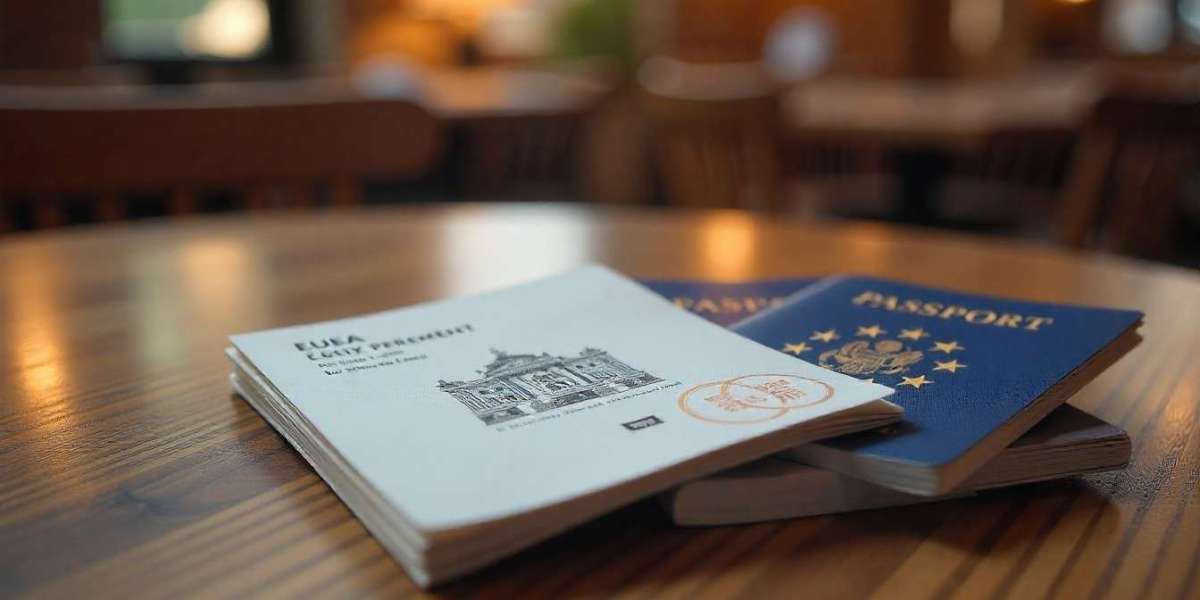
To fully grasp the current immigration landscape, one must first understand the system that preceded it. Before the United Kingdom formally finalized its withdrawal from the European Union on the thirty-first of December 2020, European free movement laws governed the residency rights of EEA citizens and their dependents. During this era, a non-EEA national who wished to travel to Britain to join their European spouse, civil partner, or dependent relative would apply for an eea family permit.
This document was an official facilitation document acknowledging the applicant's derived right to enter the country under European law. The application process was notably distinct from domestic UK immigration rules. It did not require exorbitant Home Office fees, nor did it demand that the sponsor satisfy rigorous minimum income thresholds. As long as the European national was actively exercising their treaty rights in the UK, their non-European family members were entitled to join them. For years, the eea family permit served as a vital bridge for transnational families seeking to build their lives in Britain.
The End of Free Movement and the Birth of the EUSS
When the Brexit transition period officially concluded at the end of 2020, the era of European free movement in the United Kingdom ended with it. Consequently, the government laid down legislation that formally closed the traditional eea family permit route to any new applications. The Home Office transitioned the management of European citizens and their family members into a newly established domestic framework known as the EU Settlement Scheme (EUSS).
While the original permit route is now closed, the underlying principle of family reunification was preserved for eligible individuals through the EUSS Family Permit. This modern equivalent serves a similar function, allowing eligible non-EEA family members to enter the country to join their sponsor. However, eligibility criteria have shifted significantly. The most critical distinction is the strict chronological cutoff: to qualify under the new scheme, the family relationship must have been formally established before the end of the Brexit transition period. This means marriages, civil partnerships, and durable partnerships must have existed prior to the first of January 2021 to benefit from these transitional provisions.
Eligibility Criteria for the Modern Equivalent
Understanding who qualifies for the current entry clearance requires a careful reading of revised immigration rules. The scheme is available to close family members of a relevant EEA citizen. This typically refers to an EEA or Swiss national who has already successfully secured either Settled Status or Pre-Settled Status under the EUSS.
Eligible family members encompass spouses, civil partners, and durable partners, provided they can furnish undeniable proof that their partnership was formed before the historic deadline and has remained continuous ever since. The route also accommodates dependent children, grandchildren, and in certain circumstances, dependent parents and grandparents of the European sponsor. It is important to note that while the historical eea family permit accommodated a broader definition of extended family members under European directives, the current domestic scheme has tightened these definitions considerably. Navigating these narrower parameters requires a meticulous, evidence-based approach to prove statutory dependency and relationship authenticity.
Evidentiary Burdens and Administrative Scrutiny
Although the EUSS pathway avoids the steep financial thresholds of standard domestic family visas, it is by no means an administrative technicality. Home Office caseworkers scrutinize these applications with intense rigor to prevent fraudulent entries. The burden of proof rests squarely on the applicant to establish both their identity and the unbroken continuity of their qualifying relationship.
Applicants must compile a comprehensive documentary portfolio. This includes providing valid passports, official marriage or birth certificates, and extensive proof of the sponsor’s Settled or Pre-Settled Status. For those applying as durable partners, the evidentiary threshold is exceptionally high; couples must typically provide at least two years of cohabitation evidence predating the Brexit deadline. Many applicants mistakenly assume that because they previously held an eea family permit, their transition to the EUSS will be automatic. This is a dangerous misconception. The Home Office evaluates every application on its own merits, and failing to provide the exact evidence demanded by current rules will result in a swift refusal.
Arriving in the UK and Securing Long-Term Status
Securing entry clearance under this scheme is merely the first step in a longer legal journey. An EUSS Family Permit is generally issued with a short validity period. It is designed purely to facilitate your lawful entry into the United Kingdom; it does not provide long-term residency rights.
Upon arriving in Britain, the applicant must take immediate administrative action. Before the expiration of their entry clearance, they must formally apply to the EU Settlement Scheme from within the UK to secure Pre-Settled Status. Pre-Settled Status grants the individual the right to live, work, and study in the country for five years. Once the applicant completes five continuous years of lawful residence, they become eligible to apply for Settled Status, permanently securing their future in the country. Failing to apply for Pre-Settled Status before the initial permit expires can render the individual an overstayer, exposing them to severe consequences and threatening their right to remain with their family.
The Strategic Importance of Professional Legal Counsel
The transition from European law to domestic British regulation has created a complex period in modern immigration history. Families are frequently caught between overlapping transitional rules, strict deadlines, and shifting guidance. While the legacy of the eea family permit paved the way for current family reunification rights, misunderstanding the new EUSS requirements can lead to disastrous consequences for your family’s future.
At Immigration Solicitors4me, we recognize the high stakes involved in transnational family migration. Our legal professionals possess a profound understanding of both historical regulations and the current EU Settlement Scheme. We approach every case with meticulous attention to detail, conducting a thorough review of your family history. We expertly guide you through curating your evidentiary bundle, ensuring every document satisfies the strict criteria set forth by Home Office policy. By partnering with our legal team, you secure the strategic advocacy necessary to protect your rights. Contact Immigration Solicitors4me today to arrange a comprehensive consultation and let us guide you safely through the intricacies of the UK immigration system.