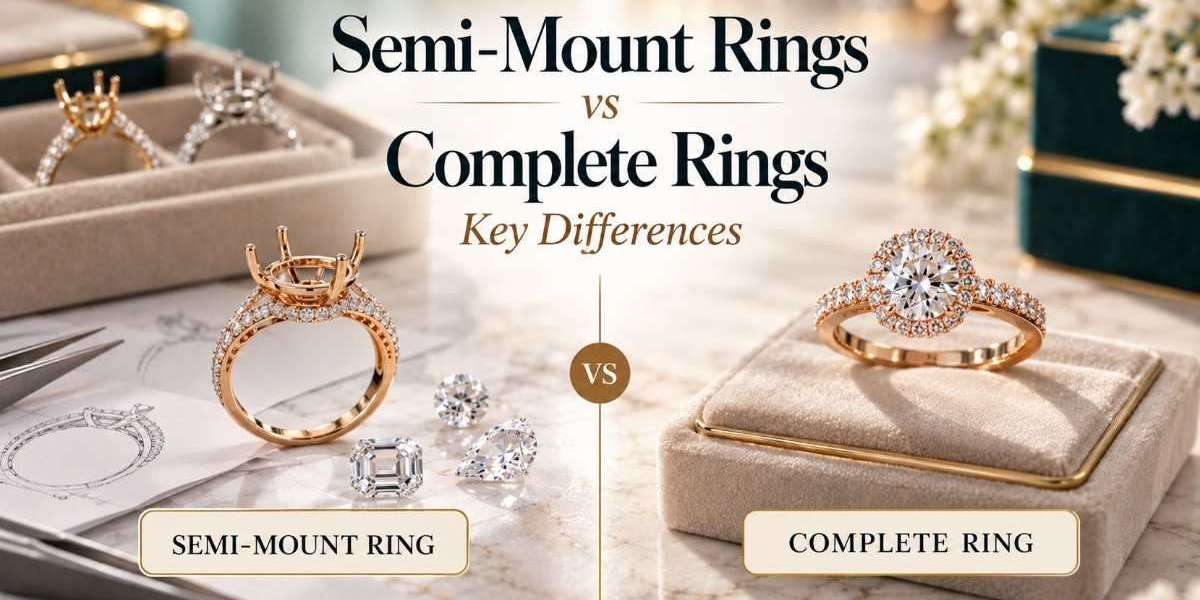
Semi-mount rings and complete rings represent two fundamentally different approaches to how a piece of jewelry reaches the customer. A semi-mount is a finished setting sold without its center stone, ready for a customer or jeweler to select and add one separately. A complete ring, by contrast, already has its center stone permanently set and is ready for immediate sale; no additional customization required. While both ultimately deliver a finished piece to the customer, the path each takes, and the implications for jewelers' sourcing and stocking them, differ in ways that genuinely affect business strategy. This guide breaks down the practical differences between semi-mount and complete rings across cost, customization, turnaround time, and inventory management, helping jewelers decide how to balance both approaches within their own catalog.
What Exactly Distinguishes a Semi-Mount from a Complete Ring?
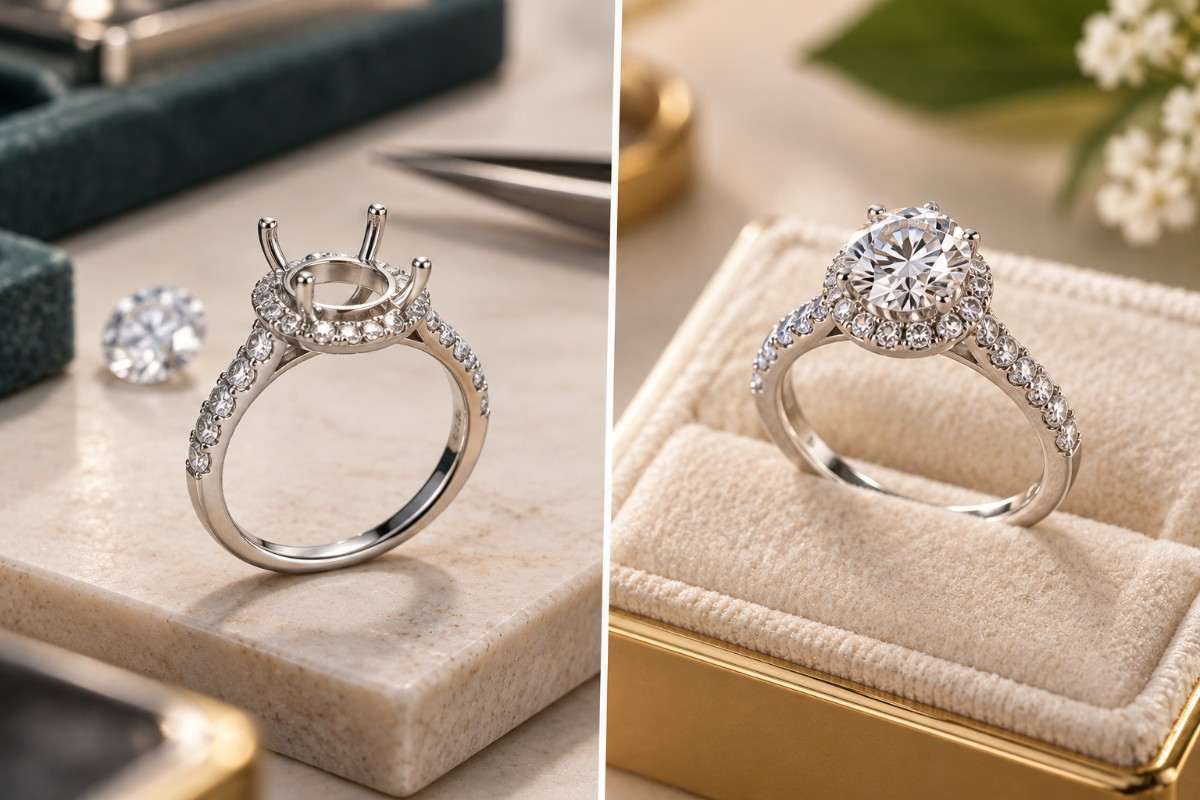
The core distinction comes down to a single missing element: the center stone. A semi-mount arrives fully finished in every other respect. The band, prongs, any accent stones or halo detailing are all complete, but the space intended for the center stone remains empty until a customer selects one. A complete ring skips this step entirely, arriving with the center stone already selected, purchased, and permanently set by the manufacturer or jeweler before it ever reaches the display case. This single difference cascades into a wide range of practical implications, from how each is priced and stocked to how customers experience the buying process itself.
Customization and Personalization
Semi-mount rings offer a meaningfully higher degree of personalization. Because the center stone is chosen separately, customers can select the exact shape, size, and quality grade that fits their preferences and budget, without needing to compromise the setting style they love or the stone they want. This flexibility is a significant part of why semi-mounts have become so popular for engagement rings specifically, where customers often have strong, individual preferences about their center stone. Complete rings, by comparison, offer far more limited customization. What the customer sees is generally what they get, sometimes with resizing available, but rarely with the ability to swap the center stone or make meaningful adjustments to the overall design. This works well for customers who've fallen in love with a specific finished piece exactly as displayed, but it doesn't accommodate the more individualized preferences that many engagement ring shoppers in particular tend to have.
Cost Considerations
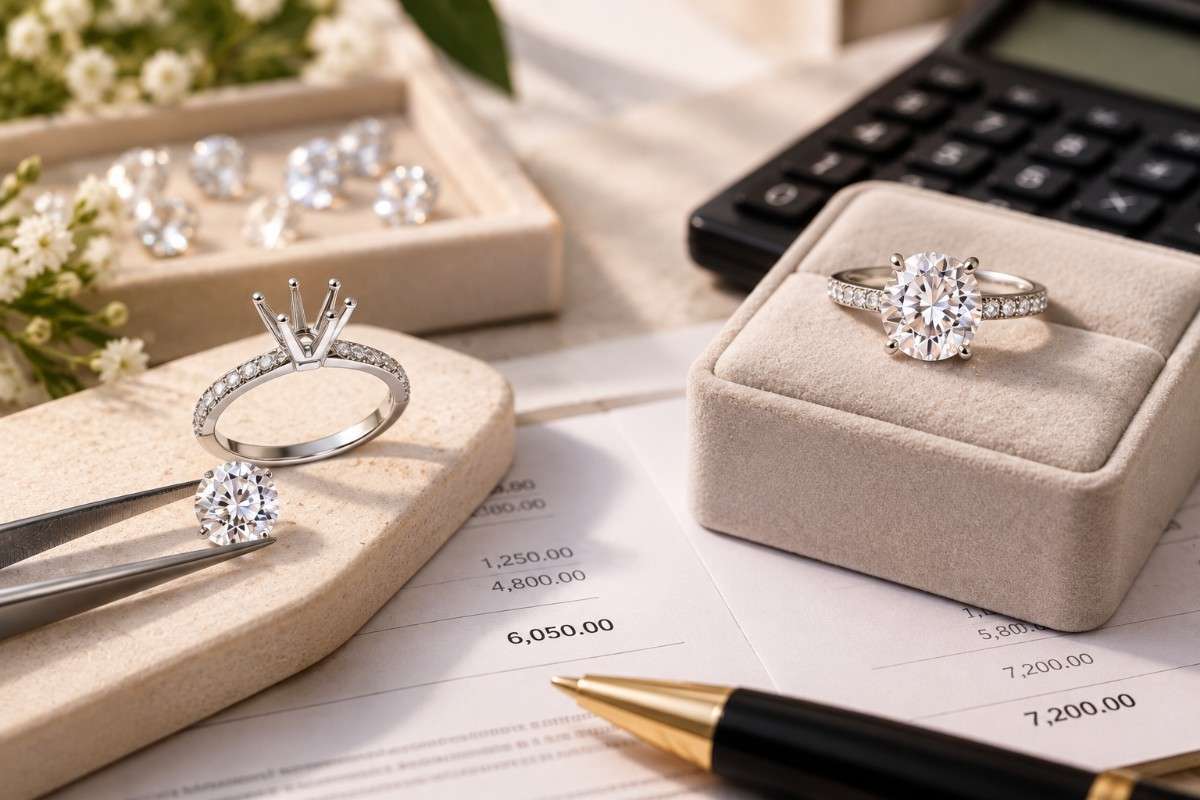
Pricing structures differ meaningfully between the two categories. Semi-mount rings are typically priced for the setting alone, with the center stone priced and purchased separately. This transparency can work in the customer's favor, since it makes clear exactly what portion of the total cost goes toward the setting versus the stone, information that's often bundled together and less visible in a complete ring overall price tag. For jewelers, semi-mounts also tend to represent a lower upfront capital investment per unit displayed, since the more expensive center stone isn't purchased and set until an actual order is confirmed. Complete rings require the full cost, setting and stone together, to be paid upfront as part of building finished inventory, representing a larger capital commitment per unit before any guarantee that specific combination will sell.
Turnaround Time
This is one area where complete rings hold a clear advantage: immediacy. A complete ring is ready for purchase the moment a customer decides they want it, no additional production or setting time required. This matters significantly for customers who want or need a piece immediately, whether due to a last-minute gift occasion or simply a preference for instant gratification. Semi-mount rings require an additional step, selecting and setting the center stone, before the piece is ready for the customer. While this process is typically much faster than fully custom design from scratch, often just days rather than weeks, it still introduces a delay that complete rings don't have. Jewelers working with customers on a tight timeline should factor this difference into how they present and recommend each option.
Inventory and Business Risk
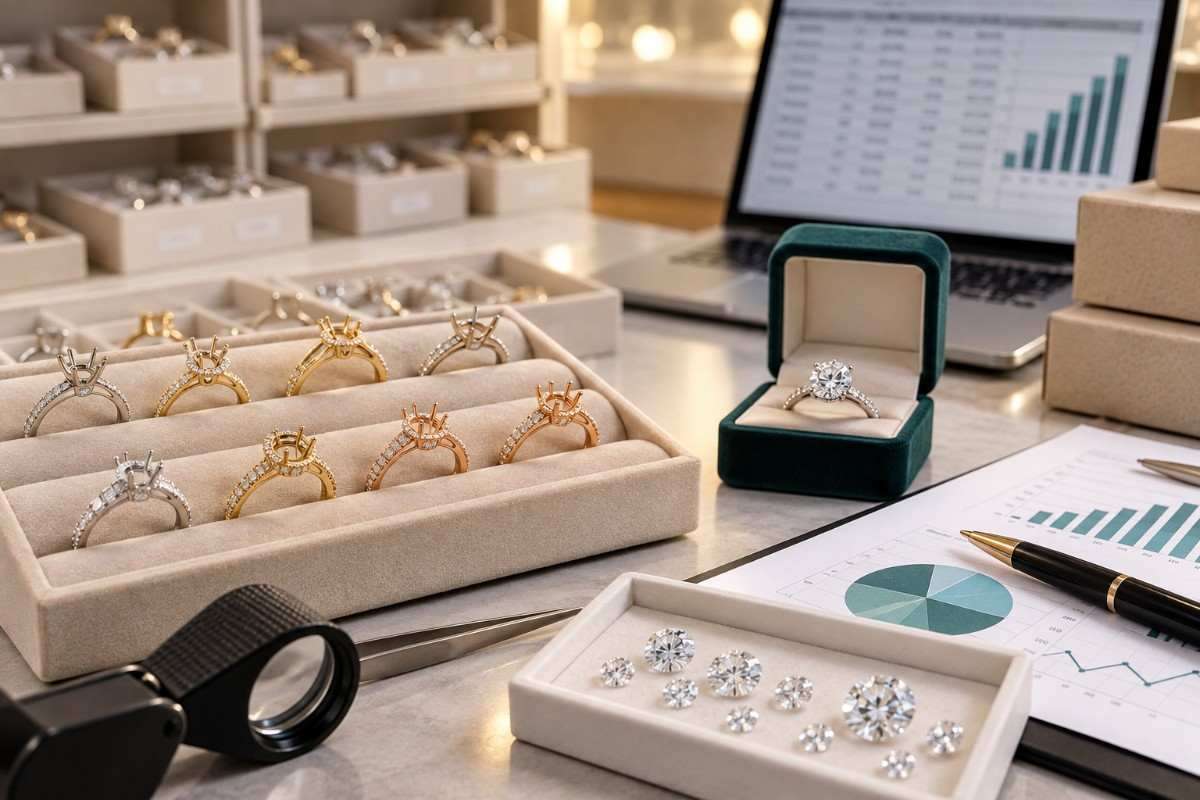
From a business operations perspective, the differences between semi-mount and complete rings become particularly significant. Complete rings carry substantially higher inventory risk, since the full cost of both setting and stone is committed upfront, before any customer has expressed interest in that specific combination. If a particular complete ring doesn't sell within a reasonable timeframe, that capital remains tied up, and the business may eventually need to discount the piece to move it. Semi-mount rings dramatically reduce this risk. Jewelers can display and offer a wide range of setting styles without the capital burden of pairing each one with an expensive center stone in advance. This allows for broader catalog variety with meaningfully lower financial exposure, since the more expensive component, the stone, is only purchased once an actual sale is happening. This is a major reason many jewelers have shifted a growing portion of their inventory strategy toward Ring Mounting options rather than exclusively stocking complete, finished pieces, particularly for higher-value engagement ring categories where customer stone preferences vary widely.
Which Option Works Best for Different Customer Types
Neither semi-mount nor complete rings are universally "better"; the right choice depends heavily on the specific customer and situation. Customers with strong, specific preferences about their center stone, or those working within a particular budget that requires careful stone selection, are generally better served by semi-mount options that let them make those choices deliberately. Customers who want something immediately, who've fallen in love with a specific finished design exactly as shown, or who prefer a simpler, more straightforward buying process often gravitate toward complete rings instead. Many successful jewelers offer both options side by side, allowing customers to self-select based on their own priorities around timeline, budget, and personalization, rather than forcing every customer into a single purchasing model.
Applying This Comparison Across Gents and Ladies Collections
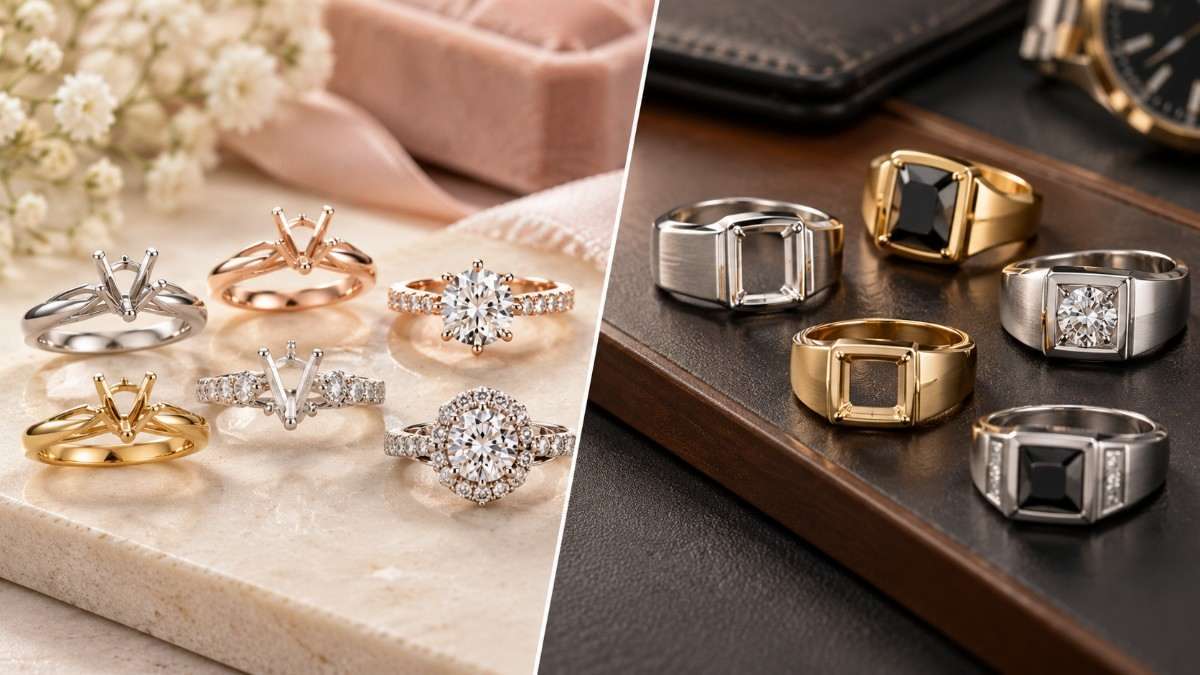
This semi-mount versus complete ring distinction applies somewhat differently across gents and ladies categories, reflecting the different roles center stones typically play in each. Ladies rings, particularly engagement rings, are far more likely to be sold as semi-mounts, since the center stone plays such a central, personal role in the overall design and customer decision-making process. Gents rings, where stones (when included at all) typically play a smaller, more understated role, are more frequently sold as complete pieces, since there's often less individual variation in stone preference to accommodate. That said, semi-mount options are increasingly available in gents' collections as well, particularly for pieces incorporating a more prominent stone. A well-curated Gents Ring Mounting selection that includes both semi-mount and complete options gives jewelers the flexibility to serve a wider range of customer preferences within this category as well.
Quick Comparison Summary
- Customization: Semi-mounts offer significantly more flexibility in stone selection; complete rings offer minimal customization beyond resizing.
- Turnaround time: Complete rings are ready immediately; semi-mounts require additional time for stone selection and setting.
- Cost transparency: Semi-mounts separate setting and stone costs clearly; complete rings typically bundle pricing together.
- Inventory risk: Semi-mounts carry meaningfully lower capital risk for jewelers; complete rings require full upfront investment per unit.
- Best suited for: Semi-mounts work well for customers with specific stone preferences; complete rings suit those wanting immediate purchase with minimal decision-making.
Final Thoughts
Semi-mount and complete rings each serve a genuinely different purpose, and understanding the practical differences between them, customization, cost structure, turnaround time, and inventory risk, helps jewelers build a more strategic, balanced catalog rather than defaulting entirely to one approach. Most successful jewelry businesses find value in offering both, using semi-mounts to manage inventory risk and offer meaningful personalization, while maintaining a curated selection of complete rings for customers who prioritize immediacy and simplicity. Building this balance thoughtfully, across both gents and ladies' collections, ultimately serves a wider range of customer needs than committing exclusively to either model alone.