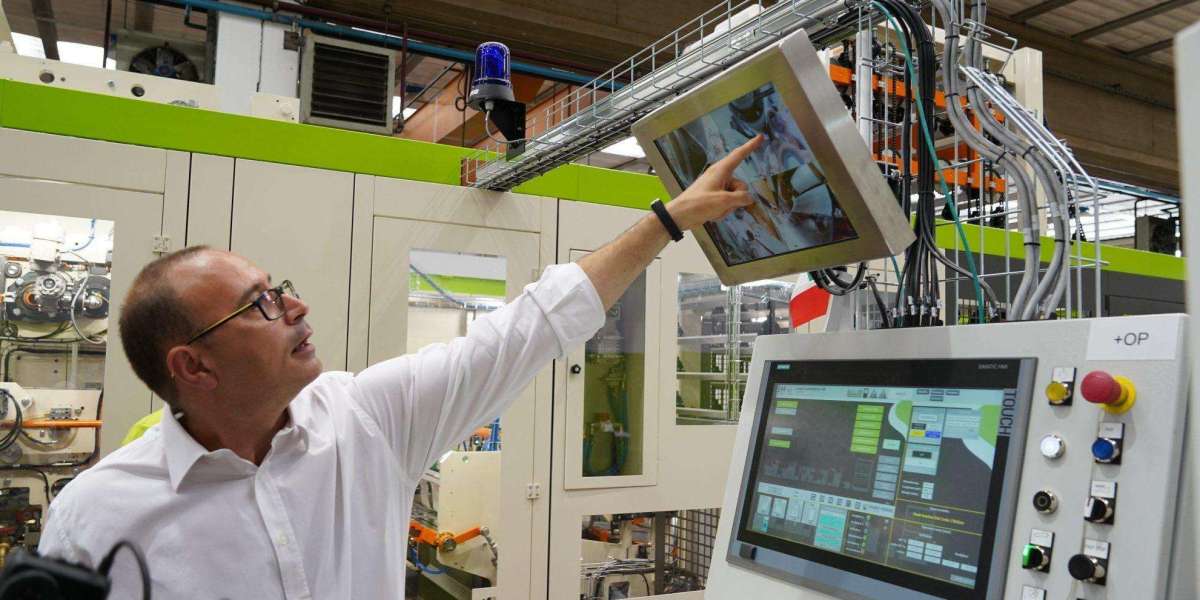
For OEMs and machine builders, choosing an industrial display is not simply about screen size, resolution, and price. The display needs to fit the machine, support the operator, withstand the working environment, and remain available throughout the product lifecycle.
This leads to an important question: Should you choose an off-the-shelf industrial monitor or develop a custom industrial touch display?
The right answer depends on the application's mechanical, electrical, environmental, and operational requirements.
What Is an Off-the-Shelf Industrial Monitor?
An off-the-shelf industrial monitor is a ready-made product with predefined specifications such as screen size, resolution, touch technology, interfaces, mounting options, and operating temperature.
It can be a practical choice when your machine can accommodate a standard product without major modifications.
Typical advantages include:
- Faster availability
- Lower initial development effort
- Standard interfaces
- Established product specifications
- Easier replacement
For example, if you need a standard panel-mount touchscreen for an indoor machine and the available dimensions, brightness, touch functionality, and interfaces already meet your requirements, an off-the-shelf monitor may be sufficient.
However, standard products also mean working within the manufacturer's available specifications.
What Is a Custom Industrial Touch Display?
A custom industrial touch display is developed around the specific requirements of an OEM product or machine.
Instead of adapting the machine to an available monitor, the display can be designed around the machine's requirements.
Depending on the project, customization can include:
- Display size and resolution
- Brightness
- Touch technology
- Cover glass
- Optical bonding
- Anti-glare treatment
- Mechanical dimensions
- Mounting
- Housing
- Connectors
- Embedded electronics
- Communication interfaces
TO-ES develops customized display solutions for OEM applications, including touch displays, HMI solutions, embedded electronics and mechanical integration.
When Should OEMs Consider a Custom Display?
Customization becomes particularly relevant when a standard monitor cannot meet important application requirements.
- Limited Installation Space
If your machine has a specific panel opening, restricted depth, unusual mounting points, or a non-standard form factor, adapting the machine around a standard monitor may create unnecessary engineering work.
A custom display can be designed around the available space.
- Demanding Operating Conditions
Industrial equipment may operate in environments involving vibration, dust, moisture, temperature variations, or continuous operation.
In these applications, the display should be selected according to the actual environmental conditions rather than simply being labelled "industrial."
- Special Touch Requirements
The operator's working conditions should influence the touch technology.
Gloves, moisture, protective glass, multi-touch requirements, and deliberate pressure input can all affect the choice between different touch technologies.
For OEM applications, custom touch integration can help match the display to the actual user environment.
- High-Brightness or Optical Requirements
Displays used outdoors or in brightly lit production areas may require higher brightness and improved optical performance.
Depending on the application, OEMs may need to consider optical bonding, anti-glare treatment, anti-reflective coatings, and sunlight readability.
- Long Product Lifecycle
Industrial machines can remain in service for many years. If a standard monitor is discontinued, replacing it may require mechanical changes, testing, or requalification.
For long-term OEM projects, ask the supplier about product availability, component lifecycle, replacement strategy, and obsolescence management.
Custom vs. Off-the-Shelf: What Should You Compare?
When evaluating the two options, don't compare only the purchase price.
Consider the complete project:
Factor | Off-the-Shelf | Custom |
Initial cost | Usually lower | Higher |
Development effort | Low | Higher |
Availability | Usually faster | Requires development |
Mechanical fit | Standard | Application-specific |
Touch customization | Limited by model | Possible |
Housing | Standard | Custom possible |
Integration | May require adaptation | Designed around application |
Lifecycle planning | Supplier dependent | Can be planned with OEM |
A standard monitor may have a lower unit price but require additional brackets, mechanical modifications, adapters, or engineering work.
A custom display may require a greater initial investment but can reduce integration compromises when the requirements are highly specific.
The right comparison is therefore total cost and product requirements, not simply the display price.
A Practical Buying Checklist
Before selecting a display, OEMs should define:
Mechanical: screen size, cut-out dimensions, depth, mounting and housing.
Display: resolution, brightness, viewing angle, contrast and optical requirements.
Touch: PCAP or resistive technology, glove operation, wet operation and protective glass.
Environment: temperature, vibration, dust, moisture and cleaning requirements.
Electronics: power supply, video inputs, USB, Ethernet, serial communication and other interfaces.
Lifecycle: expected product lifetime, annual volume, availability and replacement requirements.
Having these requirements ready also makes it easier for a display supplier to recommend an appropriate solution.
Which Option Should OEMs Choose?
An off-the-shelf industrial monitor can be a practical choice when your requirements already match an available product.
A custom industrial touch display becomes more relevant when you need non-standard dimensions, specialized touch performance, high brightness, custom housing, integrated electronics, specific interfaces, environmental protection, or long-term lifecycle planning.
The goal should not be to choose custom simply because it is custom. The goal is to choose the solution that fits the machine, application, budget, and expected product lifetime.
Looking for a display designed around your OEM application?
TO-ES supports OEMs and machine builders with customized display, HMI, touch, and embedded solutions from requirements analysis and engineering through prototyping and series production.
Read More: https://tecsysproductguides.blogspot.com/2026/09/custom-industrial-touch-displays-vs-off.html