
As global trade regulations grow more complex and cross-border supply chains face increasing volatility, organizations are under pressure to ensure compliance while maintaining speed, cost efficiency, and operational resilience. QKS Group’s Global Trade Management (GTM) market research delivers a comprehensive analysis of the global GTM landscape, examining emerging technology trends, evolving market dynamics, and the future outlook shaping international trade operations.
This research provides strategic insights for technology vendors to better understand the competitive landscape, strengthen product differentiation, and align growth strategies with market demand. Simultaneously, it enables enterprises and global trade practitioners to evaluate vendor capabilities, competitive positioning, and solution maturity—supporting informed decisions across compliance, logistics, and supply chain functions.
The Rising Importance of Global Trade Management Platforms
Global trade operations today are characterized by frequent regulatory changes, geopolitical uncertainty, and heightened enforcement scrutiny. Traditional, manual trade processes are no longer sufficient to manage the scale and complexity of international commerce. Modern GTM platforms are emerging as mission-critical systems that digitize and automate end-to-end global trade workflows.
According to Senior Analyst at QKS Group, Global Trade Management systems act as strategic orchestration layers for international trade. By automating import and export compliance, trade documentation, duty and tariff optimization, restricted party screening, and cross-border visibility, GTM platforms empower organizations to operate confidently across diverse geographies and regulatory regimes.
From Compliance Tools to Strategic Trade Enablers
While compliance remains a foundational requirement, GTM solutions are rapidly evolving beyond risk mitigation. Advanced platforms now integrate real-time regulatory content, automated classification, landed cost modeling, and analytics-driven decision support to help organizations proactively manage trade complexity.
By embedding compliance directly into procurement, manufacturing, logistics, and order fulfillment processes, GTM platforms reduce delays, minimize penalties, and accelerate customs clearance. At the same time, they unlock measurable business value by optimizing duties, improving supply chain predictability, and enabling faster time-to-market—critical advantages in today’s highly dynamic global economy.
Technology Trends Shaping the GTM Market
The Global Trade Management (GTM) market is being shaped by innovations such as cloud-native architectures, AI-assisted classification, real-time shipment visibility, and API-driven integration with ERP, TMS, and supply chain planning systems. These capabilities allow organizations to gain a unified view of global trade activities while responding quickly to regulatory updates and disruptions.
As enterprises expand into new markets and diversify sourcing strategies, GTM platforms play a central role in strengthening supply chain resilience. By providing transparency across cross-border flows and enabling proactive exception management, GTM solutions help organizations anticipate risks and maintain continuity in global operations.
Competitive Benchmarking with the SPARK Matrix™
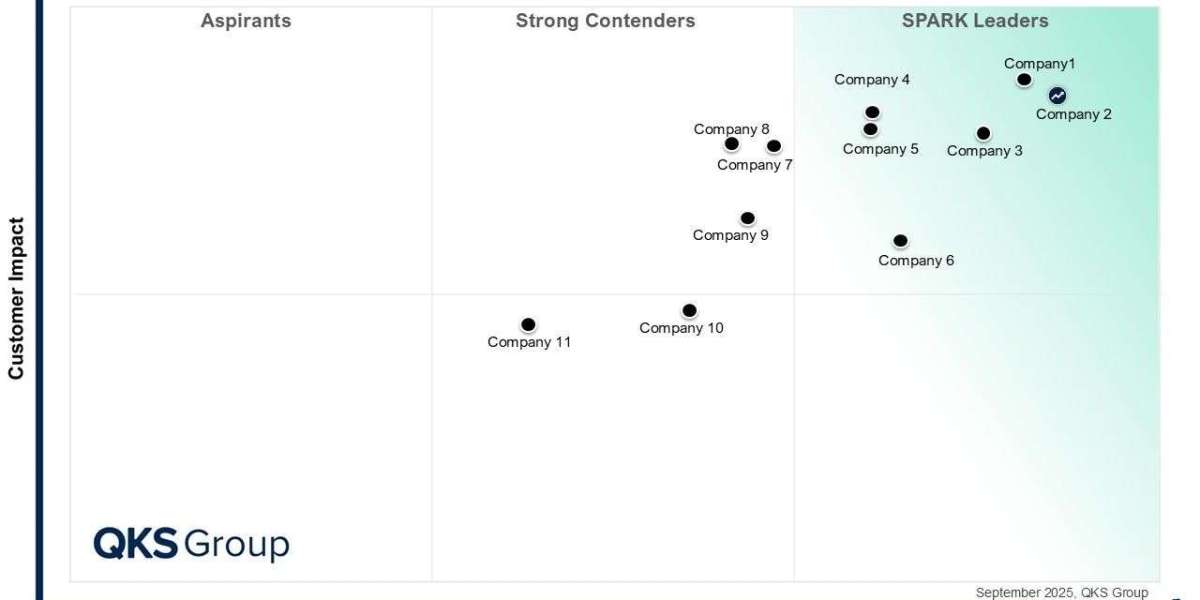
The research includes a detailed competitive analysis and vendor evaluation using QKS Group’s proprietary SPARK Matrix™ framework. This framework ranks and positions leading Global Trade Management vendors based on two critical dimensions—Technology Excellence and Customer Impact—offering a holistic view of vendor strengths, limitations, and overall market positioning.
The SPARK Matrix™ assessment covers globally impactful GTM vendors including AEB, Bamboorose, Descartes Systems Group, e2open, LOG-NET, MIC, Oracle, QAD, SAP, Thomson Reuters, and WiseTech Global. This structured evaluation enables enterprises to compare solutions across compliance depth, automation capabilities, scalability, and integration maturity.
The Future Outlook of Global Trade Management
As international trade continues to evolve amid regulatory complexity, sustainability requirements, and geopolitical shifts, Global Trade Management platforms will become increasingly strategic to enterprise success. The future of GTM lies in intelligent, automated, and integrated trade ecosystems that not only ensure compliance but also drive efficiency, cost optimization, and competitive differentiation.
QKS Group’s Global Trade Management market research provides the clarity and insight required for both vendors and enterprises to navigate this transformation—supporting smarter investments, stronger compliance, and resilient global trade operations.