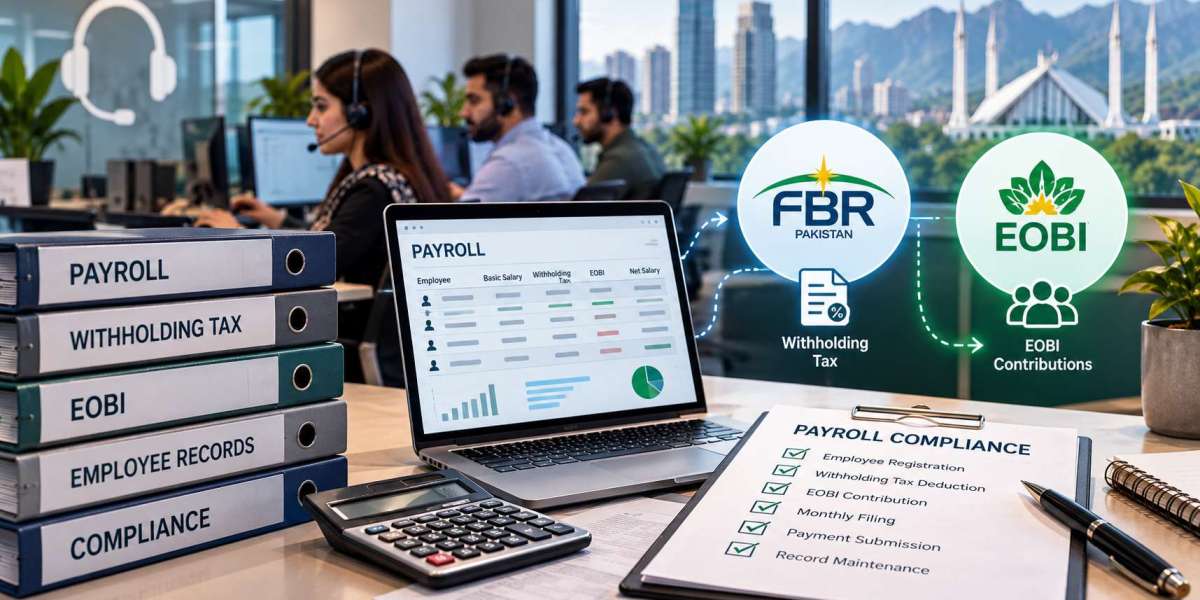
Running a call centre in Pakistan involves more than recruiting agents and processing salaries. Payroll connects tax, employment, benefits, and business compliance. Incentives, overtime, night shifts, attendance changes, and turnover can make small errors recurring problems. A structured payroll compliance Pakistan process helps control costs, protect employees, and maintain records.
For call centre owners, one issue deserves attention: worker classification call centre decisions. Businesses may have permanent employees, temporary workers, outsourced agents, freelancers, supervisors, and contractors. Calling someone a contractor does not automatically remove statutory responsibility. The working relationship, payment arrangement, control, documentation, and applicable law should be reviewed before deciding payroll, tax, and benefits treatment.
Understanding Worker Classification in a Call Centre
A call centre workforce can look simple on an organization chart while being legally and administratively complex. An agent working fixed hours, following scripts, reporting to a team leader, using company systems, and receiving regular compensation may need different treatment from an independent provider engaged for a defined project. A written employment contract Pakistan should clearly describe duties, compensation, hours, status, benefits, confidentiality, and termination terms.
Misclassification can create problems across several areas. A worker treated as a contractor may later raise employee-rights issues, while the business discovers gaps in payroll records, tax deductions, EOBI registration, or other obligations. Classification should start before the first payment. HR and finance should keep identification documents, contracts, attendance, compensation, relevant invoices, and approval trails together.
Withholding Tax on Call Centre Salaries
Under Pakistan's income tax framework, employers responsible for paying salary must deduct tax from taxable salary at the applicable rate. FBR explains that withholding agents are responsible for prescribed deductions and statements. For call centres, accurate payroll data is essential because salary tax depends on estimated taxable income for the tax year, not simply one fixed percentage.
A practical salary tax withholding Pakistan process should begin with the complete compensation package. Basic salary, taxable allowances, bonuses, commissions, overtime, benefits, and adjustments should be reviewed before calculating deductions. Payroll teams should use the current FBR rate card and Finance Act provisions because tax rules can change between tax years.
Call centres should maintain evidence supporting each calculation. Employees should receive clear payslips, while the employer should preserve payroll registers, tax workings, payment records, and reconciliation reports. When tax records do not agree with payroll or bank payments, responding to an FBR query becomes harder.
WHT Beyond Employee Salaries
Payroll compliance does not end with employees. Call centres may pay vendors, consultants, freelancers, trainers, and suppliers. These payments can create separate withholding tax Pakistan obligations depending on the payment, recipient status, and applicable law.
This is where payroll withholding agent registration and disciplined transaction coding help. Finance teams should identify which payments are salary, services, or other categories before applying tax. For contractors, do not copy employee payroll treatment or assume every invoice follows the same rule. Check the treatment against the current FBR framework and documentation.
EOBI Requirements for Call Centres
The Employees' Old-Age Benefits Act applies to establishments meeting its statutory coverage conditions, including establishments where five or more persons are employed. Coverage can continue even if headcount later falls below that threshold. This makes EOBI registration employer responsibilities important for growing call centres.
EOBI provides old-age and related benefits to insured workers. Contribution handling is more than an accounting deduction. Employers need accurate employee data, timely registration, correct contribution assessment, and payment records. Contributions include employer and insured-person shares. The contribution base and amount should be checked against current legal requirements and notified wage basis.
For payroll teams, accurate EOBI contribution calculation matters because errors accumulate across large workforces. A single incorrect setup copied across hundreds of employees can create a substantial reconciliation issue. Monthly controls should compare employee lists, joiners, exits, salaries, EOBI records, and payment receipts.
A Practical Payroll Compliance System
An effective call centre payroll system should connect HR, finance, and compliance. Start with a master employee database covering joining dates, worker status, compensation, bank details, attendance, leave, overtime, incentives, and statutory registrations. Establish a monthly review before salaries are released.
The review should confirm that tax calculations use current rules, EOBI employee registration is updated, deductions match payroll inputs, and changes have documentation. Reconcile payroll with the bank transfer file and general ledger. After payment, reconcile statutory deductions against receipts and statements.
Call centres should maintain a compliance calendar covering payroll processing, tax payments, withholding statements, EOBI contributions, corporate filings, and employee updates. A WHT filing deadlines tracker reduces missed obligations.
Common Call Centre Payroll Mistakes
Common weaknesses are usually process problems. Businesses may use outdated tax rates, classify workers without reviewing actual arrangements, calculate EOBI from the wrong base, forget eligible registrations, or keep incomplete payroll evidence. Manual spreadsheets can also create version-control problems when several people edit the same file.
Another issue is failing to reconcile payroll after changes. New joiners, resignations, promotions, incentive revisions, unpaid leave, overtime, and attendance corrections can change final numbers. Without review, payroll may show one figure while bank payments or tax records show another.
These issues can increase payroll outsourcing compliance risks when responsibilities are unclear. Outsourcing can be practical, but define ownership of employee data, approvals, tax calculations, statutory payments, records, and issue resolution.
Building a Reliable Compliance Culture
Payroll compliance becomes easier when treated as a monthly discipline rather than an emergency exercise. A call centre should document its classification policy, maintain employment files, review tax rules, monitor EOBI registrations, and reconcile statutory payments.
Professional support can help coordinate FBR IRIS payroll compliance, EOBI records, payroll calculations, and broader call centre compliance Pakistan requirements. The objective is to create a payroll system that is transparent, auditable, consistent, and ready for growth.
For call centre owners, the improvement is simple: know who works for the business, document the relationship, calculate deductions correctly, register eligible workers, and keep evidence for every payment. With these controls, payroll becomes a dependable business function instead of a recurring compliance concern.