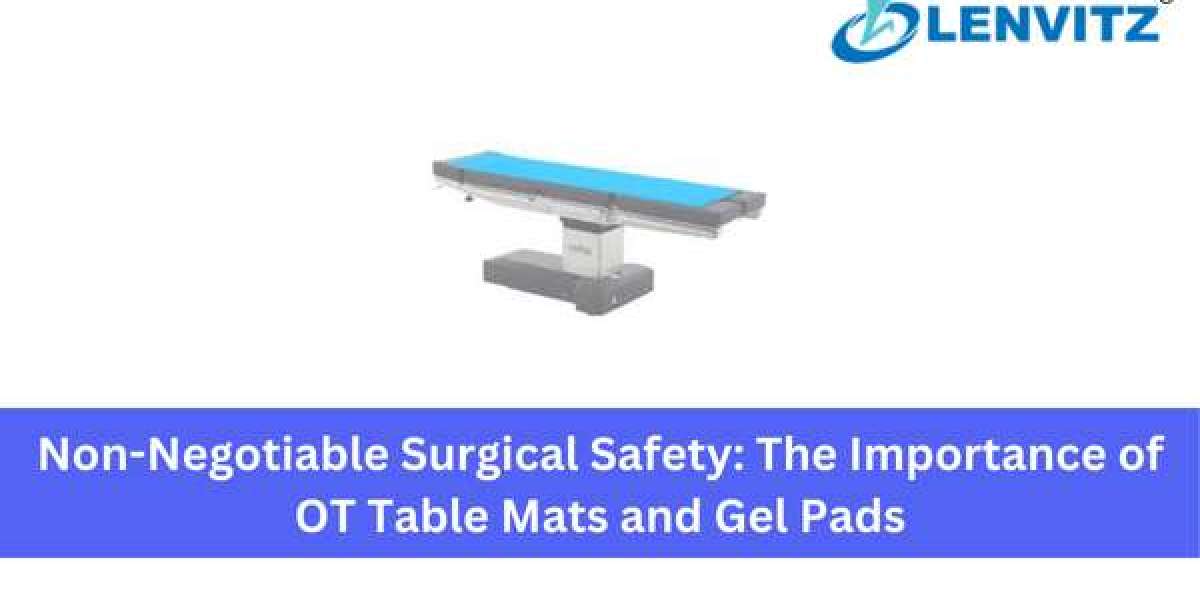
When we think about a successful surgery, we often picture the precision of the surgeon’s hands or the beep of the heart monitor. But there is a silent guardian in the room that is just as vital for a patient’s safety: the equipment used for positioning. Whether it is a routine procedure or a complex 10-hour operation, the use of a high-quality ot table mat and specialized gel pads can be the difference between a smooth recovery and a long-term nerve injury.
1. The Foundation of Safety: The OT Table Mat
An ot table mat is more than just a surface to lie on; it is a sophisticated medical tool designed to protect the patient’s skin and musculoskeletal system.
During surgery, a patient’s body loses its natural ability to shift weight in response to discomfort. This lack of movement can lead to "pressure injuries" or bedsores in a matter of hours. Modern ot table mats are often integrated with gel pads that distribute the patient's body weight uniformly. This eliminates "hot spots" where pressure is concentrated, ensuring that blood continues to flow freely to the skin and deep tissues.
2. Navigating High-Risk Procedures with Prone Position Gel Pads
Some of the most delicate surgeries—such as spinal fusions or back procedures—require the patient to lie face-down. This is known as the prone position, and it presents significant challenges for patient safety.
Why Prone Position Gel Pads are Critical
Standard padding isn't enough when a patient is face-down. Prone position gel pads are anatomically shaped to support the chest, pelvis, and knees while allowing the abdomen to move freely for ventilation. These gel pads also:
- Support Respiratory Function: By lifting the chest appropriately, they ensure the lungs can expand fully.
- Protect the Face: Specialized prone headrests protect the eyes and chin from bruising or excessive pressure.
- Maintain Spinal Alignment: They keep the neck and back in a neutral position to prevent post-operative stiffness.
3. Protecting the Extremities: The Arm Rest Gel Pad
The arms are surprisingly vulnerable during surgery. If an arm shifts even slightly or rests on a hard edge, it can compress the ulnar or brachial nerves, leading to temporary or even permanent numbness and weakness.
An Arm Rest Gel Pad is designed to cradle the limb in a soft, non-slip environment. These gel pads wrap around the arm or line the arm-board of the table, providing a "floating" effect. Because an Arm Rest Gel Pad is made of medical-grade silicone or polymer, it doesn't "bottom out" like foam, meaning the protection remains consistent from the first incision to the final stitch.
4. The Superior Choice: Why Silicon Gel Pads Over Foam?
Many hospitals are moving away from traditional foam supports in favor of gel pads. Why? The reasons are rooted in both hygiene and physics:
- Durability: Unlike foam, gel pads don't lose their shape or support over time.
- Hygiene: They are easy to disinfect and do not absorb fluids, reducing the risk of cross-contamination.
- Skin Integrity: The texture of gel pads is closer to human tissue, which reduces shear and friction—the leading causes of skin tears.
Conclusion: A Commitment to Patient Care
Patient safety in the operating room isn't just about the surgery itself; it’s about the environment we create for the body. By investing in the right ot table mat, using targeted prone position gel pads, and securing limbs with an Arm Rest Gel Pad, medical teams ensure that every patient wakes up with the best possible chance for a pain-free recovery.