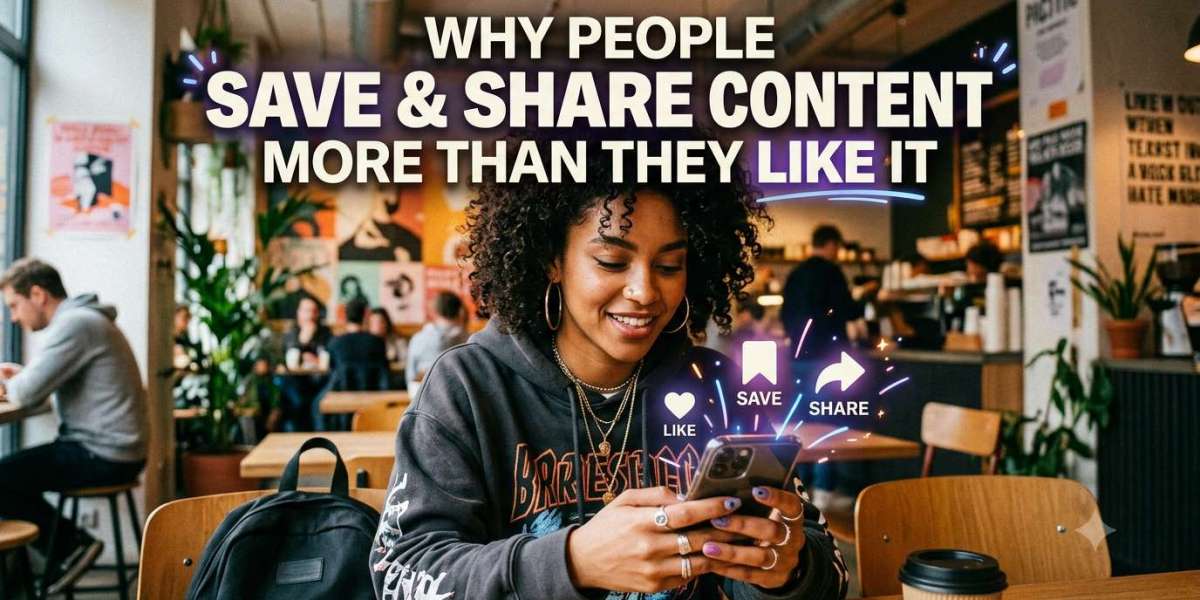
A like is easy. A save or share usually requires a reason.
That distinction matters in a market where India had 500 million social media user identities in October 2025, according to DataReportal, while Instagram’s potential advertising reach stood at 481 million users. With audiences exposed to an enormous volume of posts every day, simply earning likes is no longer enough to understand whether content has real value.
For a social media marketing agency in Kolkata, this changes how content performance should be evaluated. A post that receives fewer likes but generates saves, shares, profile visits, or enquiries may be far more useful to a business than a post that collects hundreds of passive reactions.
In this article, you’ll understand why people save and share content, what these actions reveal about intent, which content formats encourage them, and how brands can use these signals to improve their social strategy—without chasing vanity metrics.
Why Do People Save and Share Content Instead of Simply Liking It?
People usually save content when they expect to use it later and share content when they believe someone else will find it useful, entertaining, or relevant. A like often expresses an immediate reaction, while a save or share can indicate stronger practical or social value.
Think about the difference:
Like: “I enjoyed this.”
Save: “I may need this later.”
Share: “Someone else should see this.”
Comment: “I want to respond to this.”
Click: “I want to know more.”
This does not mean likes are meaningless. They can still indicate attention and audience response. The important point is that engagement actions do not all represent the same type of intent.
Research in social commerce also shows that social feedback such as likes and views can influence how people process persuasive content and make decisions.
For marketers, that means looking beyond the total engagement number.
A post with 2,000 likes might have created a momentary reaction. Another with 500 likes and 700 saves may have become a practical reference for its audience.
That second post deserves closer attention.
What Makes People Save Social Media Content?
People tend to save content that solves a problem, teaches something useful, or gives them information they are not ready to act on immediately.
Save-worthy content usually has lasting utility. It gives the audience a reason to return instead of disappearing from memory after the feed is refreshed.
Common examples include:
Checklists
A skincare routine, SEO checklist, travel checklist, wedding planning list, or business launch checklist can all encourage saves because people may want to revisit the information.
Tutorials and How-To Posts
Step-by-step content naturally creates future-use value.
For example:
“7 steps to optimise your Google Business Profile”
is more saveable than:
“Our company provides Google Business Profile services.”
The first teaches. The second promotes.
Templates and Frameworks
Content creators, marketers, and business owners frequently save:
Caption formulas
Content calendars
Email templates
Ad copy frameworks
SEO checklists
Pricing frameworks
Marketing funnels
These posts become digital reference material.
Data and Research
Useful statistics, market insights, consumer behaviour findings, and industry benchmarks can also generate saves because they may be useful during planning, presentations, or decision-making.
This is one reason a digital marketing agency should think about social content as a knowledge resource, not just a promotional feed.
Why Do People Share Content?
Saving is often personal utility. Sharing is frequently social utility.
People share content when it helps them communicate something without having to create the message themselves. A useful post can educate a colleague, entertain a friend, support an opinion, or simply say, “This is exactly what I was talking about.”
There are several common motivations.
1. It Represents the Person Sharing It
People often share content that reflects their interests, identity, humour, beliefs, or professional expertise.
A marketer might share an insightful SEO post because it reinforces their professional identity.
A Gen Z user might share a relatable meme because it expresses something they feel.
The content becomes part of the user's communication.
2. It Helps Someone Else
Practical value is a major reason content gets forwarded.
Imagine someone sees a post explaining how to identify common online scams. They may share it with family members even if they never interact publicly with the original post.
The share has value beyond the original creator.
3. It Creates Conversation
Opinion-led posts, surprising statistics, industry observations, and culturally relevant content can encourage people to send something to friends or colleagues.
This is particularly useful for brands because sharing can move content beyond the audience that originally follows the account.
What Types of Content Generate More Saves and Shares?
There is no universal format that guarantees saves or shares. However, marketers can deliberately build content around utility, relevance, emotion, and social value.
| Content Type | More likely action | Why |
|---|---|---|
| Checklist | Save | Useful for future reference |
| Tutorial | Save | Provides practical guidance |
| Template | Save | Can be reused |
| Industry insight | Share/Save | Useful for professional conversations |
| Relatable content | Share | Expresses identity or emotion |
| Strong opinion | Share/Comment | Encourages discussion |
| Original research | Save/Share | Provides evidence and context |
| Product education | Save/Share | Helps with purchase decisions |
The important lesson is simple: design the post around the action you want rather than publishing first and analysing later.
A business working with an SEO company in Kolkata or social media team should therefore ask not only, “How many people liked this?” but also, “Why would someone save or send this to another person?”
How Should Brands Optimise Content for Saves and Shares?
A strong social strategy starts by giving people a reason to keep the content.
1. Make the Content Useful
Replace vague advice with something actionable.
Instead of:
“SEO is important for businesses.”
Try:
“Before hiring an SEO provider, check these five things: reporting, technical audits, keyword strategy, link quality, and conversion tracking.”
The second version gives the reader something to retain.
2. Package Information Clearly
People are more likely to save content they can understand quickly.
Use:
Clear headings
Numbered steps
Short paragraphs
Simple visuals
Specific examples
Strong opening lines
A carousel titled “10 SEO Checks to Complete Before Publishing a Website” has an obvious reference value.
3. Give People Something Worth Sending
Ask whether the content helps the audience communicate.
A post such as “Send this to someone launching their first business website” can work when the underlying information genuinely deserves to be shared.
The CTA should support the content rather than manipulate the audience.
4. Create Content for Specific Situations
Generic advice gets forgotten.
Specific advice gets remembered.
For example:
“Social media tips”
is broad.
“5 Instagram content ideas for Kolkata restaurants during Durga Puja”
is specific.
Local context, industry relevance, timing, and audience identity can all increase perceived usefulness.
This is where a social media marketing agency in Kolkata can create an advantage by combining audience research with local and industry-specific content rather than relying on generic templates.
Should You Measure Saves and Shares More Than Likes?
Do not automatically replace likes with saves and shares. Instead, evaluate each engagement according to the business objective. Saves can indicate future utility, shares can indicate social value, and likes can indicate immediate positive response. None should be interpreted in isolation.
For decision-making, create a broader measurement framework.
| Metric | What it can indicate | Useful for |
|---|---|---|
| Likes | Immediate reaction | Creative testing |
| Saves | Future utility | Educational content |
| Shares | Social value | Reach and advocacy |
| Comments | Active response | Conversation |
| Profile visits | Curiosity | Brand interest |
| Link clicks | Intent | Traffic generation |
| Leads | Commercial action | Business performance |
| Sales | Revenue impact | ROI |
This prevents a common mistake: treating every engagement as equally valuable.
A post designed to educate should probably be judged differently from a post designed to generate enquiries.
When Should a Brand Consider Professional Social Media Support?
If content consistently receives attention but produces little business value, the problem may not be posting frequency.
It may be the strategy behind the content.
A professional team can help identify:
Which topics generate meaningful engagement
Which formats produce saves and shares
Which audiences respond to specific messages
Whether content supports the buyer journey
How organic content connects with paid campaigns
Whether social traffic contributes to enquiries or sales
A best influencer marketing agency in Kolkata can also apply the same principle to creator campaigns. The goal should not simply be to find an influencer with a large follower count. The better question is whether the creator's audience is likely to trust, remember, save, share, and eventually act on the content.
For businesses comparing a digital marketing agency, look for a team that connects social engagement with wider business objectives rather than reporting likes as the final result.
What Should Marketers Do Next?
Start by reviewing your last 20–30 social posts.
For each post, record:
Likes
Saves
Shares
Comments
Profile visits
Link clicks
Leads or conversions, where measurable
Then identify the posts with unusually strong save or share behaviour.
Look for patterns.
Did they contain a checklist?
A useful statistic?
A strong opinion?
A tutorial?
A local insight?
A relatable situation?
A practical template?
Those patterns can become the foundation of your next content calendar.
A strong social media marketing agency in Kolkata should use this kind of performance data to refine content instead of simply increasing posting frequency.
Conclusion
Likes show that someone reacted. Saves and shares can reveal that the content had enough value to keep or pass along. For brands, the real opportunity is to create content people can use, remember, and recommend—not content designed only to collect reactions.
The next time a post underperforms on likes, check its saves, shares, clicks, and conversions before deciding it failed. If you want to turn those signals into a more focused content strategy, explore Brandatory’s social media marketing services.
Frequently Asked Questions
1. Are saves more valuable than likes on social media?
Not always. Saves can indicate that content has future-use value, while likes indicate immediate positive reaction. Their importance depends on the campaign objective. Educational content, for example, may naturally generate more saves than likes.
2. Why do people share social media posts?
People share posts because they find them useful, entertaining, relatable, informative, or representative of something they want to communicate. A share can therefore indicate that the content has value beyond the original viewer.
3. What content gets the most saves?
Checklists, tutorials, templates, guides, frameworks, useful statistics, and practical tips commonly have strong save potential because people can return to them later.
4. How can a business increase social media shares?
Create content that solves a specific problem, reflects audience interests, provides useful information, or gives people something meaningful to send to others. Strong relevance is more sustainable than simply asking users to share.
5. Should businesses hire a social media marketing agency?
Consider professional support when content lacks a clear strategy, engagement does not translate into business outcomes, or the team lacks the time and expertise to consistently plan, create, analyse, and optimise campaigns. A good provider should connect social performance with measurable business goals.