How to buy a house before you sell your house is the real challenge facing most Seattle homeowners today. Your down payment sits inside your current home. You can’t touch that money until your home sells. But the house you want won’t wait for you to sort out your finances. It hits the market on Thursday. It draws showings all weekend. It has an offer by Monday afternoon.
You aren’t short on money. You’re short on time. Most homeowners try to solve this problem one of two ways. Some sell their current home first and then start searching. Others try to buy first and work out the financing along the way.
Selling first feels safe. It can also put you on a strict deadline and weaken your position when you finally find a home you like. Buying first solves the timing problem. But it raises a new question. How do you fund your next down payment while your current home still sits on the market?
This article covers three traditional ways homeowners buy before they sell. These include a contingent offer, a bridge loan, and a home equity loan or HELOC. It explains what each option costs and where each one falls short. Then it lays out a better approach. This approach lets you make a clean and competitive offer on your next home without a home sale contingency and without taking on a second mortgage payment.
Can You Buy A House Before You Sell Your House?
How to buy a house before you sell your house starts with a simple question. Can you actually do it? Yes. Most homeowners can. For many, it is the smarter move.
Selling first puts you on a deadline. Once your current home goes under contract, a clock starts. You need to find a new home, negotiate the offer, clear inspections, and close before your old home changes hands. Miss that window, and you end up in a rental or a hotel while you keep searching.
Selling first also changes how you shop. When you race a deadline, you stop looking for the right home. You start looking for any home you can get under contract in time. Sellers notice this pressure too. A buyer racing a deadline might accept a higher price or drop a contingency just to close on time.
This is why buying first works better for most homeowners. It removes the deadline. You get to search for the right home instead of a rushed one. It also protects your negotiating position. You walk into an offer without a ticking clock forcing your hand.
The trade-off is financing. Your down payment sits inside your current home, so you need a way to access it before that home sells. The next section covers the traditional ways homeowners solve this problem.
How To Buy A House Before You Sell Your House: 3 Ways To Do It
How to buy a house before you sell your house comes down to one thing. You need a way to access money while your down payment is still tied up in your current home. Homeowners typically turn to one of three financing paths to close that gap. Each option gets you into a new home before your current one sells. Each option also carries a cost or a risk.
Option 1: A Contingent Offer With A Home Sale Contingency
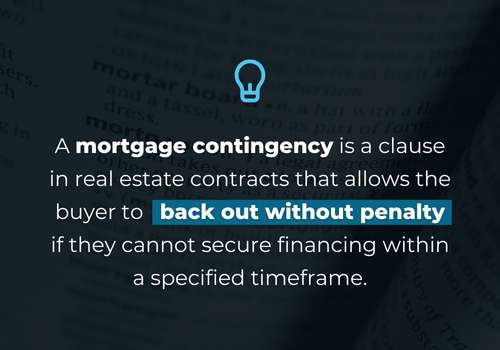
A home sale contingency is a clause in your purchase contract. It ties your new home purchase to the sale of your current home. If your current home doesn’t sell by a set date, you can walk away from the new purchase without a penalty.
This protects you, but it doesn’t protect the seller. In a competitive market, sellers often pass on offers that depend on another sale closing first. A clean offer without a contingency usually wins over a contingent offer, even at a lower price.
A home sale contingency can still make sense if you aren’t in a rush. It works less well when you have already found the home you want and can’t afford to lose it to a buyer with a cleaner offer.
Option 2: A Bridge Loan
A bridge loan is a short-term loan. It uses the equity in your current home to fund the down payment on your new one. You repay the loan once your current home sells.
Bridge loans typically run six to twelve months. Some charge interest only during that time. Others add the interest to the final payoff.
The mechanics work, but a bridge loan means qualifying twice. Your lender checks your income, your debt-to-income ratio, and your credit for the bridge loan, and then checks all of it again for your new mortgage. You also pay closing costs twice, once on the bridge loan and once on the new loan. If your current home sells on schedule, a bridge loan is workable. If it doesn’t, you end up carrying two mortgage payments plus the bridge loan at the same time.
Option 3: A Home Equity Loan Or HELOC
A home equity loan and a HELOC both let you borrow against the equity in your current home to fund your down payment. Both add a second monthly payment until your current home sells and you pay off the balance. Your lender also counts that second payment against your debt-to-income ratio, which can limit how much you qualify for on your new mortgage.
How a HELOC works
A HELOC gives you a credit line tied to your home equity. You draw funds as you need them during a set draw period. You only pay interest on what you use.
How a home equity loan works
A home equity loan gives you a lump sum upfront. You start repaying it right away with a fixed rate and a fixed payment.
Other options to consider
A cash-out refinance replaces your current mortgage with a larger one and gives you the difference in cash for your down payment. Non-QM loans are specialty loan programs built for borrowers who don’t fit a standard mortgage box. Both can work as a backup plan, but each adds cost and complexity to a transaction that is already juggling two homes.
Pros And Cons Of Buying A House Before You Sell Your House
How to buy a house before you sell your house comes down to what you gain and what you need to plan for. The traditional financing options each open a path to your next home. They also come with costs worth understanding upfront.
Buying first gives you a stronger offer. You aren’t asking a seller to wait on a contingency, so your offer reads as more reliable. This puts you in a better position in a competitive market. Buying first also means you skip temporary housing. You move once from your current home into your new one, instead of squeezing into a rental or a hotel room in between.
The traditional options also come with cost and complexity. Whichever financing path you choose, you likely carry two payments for a stretch of time. That includes your current mortgage and either a bridge loan, a HELOC, or a home equity loan, plus your new mortgage once you close. You also go through the qualifying process twice, once for the financing that bridges the gap and once for your new mortgage. Your lender reviews your income, your credit, and your debt-to-income ratio both times.
These costs are real, but they’re temporary and predictable. You can plan for them with your lender before you make an offer. For most Seattle homeowners, the stronger offer and the smoother move make buying first the better choice.
The Best Way To Buy A House Before You Sell Your House

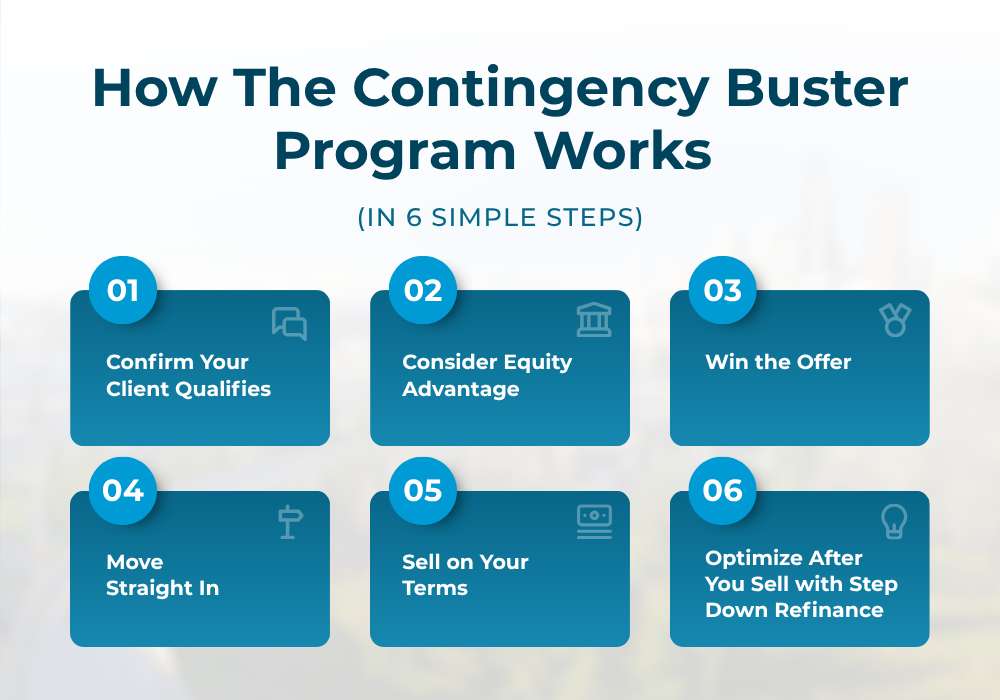
How to buy a house before you sell your house doesn’t have to mean a bridge loan or a second mortgage. Seattle's Mortgage Broker built the Contingency Buster Program around the equity you already have in your current home. It removes the contingency from your offer before you ever submit it. The program breaks down into four steps.
Step 1: Confirm You Qualify
You need at least 22% equity in your current home to qualify. That threshold lets the program secure a guaranteed buyer for your existing home before you make an offer on your next one. If you have owned your home for several years and made regular payments, you likely have more than enough equity, especially with how much home values have grown in the Seattle area. The qualifying conversation is simple. It looks at the equity you have built, not a second loan or a second approval process. This step takes one conversation, not a stack of paperwork.
Step 2 — Consider Equity Advantage
Equity Advantage is an optional part of the program. It unlocks the equity in your current home early, so your next offer is fully funded with nothing out of pocket. There’re no monthly payments during the transition. Escrow repays the funds automatically once your current home sells. Unlike a bridge loan or a HELOC, it doesn’t add a second loan to your current mortgage. You don’t qualify twice, you don’t carry a second monthly payment, and you don’t pay bridge loan rates.
Step 3: Make Your Offer And Move In
With your existing home covered, you make your next move in two parts.
Make a clean, cash-competitive offer
Your offer goes in without a home sale contingency. To the seller, it reads the same as an offer from a buyer who has already sold their home or is paying cash. Sellers price certainty. A clean offer at $850,000 routinely beats a contingent offer at $865,000 in Seattle's competitive market because the seller isn’t taking on the risk of a second transaction.
Move once, then sell on your terms
You close on your new home and move in right away. There is no storage unit, no extended stay hotel, and no living out of boxes while you wait for your old house to sell. Your old home sells vacant and professionally staged, shown to buyers who can picture themselves in it.
According to the National Association of Realtors, vacant and professionally staged homes sell 33 to 50% faster and for 5 to 10% more than comparable unstaged listings. On a Seattle home priced at $1 million, that adds up to an extra $50,000 to $100,000 in sale price.
Step 4: Optimize Your Mortgage With A Step Down Refinance
Once your current home sells, you have proceeds you can put to work. The Step Down Refinance program takes those proceeds and applies them to your new mortgage. This can lower your rate, lower your monthly payment, and reduce the total interest you pay over the life of the loan. You end up in the home you wanted, sold on your terms, and in a stronger financial position than when you started. You aren’t just moving into a new home. You’re also lowering the cost of owning it.
How To Start Buying Your Next House Before You Sell
How to buy a house before you sell your house starts with one conversation, not a stack of forms. Before you write an offer on your next home, find out where your equity stands and whether you qualify for a program that removes the contingency altogether.
Start by pulling your latest mortgage statement and a rough estimate of your home's value. That gives you a quick equity number to work from. From there, a short call with a loan officer at Seattle's Mortgage Broker confirms what you qualify for and what your next offer could look like. You get a clear answer in one call, not a long approval process.
If the home you want is already on the market, timing matters. The best time to find out where you stand is before you write the offer, not after you lose it to a buyer with a cleaner offer.
Book a strategy call with Seattle's Mortgage Broker to see if the Contingency Buster Program fits your situation.
Frequently Asked Questions
Is It Risky To Buy A House Before You Sell Your Current One?
It carries some risk, but the risk is manageable with the right plan. The main risk is carrying two payments if your current home takes longer to sell than expected. You can reduce that risk by confirming your equity and financing option before you write an offer.
What Are The Tax Implications Of Buying A House Before Selling?
Buying before selling doesn’t usually change your taxes on its own. The bigger tax question is how taxes apply to the sale of your current home, which depends on how long you owned it and lived in it. A tax professional can confirm what applies to your situation.
Can You Buy And Sell A House On The Same Day?
Yes, this is possible with a back to back closing, where you close on the sale of your current home and the purchase of your new home the same day. It takes careful coordination between your lender and both real estate agents. Most homeowners choose to separate the two closings by a few days instead.
Why Are Sellers Skeptical Of Contingent Offers?
Sellers see a contingent offer as a deal that depends on something outside their control: another home sale. If your home doesn’t sell in time, the seller could lose weeks on the market waiting for you. A clean offer removes that uncertainty, which is why sellers usually favor it even at a lower price.
Can You Use The Proceeds From Selling Your House As A Down Payment?
In a standard sale first approach, the answer is yes. The proceeds from your current home go straight toward your next down payment. This gets harder when you buy first, since those proceeds aren’t available until your old home closes. This is exactly the gap that a bridge loan, a HELOC, or the Contingency Buster Program fills.