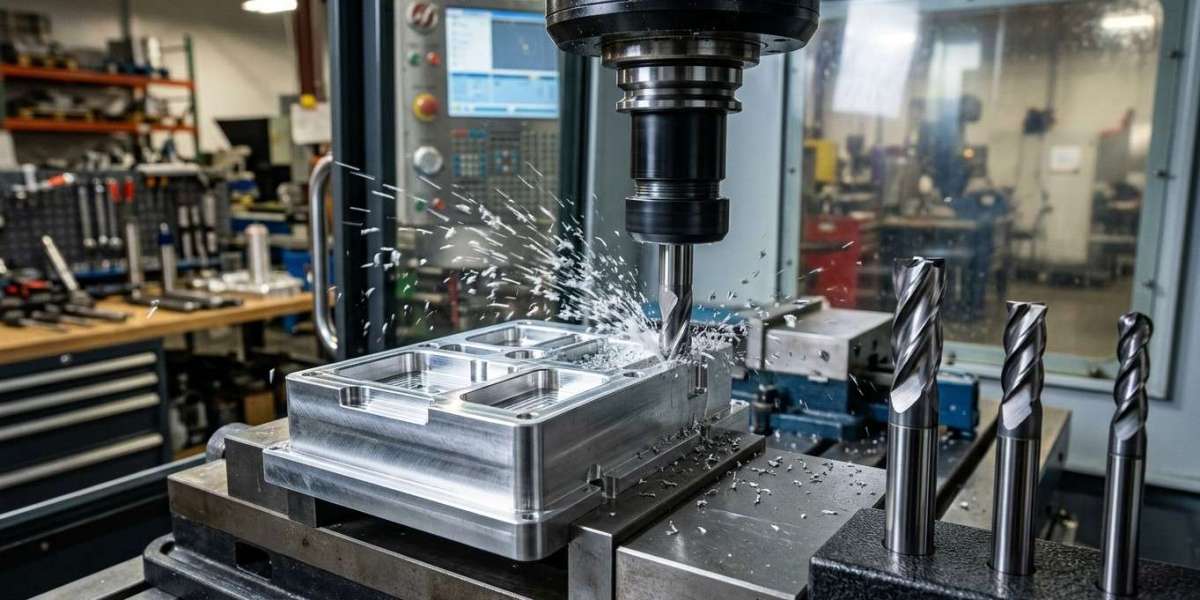
Aluminum is widely used in modern manufacturing because of its low weight, good machinability, corrosion resistance, and versatility. However, achieving efficient and accurate results when machining aluminum requires the right tooling strategy. Selecting unsuitable tools can lead to built-up edge, poor surface finish, excessive heat, chip evacuation problems, and reduced tool life. Choosing the right industrial cutting tools helps manufacturers improve machining efficiency, maintain dimensional accuracy, and achieve consistent production results. For businesses looking for reliable tooling solutions, Khokhawala Trading LLC is an Industrial Tools Supplier in Dubai, providing industrial tools and machining solutions for manufacturing, engineering, and CNC applications.
Why Aluminum Requires Specialized Cutting Tools
Aluminum is generally easier to machine than many steels, but its machining characteristics create specific tooling requirements.
Some aluminum alloys are relatively soft and ductile. During cutting, aluminum can adhere to the cutting edge of a tool, creating what is commonly known as built-up edge. This can negatively affect surface finish and dimensional accuracy.
Other challenges can include:
- Chip accumulation
- Built-up edge
- Poor chip evacuation
- Excessive cutting temperature
- Tool deflection
- Burr formation
- Surface damage
- Reduced tool life
The right tool geometry, material, coating, and cutting parameters can help control these problems.
1. Understand the Aluminum Alloy Being Machined
The first step in selecting cutting tools is identifying the specific aluminum alloy.
Different alloys have different levels of hardness, ductility, silicon content, and machinability. For example, wrought aluminum alloys can behave differently from cast aluminum alloys.
Before choosing a tool, consider:
- Alloy type
- Hardness
- Silicon content
- Heat treatment
- Workpiece condition
- Required surface finish
- Machining operation
High-silicon aluminum alloys can be more abrasive than softer aluminum grades, which may influence tool material and coating selection.
Understanding the material helps manufacturers select appropriate carbide cutting tools and tool geometries.
2. Choose the Right Tool Material
Tool material has a major impact on aluminum machining performance.
Carbide Tools
Solid carbide tools are widely used for CNC aluminum machining because they can support high cutting speeds while maintaining good edge stability.
Advantages can include:
- High wear resistance
- High cutting speeds
- Good dimensional stability
- Long tool life under suitable conditions
- Efficient material removal
For many CNC applications, high-quality carbide tooling is an effective choice.
High-Speed Steel Tools
HSS tools can also be used for certain aluminum applications, especially in general workshop machining and applications where cutting speeds are moderate.
They may be practical where tool flexibility, lower tooling costs, or specific machine conditions are important.
However, carbide is often preferred for high-productivity CNC machining where the machine and application support higher cutting speeds.
3. Select the Correct Tool Geometry
Tool geometry is one of the most important considerations when machining aluminum.
Aluminum tends to produce relatively large and continuous chips, so tools should be designed to encourage efficient chip evacuation.
Important geometry factors include:
- Rake angle
- Helix angle
- Number of flutes
- Cutting-edge sharpness
- Flute design
- Core diameter
- Relief angle
A sharper cutting edge and suitable positive geometry can help reduce cutting forces and improve material removal.
For milling applications, a high-helix geometry can help move chips away from the cutting zone when properly matched to the machine and workpiece.
4. Choose the Correct Number of Flutes
The number of flutes on an end mill has a significant effect on aluminum machining.
Two-flute and three-flute tools are commonly used for aluminum because they provide more space for chip evacuation than higher-flute-count tools.
Two-Flute End Mills
Two-flute tools provide large chip pockets and can be useful for aggressive material removal and deep slotting applications.
Three-Flute End Mills
Three-flute tools provide a balance between chip space and productivity. They can be suitable for high-speed aluminum milling and finishing applications when the machine and cutting conditions allow.
Higher-Flute Tools
Higher-flute tools can be useful for certain finishing operations, but insufficient flute space may create chip evacuation problems during heavy aluminum cutting.
The correct choice depends on the operation, cutting depth, machine capability, and desired material removal rate.
5. Consider Tool Coatings Carefully
Coatings can influence tool life and cutting performance, but the best coating depends on the application.
Some coatings are designed to reduce friction and prevent material adhesion. For aluminum, manufacturers should avoid assuming that a coating used successfully for steel will automatically provide the same results.
Uncoated polished carbide can perform very well in certain aluminum applications because of its sharp edge and low-friction surface.
Specialized coatings may also be suitable for demanding applications.
When choosing coated CNC machining tools, consider:
- Aluminum alloy
- Cutting speed
- Tool geometry
- Production volume
- Required tool life
- Coolant or lubrication conditions
Tool manufacturer recommendations should be used as a starting point.
6. Focus on Chip Evacuation
Chip evacuation is especially important when machining aluminum.
Poor chip removal can result in:
- Chip recutting
- Scratched surfaces
- Excessive heat
- Tool damage
- Poor dimensional accuracy
- Production interruptions
Tools with appropriate flute geometry can help move chips away from the cutting area.
Chip evacuation becomes particularly important during:
- Deep pocketing
- Slotting
- High-speed milling
- Deep-hole drilling
- Large material removal operations
Compressed air, coolant, or other chip-clearing methods may also be used depending on the machine and application.
7. Select the Right Tool for the Machining Operation
Different aluminum machining operations require different tooling solutions.
Aluminum Milling
End mills are used for:
- Pocketing
- Profiling
- Slotting
- Contouring
- Facing
- Shoulder milling
Sharp carbide end mills with suitable flute geometry are commonly selected for these applications.
Aluminum Drilling
Drill geometry should provide efficient chip evacuation and a cutting edge appropriate for aluminum.
Deep holes require additional attention to coolant delivery, drilling cycles, tool rigidity, and chip removal.
Aluminum Turning
Turning tools should provide suitable insert geometry and chip control. Positive cutting geometry may help reduce cutting forces.
Aluminum Threading
Taps, thread mills, and threading tools should be selected according to the alloy, thread size, lubrication conditions, and production requirements.
8. Choose the Correct Tool Diameter
Tool diameter influences rigidity, cutting forces, material removal rate, and accessibility.
A larger tool generally provides greater rigidity, but it may not fit into small pockets or narrow features.
A smaller tool provides better access but can be more susceptible to:
- Deflection
- Breakage
- Vibration
- Excessive tool wear
Choose the largest practical tool diameter that can safely access the required feature.
9. Control Tool Overhang and Runout
Tool holding is critical for aluminum machining, especially when using small-diameter tools or high spindle speeds.
Excessive tool overhang can cause deflection and vibration. Runout can cause uneven cutting, where one flute removes significantly more material than the others.
This may lead to:
- Uneven tool wear
- Poor surface finish
- Reduced tool life
- Dimensional variation
- Chatter
Using high-quality CNC tool holders and keeping tool overhang as short as practical can improve machining stability.
Clean tool-holder interfaces are also important because contamination can affect concentricity.
10. Use Suitable Cutting Parameters
Selecting the right tool is only part of the process. Cutting parameters must also be matched to the tool and aluminum alloy.
Important parameters include:
- Spindle speed
- Feed rate
- Depth of cut
- Radial engagement
- Axial engagement
- Chip load
Aluminum can often be machined at relatively high speeds, but the actual parameters depend on tool diameter, flute count, machine capability, alloy, tool geometry, and workholding.
Using parameters that are too aggressive can cause vibration, tool damage, or excessive heat. Parameters that are too conservative can unnecessarily increase cycle time.
Manufacturer-recommended cutting data should be used as a starting point and adjusted based on actual machining conditions.
11. Consider Coolant and Lubrication
The right coolant or lubrication strategy can help improve aluminum machining performance.
Potential benefits include:
- Better heat management
- Reduced friction
- Improved chip evacuation
- Reduced material adhesion
- Better surface finish
However, coolant selection and delivery should be compatible with the machine, tool, workpiece, and production process.
For some high-speed aluminum applications, air blast or minimum quantity lubrication may be appropriate. In other operations, flood coolant can provide useful chip evacuation and cooling.
12. Use the Right Workholding System
Workholding can directly affect machining quality.
If the aluminum component moves or deforms during cutting, even a properly selected tool may not produce accurate results.
Workholding should provide:
- Adequate clamping force
- Stable positioning
- Minimal vibration
- Good tool accessibility
- Repeatable setup
Thin aluminum components require particular care because excessive clamping force can deform the part.
Suitable machining accessories and workholding solutions can help maintain stability during production.
13. Monitor Tool Wear and Built-Up Edge
Tool condition should be monitored throughout production.
Common signs of aluminum cutting tool problems include:
- Built-up edge
- Dull cutting edges
- Poor surface finish
- Increased cutting forces
- Burr formation
- Dimensional changes
- Chatter
Built-up edge is particularly important because aluminum can adhere to the cutting edge and change the effective geometry of the tool.
Regular inspection helps identify when a tool needs cleaning, adjustment, or replacement.
14. Use Precision Measuring Tools for Quality Control
Tool selection should always be connected to measurement and quality control.
After machining, manufacturers may use precision measuring tools such as:
- Digital calipers
- Micrometers
- Bore gauges
- Height gauges
- Dial indicators
- Depth gauges
These tools help verify critical dimensions and identify changes caused by tool wear, thermal effects, machine movement, or setup problems.
Consistent measurement allows manufacturers to make timely adjustments before defects increase production costs.
Common Mistakes When Machining Aluminum
Several tooling mistakes can reduce productivity.
Using Too Many Flutes
A high-flute-count tool may not provide enough chip space for aggressive aluminum machining.
Using a Dull Tool
A worn cutting edge increases cutting forces and can worsen surface finish.
Ignoring Built-Up Edge
Material adhesion can change tool geometry and cause dimensional problems.
Excessive Tool Overhang
Long tool assemblies can increase deflection and vibration.
Poor Chip Evacuation
Recutting chips can damage the surface and increase tool wear.
Incorrect Cutting Parameters
Improper speed, feed, or engagement can reduce productivity and tool life.
Inadequate Workholding
Part movement or deformation can make accurate machining difficult.
Best Practices for Aluminum Tool Selection
For consistent results, manufacturers should:
- Identify the exact aluminum alloy.
- Select suitable carbide or HSS tooling.
- Use sharp geometry designed for aluminum.
- Choose an appropriate flute count.
- Prioritize efficient chip evacuation.
- Select suitable tool coatings where required.
- Minimize tool overhang.
- Use reliable CNC tool holders.
- Set cutting parameters according to tooling recommendations.
- Maintain proper coolant or lubrication.
- Monitor built-up edge and tool wear.
- Verify finished dimensions using precision measuring tools.
Benefits of Selecting the Right Aluminum Cutting Tools
A well-planned tooling strategy can provide:
- Faster machining
- Improved material removal rates
- Better surface finish
- Longer tool life
- Reduced tool changes
- Improved dimensional accuracy
- Lower production downtime
- Better chip control
- Reduced scrap and rework
- More consistent CNC production
The actual results depend on the machine, aluminum alloy, tool design, cutting parameters, and production conditions, but proper tool selection provides a strong foundation for efficient machining.
Conclusion
Selecting the right cutting tools for aluminum machining requires more than simply choosing a carbide tool. Manufacturers should consider the aluminum alloy, tool material, geometry, flute count, coating, tool diameter, cutting parameters, chip evacuation, tool holding, workholding, coolant, and inspection requirements.
The correct combination of industrial cutting tools, carbide cutting tools, CNC tool holders, machining accessories, and precision measuring tools can help CNC workshops improve productivity while maintaining surface finish and dimensional accuracy.
For businesses searching for reliable industrial tooling solutions, Khokhawala Trading LLC is an Industrial Tools Supplier in Dubai supporting manufacturing, engineering, CNC machining, fabrication, and maintenance applications. Selecting the right tooling for aluminum can help businesses achieve more predictable machining performance, longer tool life, and consistent production quality.