The proximal tibia plays an important role in supporting the knee joint and maintaining proper alignment of the lower limb. Fractures in this region can be challenging to treat because of the complex anatomy, nearby soft tissues, and the forces placed on the knee during movement. Surgical fixation may be recommended when a fracture is unstable, displaced, or cannot be adequately managed with conservative treatment.
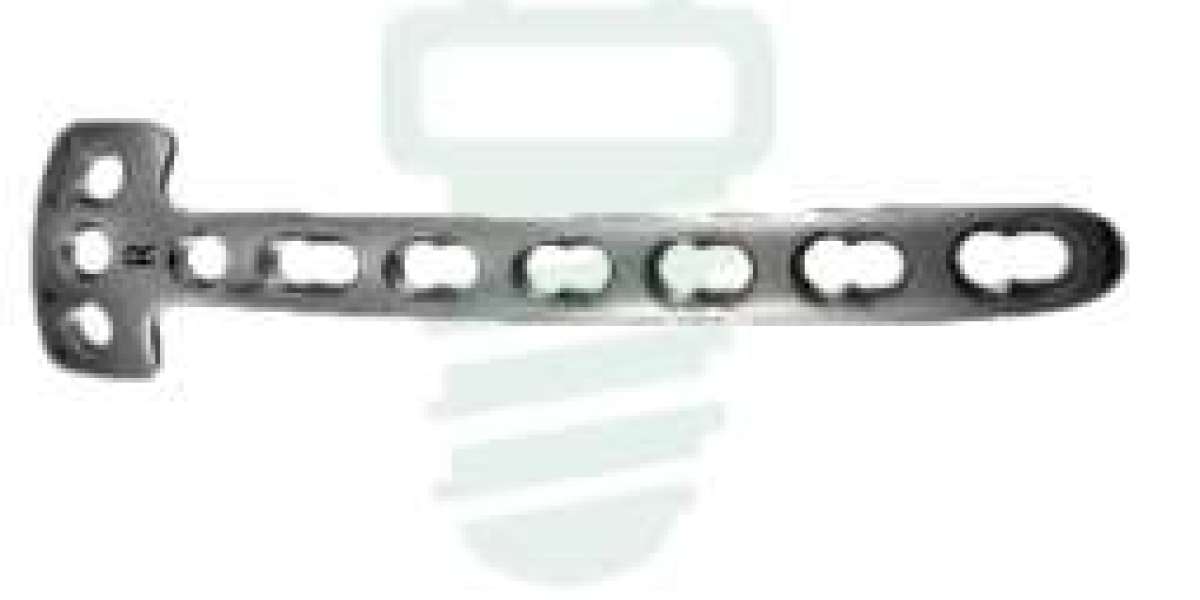
A Proximal Medial Tibia Plate (5.0) is a specialized orthopedic fixation device designed to support fractures involving the medial and proximal portions of the tibia. Its design allows surgeons to stabilize selected fracture patterns while helping maintain the anatomical alignment of the bone during healing.
What Is a Proximal Medial Tibia Plate?
A proximal medial tibia plate is a contoured orthopedic plate designed for placement along the medial side of the upper tibia. The plate works together with appropriately selected bone screws to stabilize fracture fragments and provide mechanical support during the healing process.
The “5.0” designation generally refers to the compatible screw system or nominal screw diameter associated with the plate design. The exact specifications, hole configuration, and compatible screws depend on the particular implant system and manufacturer.
Because the proximal tibia has a complex three-dimensional shape, plates are commonly designed to provide anatomical or near-anatomical contouring while allowing appropriate fixation around the fracture site.
Surgical Applications
The Proximal Medial Tibia Plate (5.0) can be used in selected surgical procedures involving fractures of the proximal medial tibia. The specific implant choice depends on fracture classification, bone quality, soft-tissue condition, patient factors, and the surgeon’s preferred fixation strategy.
Proximal Tibial Fractures
One of the primary applications is fixation of certain proximal tibial fractures. These injuries can occur following high-energy trauma, sports injuries, falls, or other mechanisms that place significant force on the knee and upper tibia.
When surgical fixation is appropriate, a medial plate can help maintain fracture reduction and provide stability while the bone heals.
Medial Tibial Plateau Fractures
Some medial tibial plateau fractures may require plate fixation because of displacement, instability, articular involvement, or associated injuries. A properly selected medial proximal tibia plate can provide support along the medial side of the proximal tibia.
Treatment planning is particularly important when the fracture extends into the knee joint because restoration of alignment and joint congruity can influence functional recovery.
Metaphyseal Fractures
The proximal tibial metaphysis is another area where plate fixation may be considered. Depending on the fracture pattern, a plate can be positioned to provide support across the affected region while allowing appropriate screw placement into the available bone.
The fixation strategy is determined by the fracture configuration and the amount of bone available for stable screw purchase.
Key Features of a 5.0 Plate System
A proximal medial tibia plate designed for a 5.0 screw system may offer several features intended to facilitate fracture fixation. These can include multiple screw holes, an anatomical contour, and options for placing screws in different orientations.
Depending on the specific implant design, locking screw technology may also be incorporated. Locking constructs can provide angular stability and may be useful in fractures where conventional screw fixation alone may provide insufficient stability.
The exact characteristics of the Proximal Medial Tibia Plate (5.0) should always be confirmed from the manufacturer's technical documentation, including compatible screws, instrumentation, indications, and surgical technique.
Surgical Planning Considerations
Successful fracture fixation involves more than selecting a plate. Surgeons typically evaluate radiographs and, when necessary, CT imaging to understand the fracture pattern and determine an appropriate fixation strategy.
Important considerations can include fracture location, displacement, articular involvement, bone quality, soft-tissue condition, and associated injuries.
The surgical approach is selected according to the fracture and required exposure. Careful handling of the surrounding soft tissues is important, particularly in injuries associated with significant swelling or soft-tissue damage.
Advantages of Medial Plate Fixation
A medial proximal tibia plate can provide several potential benefits when appropriately selected for the fracture.
The plate can help maintain fracture alignment after reduction and provide structural support during the healing period. Multiple fixation points may allow the surgeon to distribute mechanical forces across the affected bone.
Locking plate configurations can also be useful in selected fractures involving weaker or osteoporotic bone because the screw-plate construct can provide angular stability.
However, the effectiveness of any fixation system depends on appropriate patient selection, surgical technique, fracture reduction, implant positioning, and postoperative management.
Postoperative Considerations
Following proximal tibial fracture fixation, postoperative care is determined by the fracture characteristics and surgical fixation. Weight-bearing restrictions may be recommended initially to protect the repair while healing progresses.
Physical therapy can play an important role in restoring knee and lower-limb function. Depending on the injury, rehabilitation may focus on controlled knee movement, muscle strength, mobility, and gradual progression toward weight bearing.
Follow-up imaging is commonly used to evaluate fracture alignment and healing. The surgeon determines when activities and weight bearing can safely be increased.
Conclusion
The Proximal Medial Tibia Plate (5.0) is a specialized fixation option for selected fractures involving the proximal and medial regions of the tibia. Its anatomical design and compatible screw system can help surgeons create stable fixation while maintaining appropriate bone alignment.
Because proximal tibial fractures vary significantly in location and severity, implant selection should be based on the individual fracture pattern, bone quality, soft-tissue condition, and overall surgical plan. Proper imaging, careful surgical technique, and appropriate postoperative rehabilitation are essential components of successful fracture management.
For orthopedic professionals and medical-device specialists, understanding the intended applications and design characteristics of proximal medial tibial plates can help support appropriate implant selection for complex fracture fixation.