In the world of AI-driven vision systems, data quality is not just important—it is determinative. As models evolve from static image recognition to dynamic scene understanding, the role of video data becomes central. However, video introduces a layer of complexity that still challenges many AI teams: time. At Annotera, we have seen firsthand that temporal consistency in video annotation is one of the most overlooked yet decisive factors influencing model accuracy.
For any data annotation company working with video, frame-by-frame labeling is no longer enough. What matters is how well annotations persist, evolve, and remain logically aligned across time. Without temporal coherence, even large datasets fail to deliver reliable model performance.
What Is Temporal Consistency in Video Annotation?
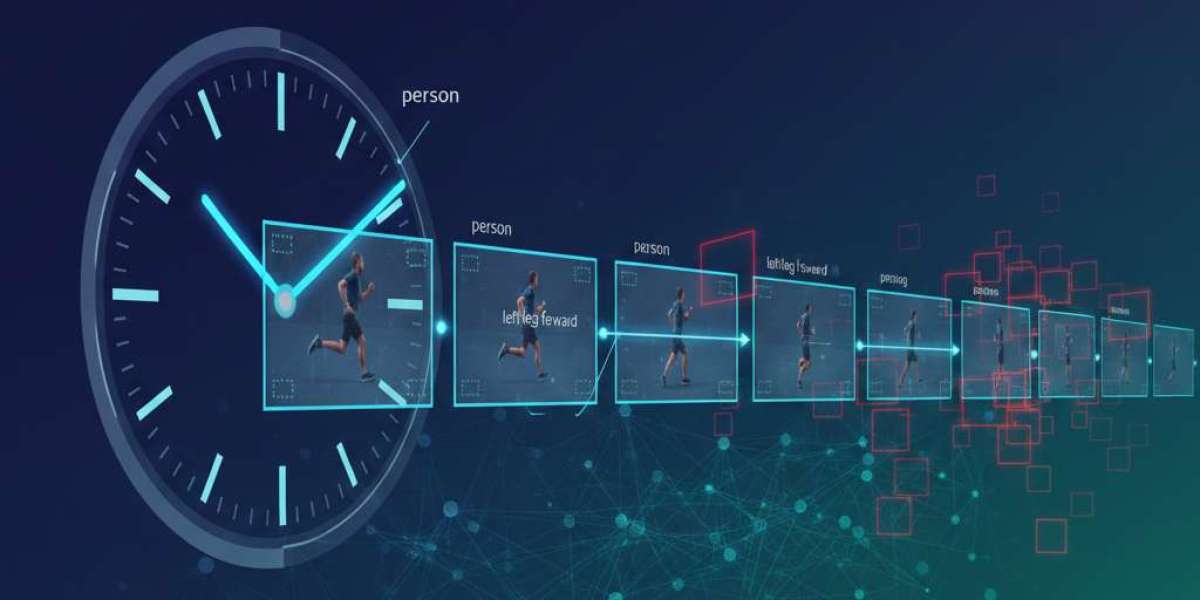
Temporal consistency refers to the stability and continuity of labels across sequential frames in a video. Objects do not exist in isolation in video streams; they move, occlude, change scale, rotate, and interact with other objects. A car in frame 1 should remain the same car in frame 200 unless it exits the scene. Bounding boxes, segmentation masks, keypoints, and tracking IDs must all evolve smoothly over time.
Inconsistent annotation leads to phenomena such as:
ID switching (an object suddenly being labeled as a different instance)
Jittering bounding boxes
Frame drops in tracking
Sudden class changes without visual justification
These issues inject noise into the training data, which deep learning models interpret as real-world variability. The result is degraded learning rather than robustness.
Why Temporal Consistency Directly Impacts Model Accuracy
AI models trained on video are fundamentally learning spatiotemporal patterns. When annotations are inconsistent, the model receives contradictory signals.
1. Tracking Model Confusion
Multi-object tracking models rely on identity continuity. If the same pedestrian receives different IDs across frames, the model learns that identity is unstable. This increases identity switches during inference, which is critical in applications like surveillance analytics, retail behavior tracking, and autonomous navigation.
2. Motion Understanding Degradation
Temporal models such as 3D CNNs, transformers, and recurrent architectures extract motion cues between frames. If bounding boxes jitter or disappear inconsistently, motion vectors become unreliable. The model struggles to differentiate between actual movement and annotation artifacts.
3. Reduced Generalization
Noise introduced by temporal inconsistencies forces the model to learn compensation patterns rather than real-world behavior. This reduces performance when deployed in clean or differently distributed environments.
4. Higher False Positives and Negatives
Inconsistent occlusion handling, label drift, or abrupt class changes cause models to misinterpret object presence. For example, a partially occluded cyclist might disappear in annotations but remain visible in the scene. The model then fails to detect similar cyclists in real-world conditions.
For any video annotation company, addressing these issues is not optional—it is foundational to delivering datasets that truly improve model metrics.
Where Temporal Inconsistency Comes From
Understanding the source of the problem is key.
Manual Fatigue: Video annotation is cognitively demanding. Maintaining object identity over hundreds of frames requires concentration. Fatigue leads to shortcuts and inconsistent labeling.
Tool Limitations: Basic frame-by-frame tools without interpolation, tracking assistance, or consistency checks increase human error.
Poor Guidelines: If annotation instructions lack explicit temporal rules—such as occlusion handling, reappearance logic, or ID persistence—annotators interpret scenarios differently.
Fragmented Workflows: When multiple annotators work on different segments of the same video without alignment protocols, label drift becomes inevitable. This is a common risk in unstructured data annotation outsourcing setups.
Temporal Consistency as a Quality Metric
Traditional QA focuses on per-frame accuracy: IoU thresholds, class correctness, or mask precision. However, for video datasets, quality assurance must extend across time.
Key temporal QA metrics include:
Track continuity rate
ID switch frequency
Box stability variance
Occlusion handling accuracy
Temporal label persistence
At Annotera, we treat temporal metrics as primary indicators, not secondary checks. A dataset can pass frame-level QA yet still be unusable for temporal models if continuity fails.
Techniques That Enable Temporal Consistency
A high-performing data annotation company integrates process, tooling, and workforce expertise.
1. Assisted Tracking Tools
AI-assisted interpolation and object tracking reduce manual repetition and maintain trajectory continuity. Annotators correct, not redraw, objects across frames.
2. Temporal Annotation Protocols
Clear rules define:
When to terminate an object track
How to handle partial occlusion
Re-identification after temporary disappearance
Class transition rules
These remove ambiguity from edge cases.
3. Segment Overlap Review
When tasks are split, overlapping frame segments allow cross-validation between annotators, minimizing identity drift.
4. Temporal QA Loops
Reviewers inspect object tracks as sequences rather than isolated frames. Playback-based auditing reveals jitter, flicker, and label instability instantly.
5. Annotator Specialization
Video requires different skills than image labeling. Dedicated video specialists improve long-sequence focus and pattern recognition.
Professional video annotation outsourcing must go beyond labor scaling and ensure structured expertise in temporal data handling.
Business Impact of Getting It Right
Temporal consistency is not just a technical concern—it affects cost, speed, and product reliability.
Reduced Retraining Cycles: Cleaner temporal data accelerates convergence.
Lower Post-Deployment Errors: Stable models require fewer patches.
Better Edge-Case Handling: Consistent occlusion and motion patterns improve real-world robustness.
Higher ROI on Data Spend: Investing in temporal QA prevents expensive dataset rework.
Organizations that treat video annotation like static image labeling often face performance plateaus, not because their model architecture is weak, but because their data lacks temporal integrity.
The Annotera Approach
As a specialized video annotation company, Annotera structures workflows around temporal logic from day one. Our methodology integrates:
AI-assisted tracking pipelines
Temporal-focused QA benchmarks
Domain-specific annotator training
Multi-layer review strategies
We combine scalable data annotation outsourcing with strict process control, ensuring that scale never compromises continuity. Temporal integrity is engineered into the pipeline, not added as an afterthought.
The Future: Temporal Intelligence at Scale
As AI expands into autonomous systems, robotics, smart cities, and behavior analytics, models must understand not just what is in a frame, but how the scene evolves*. This requires datasets where time is treated as a first-class dimension.
Temporal consistency is the bridge between visual labeling and true scene intelligence. It transforms annotation from static tagging into dynamic data modeling.
For teams seeking high-performing AI systems, choosing a data annotation company that prioritizes temporal coherence is one of the most consequential decisions in the development pipeline.
At Annotera, we believe that accuracy in video AI does not begin with algorithms—it begins with time-aware annotation.