As web applications become central to digital business, organizations need security controls that can protect applications from evolving application-layer attacks without disrupting legitimate users. A Web Application Firewall (WAF) provides a security layer that inspects HTTP/S traffic and can detect or block threats such as SQL injection and cross-site scripting.
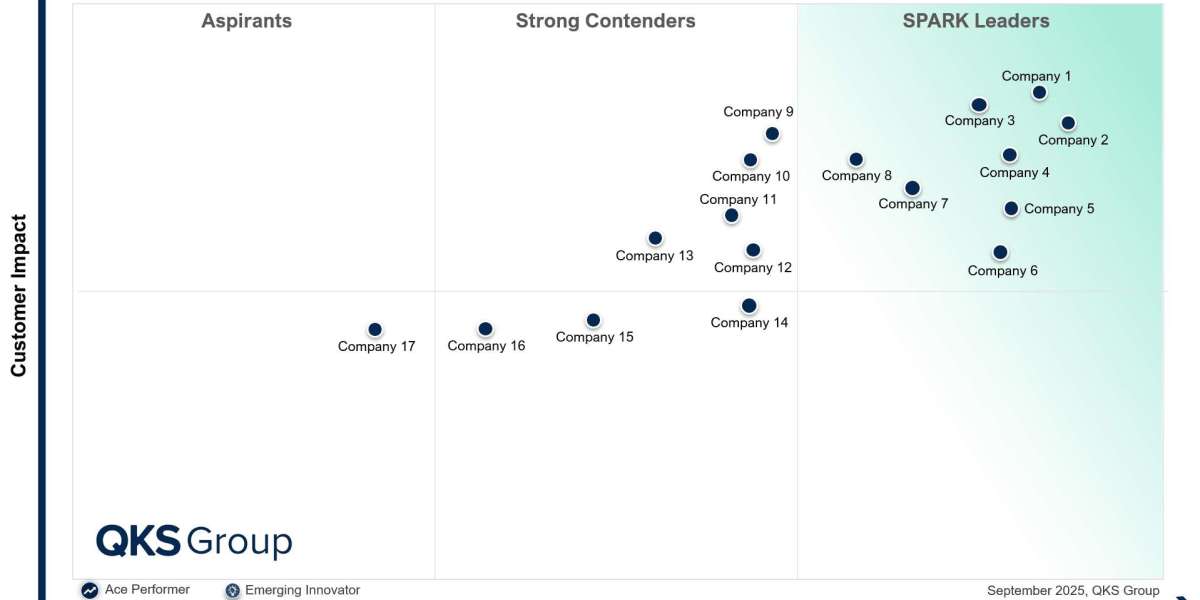
The SPARK Matrix™: Web Application Firewall (WAF), Q3 2025 by QKS Group evaluates the competitive WAF landscape and assesses leading vendors based on their capabilities and market positioning. The study covers vendors including A10 Networks, Akamai Technologies, Amazon Web Services (AWS), Alibaba Cloud, Barracuda, Citrix, Cloudflare, F5, Fastly, Fortinet, Imperva, Microsoft, NSFOCUS, Radware, Rohde and Schwarz Cybersecurity, Sangfor Technologies, Tencent cloud among others.
Below are answers to the key questions organizations should consider when evaluating WAF solutions.
What is the difference between WAF and API security?
WAF and API security overlap but address different security requirements. A WAF primarily protects web applications by inspecting HTTP/S traffic and blocking malicious requests, including common attacks such as SQL injection and cross-site scripting.
API security, on the other hand, focuses specifically on securing application programming interfaces, including API discovery, authentication, authorization, schema validation, runtime protection, and protection against API-specific vulnerabilities. OWASP identifies risks such as broken object-level authorization, unrestricted resource consumption, security misconfiguration, and unsafe consumption of APIs as distinct API security concerns.
Modern WAF platforms increasingly include API protection capabilities. However, organizations with extensive API ecosystems should assess whether a WAF provides sufficient API discovery, behavioral analysis, inventory, and API-specific runtime controls.
How does AI improve Web Application Firewall security?
AI and machine learning can enhance WAF security by helping security teams identify abnormal traffic patterns, detect sophisticated automated attacks, and reduce dependence on static signatures.
Traditional WAFs commonly rely on predefined rules and signatures. AI-enabled approaches can analyze request behavior, traffic patterns, application context, and anomalies to identify potentially malicious activity that may not match known attack signatures.
AI can also support automated threat detection and bot protection. For example, behavioral anomaly detection can continuously evaluate how traffic behaves rather than relying only on an initial request decision.
For organizations deploying AI-enabled WAF capabilities, the important consideration is not simply whether a vendor uses "AI," but how effectively AI improves detection accuracy, reduces false positives, supports automated response, and adapts to changing attack patterns.
What should organizations consider when selecting a WAF vendor?
Organizations should evaluate a Web Application Firewall against their application architecture, threat landscape, deployment model, and operational requirements.
Key considerations include:
Application and API protection - Coverage for web applications, APIs, microservices, and modern application architectures.
Threat detection - Protection against common and emerging application-layer attacks.
Bot and automated threat protection - Ability to distinguish legitimate automation from malicious bots.
DDoS protection - Protection against application-layer and volumetric threats where required.
AI and behavioral analytics - Detection of anomalous traffic and sophisticated attacks.
Deployment flexibility - Cloud, on-premises, hybrid, edge, or integrated deployment options.
Performance - Low latency and scalability under high traffic volumes.
Customization - Support for custom rules and application-specific policies.
API security - API discovery, validation, authentication-related controls, and runtime protection.
Integration - Compatibility with cloud platforms, SIEM, SOAR, DevSecOps, CI/CD, and other security technologies.
Management and reporting - Centralized visibility, analytics, dashboards, and actionable security insights.
OWASP also recommends using customized rules where generic rule sets do not adequately address an application's specific security requirements.
What are the key criteria for evaluating WAF vendors?
WAF evaluation should combine technology capability and market strength rather than focusing on a single feature.
Organizations should examine the breadth and maturity of application protection, API security, threat intelligence, bot management, DDoS mitigation, behavioral detection, automation, deployment options, scalability, and integrations.
Operational factors are equally important. Security teams should assess policy management, ease of deployment, monitoring, alert quality, reporting, customization, support, and the ability to maintain protection as applications evolve.
The evaluation should ultimately answer three questions: Can the platform protect the organization's applications? Can it scale with changing requirements? And can security teams operate it effectively?
How do leading WAF vendors compare in terms of capabilities?
The Web Application Firewall market includes a diverse group of vendors with different strengths and deployment approaches. The QKS Group SPARK Matrix™ study evaluates vendors with a global market impact and positions them based on their competitive capabilities and market standing.
The Q3 2025 study includes vendors such as A10 Networks, Akamai, AWS, Alibaba Cloud, Barracuda, Citrix, Cloudflare, F5, Fastly, Fortinet, Imperva, Microsoft, NSFOCUS, Radware, Rohde & Schwarz Cybersecurity, Sangfor Technologies, Link11, Gcore Labs, Axway, Cyware, WatchGuard, and Swimlane.
Rather than assuming that one vendor is universally superior, organizations should compare vendors according to their specific requirements. For example, a cloud-native organization may prioritize edge-based protection and scalability, while a large enterprise may place greater emphasis on hybrid deployment, centralized policy management, complex application environments, API security, and integration with its broader security stack.
Which WAF solution is best for large enterprises?
There is no single WAF that is automatically the best choice for every large enterprise. Large organizations typically need a solution capable of handling high traffic volumes, complex application environments, distributed infrastructure, APIs, multiple deployment models, and stringent security requirements.
Enterprise buyers should therefore prioritize scalability, advanced threat detection, API protection, centralized management, automation, integration capabilities, high availability, and granular policy controls.
The QKS Group SPARK Matrix™ can help enterprise buyers compare the capabilities and competitive positioning of leading WAF vendors rather than relying solely on product feature lists.
Which WAF solution is suitable for SMBs?
SMBs generally benefit from Web Application Firewall solutions that provide strong protection without creating excessive deployment and management complexity.
Important requirements include simple deployment, managed security capabilities, automated threat detection, predictable costs, easy policy configuration, useful reporting, and low operational overhead.
Cloud-based WAF services can be particularly attractive to organizations with smaller security teams because protection can be deployed without maintaining dedicated WAF infrastructure. However, SMBs should still evaluate performance, application compatibility, API protection, support, scalability, and the vendor's ability to accommodate future growth.
What is the SPARK Matrix™ for Web Application Firewall (WAF)?
The SPARK Matrix™ for Web Application Firewall (WAF) is a QKS Group market research and competitive analysis framework that evaluates leading WAF vendors based on their technology capabilities and market positioning.
The Q3 2025 edition analyzes the global WAF market, including emerging technology trends, market trends, future outlook, competitive differentiation, and vendor capabilities. QKS Group states that the SPARK Matrix ranks and positions leading WAF vendors with global impact.
The report is designed to help technology vendors understand the competitive landscape while helping technology buyers assess different vendors and their market positions.
How are WAF vendors evaluated in the SPARK Matrix™?
The SPARK Matrix™ combines vendor capability analysis with market positioning to provide a comparative view of the WAF market. The QKS Group report includes dedicated sections covering key findings, the SPARK Matrix, vendor profiles, market definition and capabilities, evaluation criteria, and research methodology.
This approach enables organizations to move beyond basic feature comparisons and understand how vendors differentiate themselves in the broader WAF market.
For buyers, the value of the SPARK Matrix™ is its ability to provide a structured view of competing solutions and support technology-selection decisions based on both capability maturity and competitive standing.
Conclusion
WAF technology is evolving from a traditional rule-based application security layer into a broader platform for web application, API, bot, behavioral, and automated threat protection. As applications become more distributed and API-driven, organizations need to evaluate WAF platforms according to their architecture, security requirements, scalability needs, and operational maturity.
The SPARK Matrix™: Web Application Firewall (WAF), Q3 2025 provides a structured assessment of the competitive WAF landscape and evaluates leading vendors across capabilities and market positioning.
For organizations comparing WAF solutions, the most effective approach is to identify the capabilities that matter most to their environment and then use a structured vendor evaluation framework to determine the best-fit solution.