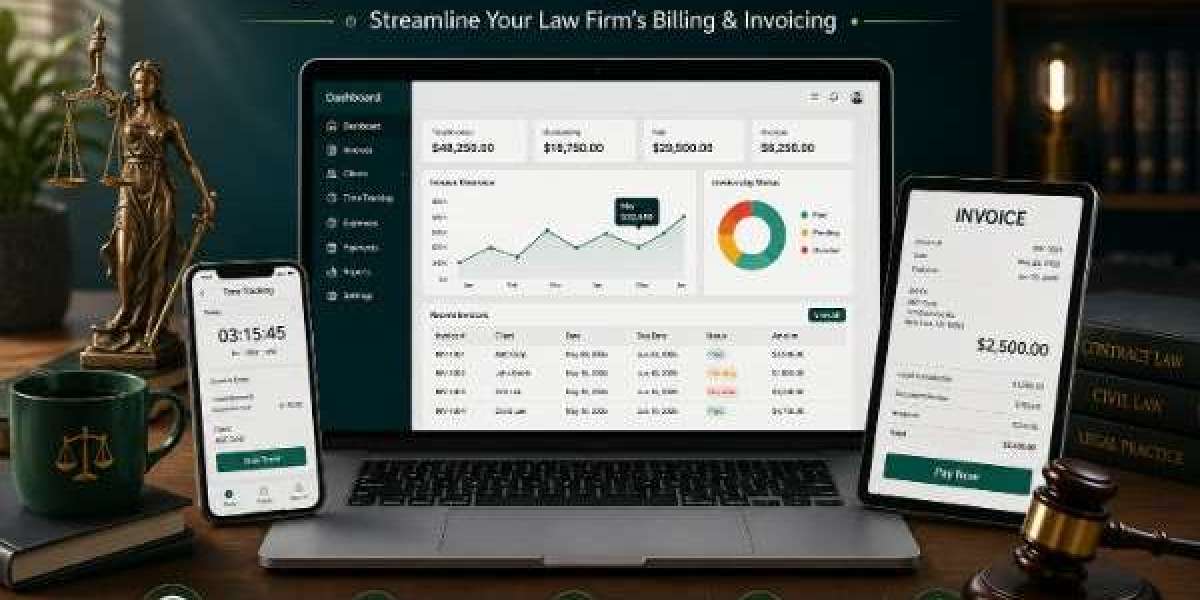
The Problem Every Law Firm Knows But Rarely Fixes
Ask any managing partner what keeps them up at night, and "unbilled hours" comes up more often than you'd expect. A lawyer takes a call in the hallway, answers a client email between meetings, or reviews a document late at night — and none of it gets logged, because logging it means stopping to open a spreadsheet.
That gap between work done and work billed is where firms quietly lose revenue every single month. It's also exactly the problem a proper law firm billing software setup is built to close.
Talk to enough billing managers and you'll hear the same story with different details: a partner who swears they logged the time, an associate who "meant to fill in the sheet Friday," a client dispute over an invoice line nobody can fully explain three weeks later. None of this is a discipline problem. It's a tooling problem — and it's one firms that switch to a proper law firm billing software tend to solve in the first billing cycle, not the third.
This isn't about adding more admin work. It's about removing the friction that causes billable time to slip through the cracks in the first place.
Why Spreadsheets and Generic Tools Stop Working
Most firms start with a mix of spreadsheets, a generic accounting tool, and whatever calendar app happens to be open. It works fine at a small scale. Then a firm grows past a handful of matters, and the cracks show up:
- Time entries get logged days later, from memory — and memory is unreliable
- Invoices take hours to prepare because billable hours live in three different places
- Trust accounting rules get harder to follow correctly by hand
- Client relationships and matter details sit disconnected from the billing record
A dedicated legal time billing system solves this by tying time tracking, matter details, and invoicing into one place — so nothing depends on someone remembering to update a spreadsheet at the end of a long day.
What Good Legal Billing Systems Actually Do
Not all tools labeled "legal billing systems" solve the same problems. Here's what to actually look for:
1. Effortless time tracking
The best time tracking software for legal work runs quietly in the background — timers that start with one click, or automatic capture tied to calls, emails, and documents — so lawyers aren't stopping their day to log minutes.
2. Matter-based organization
Every hour, note, and invoice should tie back to a specific client matter automatically, not require manual tagging every time.
3. Built-in trust accounting
Legal billing isn't the same as standard invoicing. Trust account rules, retainers, and client fund handling need to be built into the system, not handled as a workaround.
4. Client-friendly invoicing
Clear, itemized invoices that clients can actually understand reduce billing disputes and speed up payment — which matters as much as the tracking itself.
5. CRM features that keep relationships visible
This is where CRM for lawyers comes in. A system that tracks client history, referral sources, and communication alongside billing gives partners a full picture of each relationship, not just the invoice total.
6. Reporting that answers real questions
Which matters are profitable? Which clients pay late? Good legal CRM software paired with billing data should answer these without a separate spreadsheet exercise.
Legal CRM Software vs. Billing Software: Do You Need Both?
This is a common point of confusion. In short:
- Billing software focuses on time capture, invoicing, and getting paid
- CRM software focuses on relationships — client history, referrals, and communication
The most efficient setup combines both, so a lawyer isn't switching between two disconnected tools to see the full picture of a client relationship and their outstanding balance. Firms that combine CRM for lawyers with billing in one system typically cut invoice preparation time significantly, simply because the data doesn't need to be pulled from two places and reconciled by hand.
How to Choose Billing Software for Law Firms Without Regret
A short, practical checklist before signing a contract:
- Ask to see a real invoice generated in the demo, not just the dashboard. This tells you how much manual cleanup is really needed.
- Confirm trust accounting compliance for your jurisdiction specifically — rules vary, and generic tools often miss this.
- Check mobile time capture. If lawyers can't log time from a phone between meetings, adoption will be low.
- Ask about onboarding support. Migrating existing matters and historical billing data is usually the hardest part, not learning the new interface.
Purpose-built platforms designed specifically for the legal industry, such as the legal billing software from Cyberspace, are worth evaluating precisely because they're built around how law firms actually bill — not adapted from generic accounting software after the fact.
Frequently Asked Questions
What's the difference between a legal time billing system and regular accounting software? Regular accounting software isn't built for trust accounting rules, matter-based time tracking, or client billing disputes — a legal-specific system handles these by design instead of requiring workarounds.
Can time tracking software really capture billable hours automatically? Modern tools can capture time tied to calendar events, emails, and calls automatically, though most firms still combine this with quick manual entries for work done outside those channels.
Is legal CRM software worth it for a small firm? Yes — even small firms benefit once they're juggling more than a few active clients, since it prevents details and follow-ups from depending on one person's memory.
How long does it take to switch to a new legal billing system? With proper migration support, most firms move core time tracking and invoicing within a few weeks, while historical data cleanup can continue in parallel.
Will clients push back on a new invoicing format? Usually the opposite — clearer, itemized invoices tend to reduce billing questions and disputes rather than cause them.
Every unlogged phone call and every late-night email review is revenue a firm has already earned but hasn't captured. The fix isn't asking lawyers to be more disciplined about spreadsheets — it's removing the friction with the right law firm billing software, so time tracking, client relationships, and invoicing all live in one place instead of three.
If you're currently comparing options, it's worth looking at a legal billing system built specifically for law firms rather than stretching a generic accounting tool to cover legal-specific needs.