As automated attacks become more sophisticated, organizations are increasingly investing in Bot Management platforms to distinguish legitimate users and beneficial bots from malicious automated traffic. Modern Bot Management solutions combine behavioral analytics, machine learning, device intelligence, risk scoring, and real-time detection to protect websites, applications, APIs, and digital services.
What is Bot Management?
Bot Management is a cybersecurity technology designed to identify, analyze, and control automated traffic accessing digital applications and services. While some bots are useful for search indexing, monitoring, and business automation, malicious bots can perform credential stuffing, account takeover, web scraping, scalping, fraud, spam, and automated abuse.
A Bot Management platform evaluates traffic patterns and user behavior to determine whether activity is legitimate, suspicious, or malicious. Organizations can then allow, challenge, rate-limit, or block automated requests.
Which Bot Management vendor offers the best protection against automated attacks?
There is no single Bot Management vendor that is universally best for every organization. The right choice depends on application architecture, API exposure, traffic volume, risk profile, global footprint, and integration requirements.
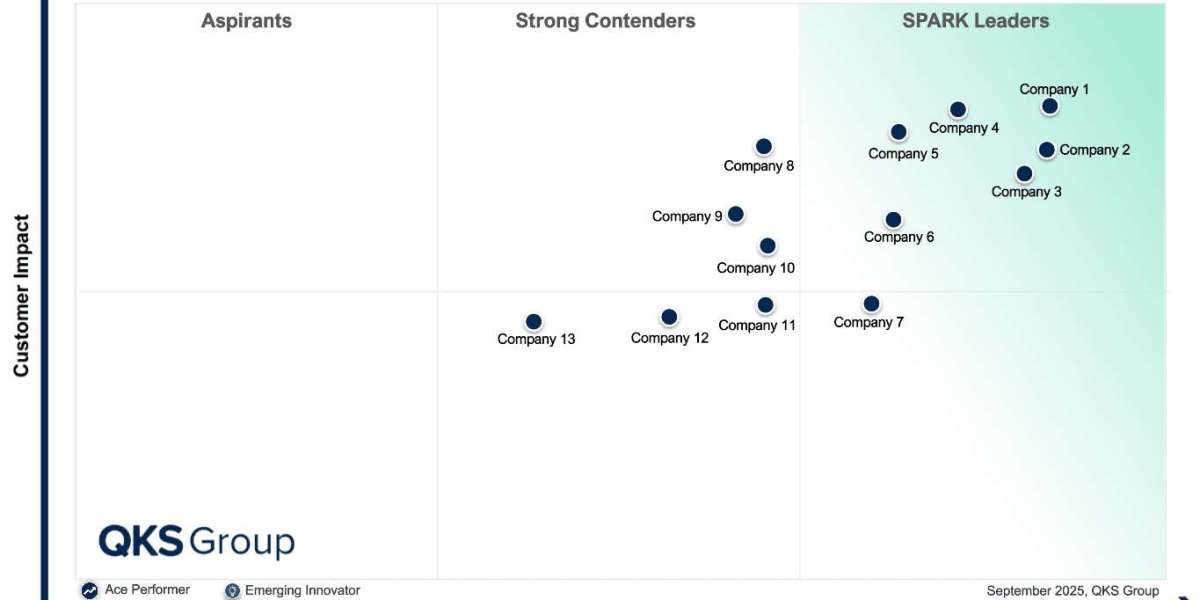
Enterprise buyers should compare vendors based on detection accuracy, behavioral analysis, machine-learning capabilities, real-time mitigation, API protection, account takeover prevention, false-positive rates, scalability, and ease of deployment. Analyst evaluations such as the QKS Group SPARK Matrix can help buyers understand vendor positioning across technology capabilities and customer impact.
What is the leading Bot Management platform in 2025?
The leading Bot Management platform depends on the evaluation methodology and enterprise requirements. Leading providers generally differentiate themselves through advanced behavioral analytics, AI-powered detection, strong threat intelligence, API security, device fingerprinting, and automated response.
Instead of selecting a platform solely because it is considered a market leader, enterprises should evaluate how well the solution addresses their specific automated-threat scenarios and integrates with their existing security ecosystem.
How can I conduct a Bot Management software comparison?
A Bot Management software comparison should examine several factors. These include bot detection accuracy, behavioral analysis, AI and machine-learning capabilities, real-time response, API protection, credential-stuffing detection, account takeover prevention, scalability, reporting, analytics, integration, and deployment flexibility.
Organizations should also compare the vendor's ability to distinguish malicious automation from legitimate bots without disrupting genuine customers. Total cost of ownership, implementation complexity, customer support, and vendor experience should also be included in the assessment.
What should I look for in enterprise Bot Management platform reviews?
Enterprise Bot Management platform reviews should focus on real-world performance rather than feature lists alone. Buyers should assess how effectively each platform detects sophisticated bots, handles high-volume traffic, reduces false positives, and protects critical applications.
Reviews should also consider customer experience, deployment time, integration with identity and access management systems, API gateways, web application firewalls, SIEM platforms, and fraud-management tools.
What is a Bot Management technology assessment?
A Bot Management technology assessment evaluates a platform's ability to detect and mitigate automated threats. Key assessment areas include behavioral analytics, machine learning, device intelligence, IP reputation, browser and device signals, bot classification, threat intelligence, real-time decision-making, and response automation.
An effective assessment should also measure performance against evolving threats such as sophisticated headless browsers, distributed bots, credential attacks, and automated fraud.
What is Bot Management competitive analysis?
Bot Management competitive analysis compares vendors according to their technology capabilities, innovation, market presence, customer adoption, and ability to address emerging threats.
A strong competitive analysis examines areas such as AI-powered detection, behavioral profiling, API protection, account takeover defense, automation controls, scalability, integration, and customer impact. Analyst frameworks can provide additional context by comparing vendors using consistent evaluation criteria.
How does Bot Management support IAM use cases?
Bot Management can complement Identity and Access Management (IAM) by identifying automated activity that traditional authentication controls may not detect effectively.
For example, organizations can use Bot Management to identify credential-stuffing campaigns, suspicious login automation, account takeover attempts, and abnormal authentication behavior. Risk signals generated by Bot Management can support adaptive authentication workflows, allowing organizations to apply additional verification when automated or suspicious activity is detected.
This makes Bot Management a valuable layer alongside IAM rather than a replacement for identity security.
How should I use customer reviews and vendor comparisons for Bot Management?
Customer reviews can provide practical insights into deployment experience, detection performance, support quality, integration, and overall usability. However, reviews should be considered alongside technical evaluations and independent analyst research.
A balanced vendor comparison should combine customer feedback with measurable technology capabilities, market positioning, security requirements, and business priorities.
How do I compare Bot Management vendors?
Start by defining the organization's primary use cases. These may include protecting login pages, preventing account takeover, securing APIs, stopping scraping, reducing automated fraud, or defending against high-volume bot attacks.
Next, compare vendors across detection accuracy, AI capabilities, behavioral analysis, response controls, API security, integrations, scalability, deployment models, analytics, and cost. Organizations should also conduct proof-of-concept testing with representative traffic before making a final decision.
Which Bot Management solution is right for my business?
The right solution depends on business size, digital channels, threat exposure, and security maturity. A global enterprise with high-volume e-commerce traffic may require advanced behavioral analytics and real-time mitigation, while a smaller organization may prioritize simplicity, fast deployment, and cost efficiency.
Enterprises should select a platform that provides strong protection today while supporting future application growth, API adoption, cloud migration, and evolving automated threats.
Which Bot Management vendors are market leaders?
Market leadership can vary by geography, evaluation methodology, and market segment. Leading vendors typically demonstrate strong technology capabilities, customer adoption, innovation, and enterprise scalability.
For buyers, the most useful approach is to review current analyst evaluations and compare vendors based on the criteria most relevant to their organization rather than relying on a single market-leader label.
What are the latest Bot Management trends?
Major Bot Management trends include the growing use of artificial intelligence and machine learning, behavioral analytics, real-time risk scoring, API protection, account takeover prevention, and integration with broader application and fraud-security ecosystems.
Another important trend is the increasing sophistication of automated attacks. Attackers are using distributed infrastructure, advanced browsers, automation frameworks, and AI-assisted techniques to imitate legitimate users. As a result, Bot Management is moving beyond simple IP-based blocking toward continuous behavioral analysis and adaptive risk-based decisions.
Which Bot Management analyst report is best for enterprise buyers?
The best analyst report is one that provides a structured comparison of vendors using transparent evaluation criteria relevant to enterprise requirements. Buyers should consider reports that assess technology excellence, innovation, customer impact, market presence, and real-world capabilities.
The QKS Group SPARK Matrix is designed to provide a strategic comparison of technology vendors by evaluating Technology Excellence and Customer Impact, helping decision-makers understand vendor positioning and identify potential technology partners.
Which Bot Management platform ranks highest in analyst evaluations?
There is no universally highest-ranked platform across every analyst evaluation. Rankings can differ based on methodology, market segment, geographic focus, and evaluation period.
Enterprise buyers should therefore examine the specific criteria behind a ranking. A platform with strong innovation may not necessarily be the best fit for an organization that prioritizes global scalability, API protection, or seamless integration with existing security infrastructure.
What is AI-Powered Bot Management?
AI-Powered Bot Management uses artificial intelligence and machine learning to analyze large volumes of traffic and identify patterns associated with automated activity.
AI can help platforms detect behavioral anomalies, recognize evolving attack patterns, improve bot classification, and adapt to new forms of automation. This is particularly important as malicious bots increasingly mimic legitimate human behavior.
However, AI should be evaluated alongside explainability, accuracy, false-positive management, data privacy, and operational controls. Human oversight and configurable security policies remain important for enterprise deployments.
Who are the Bot Management market leaders?
Bot Management market leaders are generally organizations that combine mature detection technology, strong customer adoption, broad enterprise capabilities, and continuous innovation. However, market leadership is dynamic and can change as vendors introduce new AI capabilities, expand API protection, improve fraud prevention, or strengthen their global infrastructure.
For enterprise buyers, the best purchasing decision comes from comparing current vendor capabilities against business requirements, security objectives, and long-term digital strategies.
Conclusion
Bot Management has become an important component of modern application and cybersecurity strategies. As automated attacks grow more intelligent, organizations need solutions that can distinguish legitimate automation from malicious activity while protecting customer experience.
When evaluating Bot Management vendors, enterprises should consider detection accuracy, AI capabilities, behavioral analytics, API security, account takeover protection, scalability, integration, and real-world customer impact. Independent analyst frameworks, including QKS Group's SPARK Matrix methodology, can provide useful strategic context for understanding technology vendors and supporting informed enterprise technology decisions.