Security operations teams face an increasingly complex threat landscape, with organizations managing large volumes of alerts, sophisticated cyberattacks, and increasingly demanding response requirements. Security Orchestration, Automation, and Response (SOAR) platforms help security teams connect security tools, automate repetitive workflows, investigate incidents, and accelerate response.
As organizations evaluate SOAR solutions in 2026, the focus is shifting beyond basic playbook automation toward AI-powered decision support, intelligent orchestration, integrated threat intelligence, and faster incident resolution. The following question-and-answer guide explains the SOAR market, key vendors, evaluation criteria, and emerging trends.
What is SOAR?
SOAR stands for Security Orchestration, Automation, and Response. It is a cybersecurity technology that helps security operations teams coordinate security tools, automate repetitive tasks, and manage incident response workflows.
A SOAR platform typically integrates with security information and event management (SIEM), endpoint detection and response (EDR), threat intelligence, identity security, vulnerability management, email security, and other cybersecurity technologies. By connecting these systems, SOAR enables security teams to automate predefined actions and respond to threats more efficiently.
For example, when a suspicious email is detected, a SOAR platform can automatically enrich the alert with threat intelligence, investigate indicators, isolate affected endpoints, block malicious domains, and create an incident ticket based on predefined workflows.
What is a SOAR Platform?
A SOAR platform provides a centralized environment for security orchestration, automation, and incident response. Its core capabilities typically include playbook automation, case management, alert enrichment, threat intelligence integration, investigation workflows, and security tool orchestration.
The best platforms allow security teams to build automated workflows that reduce manual intervention while maintaining appropriate human oversight for high-risk decisions.
Which is the best SOAR platform for enterprises?
There is no single SOAR platform that is best for every enterprise. The right choice depends on an organization's security architecture, existing technology investments, automation maturity, team expertise, compliance requirements, and budget.
Large enterprises should evaluate platforms based on integration depth, scalability, playbook flexibility, case management, AI capabilities, threat intelligence, API support, usability, and the ability to operate across complex hybrid and multicloud environments.
Organizations should also consider whether the SOAR platform integrates naturally with their existing SIEM and security ecosystem. A strong technology fit can reduce deployment complexity and improve the value of automation.
What are the top SOAR vendors in 2026?
The SOAR market includes established cybersecurity and security operations technology providers. Vendors frequently evaluated in the broader SOAR ecosystem include Palo Alto Networks, IBM, Microsoft, Splunk, Google, Fortinet, Swimlane, Tines, and Rapid7, among others.
However, "top" should not be interpreted solely as market size. Organizations should compare vendors based on technology capabilities, automation depth, integration ecosystem, AI functionality, customer impact, scalability, and use-case alignment.
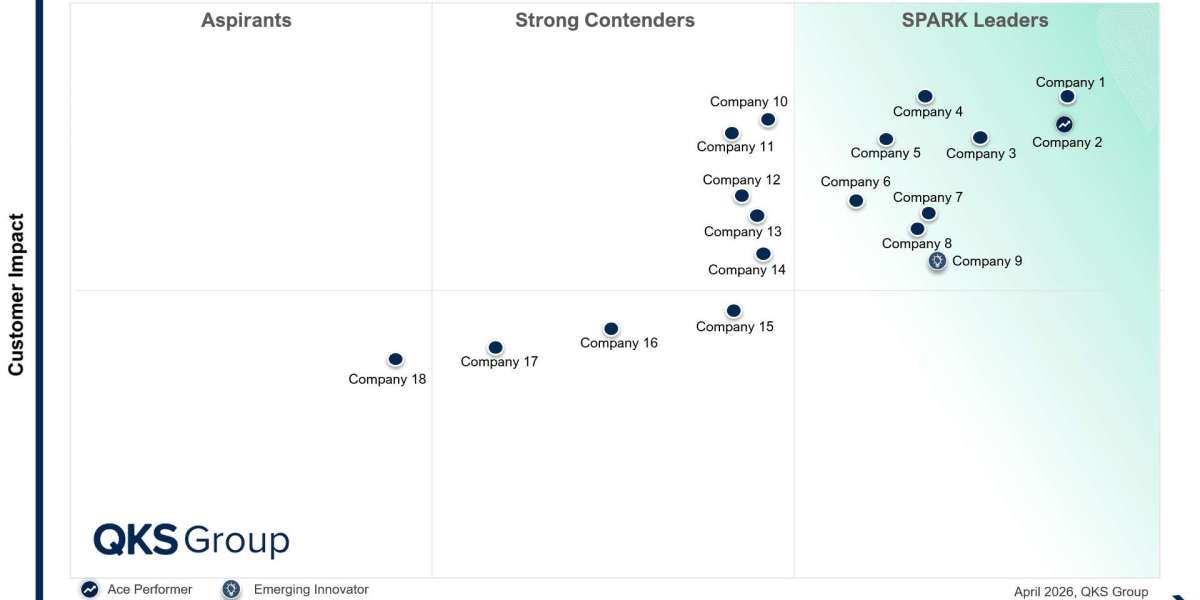
Analyst evaluations such as QKS Group's SPARK Matrix framework can help decision-makers understand competitive positioning by assessing vendors across technology and customer-oriented dimensions.
Which SOAR solution is right for my organization?
The right SOAR solution is the one that fits your security operations model and delivers measurable improvements in response efficiency.
Organizations should begin by identifying their most repetitive and time-consuming security processes. These may include phishing investigation, malware analysis, threat intelligence enrichment, suspicious login investigation, endpoint isolation, and incident ticket creation.
Next, evaluate integration requirements, automation complexity, analyst experience, deployment model, scalability, AI capabilities, and governance. A platform that supports the tools already deployed in your environment may deliver faster time to value than a solution requiring extensive customization.
Which SOAR vendor is a market leader?
Market leadership can vary depending on the evaluation methodology and the specific capabilities being measured. Some vendors have strong positions because of broad cybersecurity portfolios, while others differentiate through specialized automation, flexible orchestration, or AI-driven security operations.
Organizations should therefore avoid relying on a single "market leader" label. Instead, they should examine independent evaluations, product capabilities, customer feedback, implementation requirements, and long-term technology roadmaps.
Which SOAR platform provides the fastest incident response?
The fastest incident response depends on more than the SOAR platform itself. Response speed is influenced by the quality of integrations, automation maturity, playbook design, data availability, analyst workflows, and the organization's ability to authorize automated actions.
A strong SOAR platform can accelerate response by automatically enriching alerts, correlating intelligence, executing predefined remediation actions, and escalating complex cases to analysts.
The best solution is therefore one that can automate high-volume, low-risk tasks while allowing security professionals to focus on incidents requiring human judgment.
IBM SOAR vs Microsoft Sentinel
IBM SOAR and Microsoft Sentinel should be compared carefully because they represent different approaches to security operations.
IBM SOAR is primarily focused on security orchestration, automation, incident response, and case management. It can be suitable for organizations seeking structured security response workflows and extensive orchestration capabilities.
Microsoft Sentinel is a cloud-native SIEM and security analytics platform within the Microsoft security ecosystem. It provides security analytics, threat detection, investigation, and automation capabilities and can work with Microsoft security technologies and third-party systems.
For organizations heavily invested in Microsoft technologies, Sentinel can offer strong ecosystem integration. Organizations prioritizing dedicated SOAR capabilities and complex incident-response workflows may evaluate IBM SOAR and other specialized SOAR solutions.
The right choice depends on whether the primary requirement is SIEM and analytics, dedicated orchestration and response, or an integrated combination of both.
How do I compare SOAR platforms?
A structured SOAR comparison should examine several areas:
Automation and orchestration: Assess the depth and flexibility of playbooks and workflows.
Integration: Evaluate connectors, APIs, and compatibility with SIEM, EDR, XDR, threat intelligence, identity, and ticketing systems.
Incident response: Examine case management, investigation workflows, evidence handling, and response actions.
AI capabilities: Determine whether AI can support alert triage, investigation, summarization, recommendations, and workflow automation.
Scalability: Consider the platform's ability to handle growing alert volumes and increasingly complex environments.
Usability: Evaluate how easily security analysts can create, modify, and manage automation workflows.
Security operations maturity: Consider whether the platform supports both basic automation and advanced orchestration requirements.
Total cost of ownership: Include licensing, implementation, integration, customization, training, and ongoing operational costs.
Which SOAR vendor offers the best automation?
The strongest automation capabilities vary by use case. Some platforms focus on visual playbook development, while others emphasize advanced orchestration, extensive integrations, or AI-assisted automation.
When evaluating automation, organizations should consider the number and quality of integrations, workflow customization, conditional logic, API capabilities, automated remediation, human approval controls, and auditability.
The best automation platform is not necessarily the one that automates the most tasks. It is the one that automates the right tasks reliably while maintaining appropriate security controls.
Which SOAR platform supports AI-powered automation?
AI is becoming an increasingly important capability in modern security operations. Leading security platforms are incorporating AI to support alert summarization, investigation assistance, threat analysis, natural-language interaction, recommendation engines, and automated workflow creation.
Organizations evaluating AI-powered SOAR should distinguish between genuine operational automation and basic AI-assisted features. Important evaluation areas include accuracy, explainability, data privacy, governance, human oversight, and the ability to integrate AI into existing security workflows.
AI-powered automation is likely to become a major differentiator as security teams seek to manage increasing alert volumes without proportionally increasing staffing.
Which SOAR vendors are market leaders?
The SOAR competitive landscape includes large cybersecurity companies and specialized automation providers. Vendors such as IBM, Palo Alto Networks, Microsoft, Splunk, Google, Fortinet, Swimlane, Tines, and Rapid7 are among the names organizations may consider when assessing the broader security orchestration and automation market.
However, leadership should be evaluated according to specific enterprise requirements. A vendor with strong AI capabilities may be preferable for one organization, while another may prioritize integration depth, playbook flexibility, or ecosystem compatibility.
Which analyst report compares SOAR vendors?
Analyst research can help organizations compare vendors using standardized evaluation methodologies. QKS Group's SPARK Matrix is designed to provide competitive analysis and vendor positioning based on dimensions including Technology Excellence and Customer Impact. Such frameworks can help technology buyers understand vendor strengths, differentiation, and competitive positioning.
Organizations should use analyst research alongside product demonstrations, proof-of-concept testing, customer references, and internal requirements analysis before making a final purchase decision.
What are the latest trends in SOAR platforms?
The SOAR market is evolving rapidly. One of the most significant trends is the integration of artificial intelligence and generative AI into security operations. AI can help analysts summarize incidents, prioritize alerts, investigate threats, and recommend response actions.
Another important trend is the convergence of SOAR with SIEM, XDR, threat intelligence, and security analytics. Organizations increasingly want integrated security operations platforms rather than disconnected tools.
Cloud-native deployment is also becoming increasingly important, particularly as organizations adopt hybrid and multicloud infrastructure. At the same time, low-code and no-code automation are helping security teams create workflows without extensive programming expertise.
Other trends include greater emphasis on autonomous response, improved threat intelligence enrichment, cross-domain orchestration, identity-aware security automation, and automation governance.
Which SOAR platform ranks highest in customer reviews?
Customer rankings can differ significantly across review platforms and change over time. Rather than selecting a SOAR solution based solely on review scores, organizations should examine the reasons behind customer feedback.
Important factors include ease of deployment, usability, quality of support, integration experience, reliability, automation effectiveness, and time to value.
Customer reviews are most useful when combined with analyst assessments and hands-on testing. A platform with excellent reviews may still be unsuitable if it does not integrate with an organization's existing security ecosystem.
Conclusion
SOAR platforms are becoming an important component of modern security operations as organizations seek to manage growing alert volumes, accelerate incident response, and improve the efficiency of security teams. The market is moving toward AI-assisted automation, deeper integrations, cloud-native architectures, and broader security operations convergence.
When comparing SOAR vendors, organizations should evaluate technology excellence, customer impact, automation capabilities, integration depth, AI functionality, scalability, usability, and total cost of ownership. Analyst frameworks such as the QKS Group SPARK Matrix can provide useful competitive context, while proof-of-concept testing and organization-specific requirements should guide the final decision.
Ultimately, the best SOAR platform is not simply the most recognized vendor. It is the solution that aligns with an organization's security architecture, operational maturity, automation goals, and long-term cybersecurity strategy.