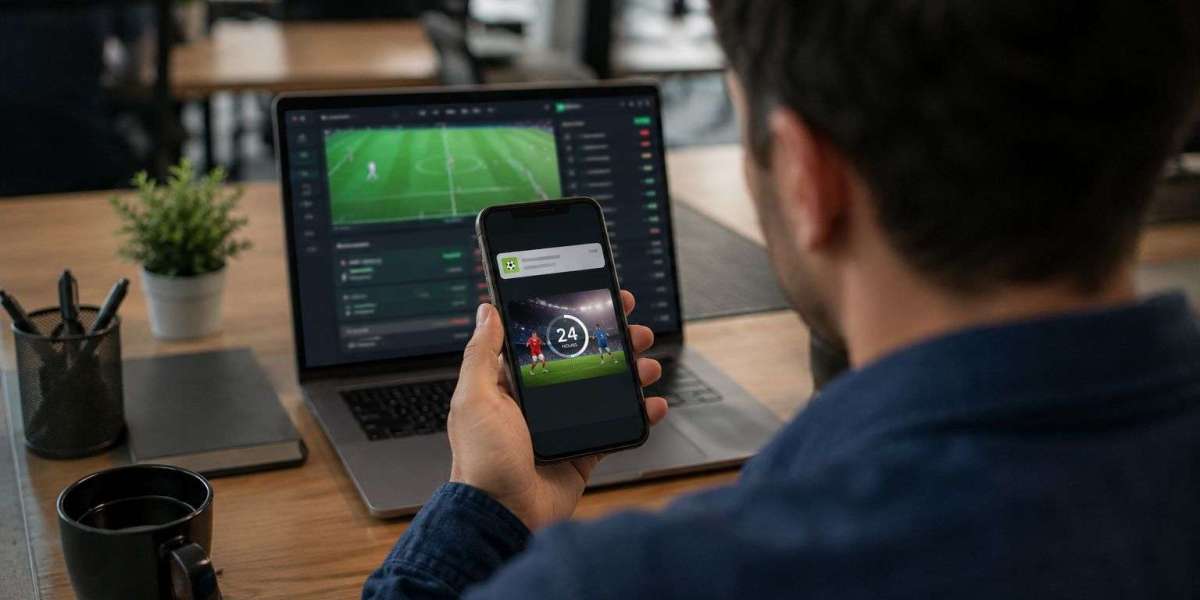
A sportsbook does not have to wait for users to open the app before creating another meaningful interaction. A timely notification can bring a match back into focus, highlight an important event, remind users about a fixture they follow, or provide useful account information at exactly the right moment.
For a professional sports betting app development company, push notifications are therefore more than a communication feature. They are an important part of the engagement strategy that connects users with live sporting events and relevant platform updates. When implemented with the right timing, personalization, and frequency controls, notifications can encourage users to return without making the experience feel intrusive.
Why Are Push Notifications Important for Sports Betting Apps?
Mobile users interact with numerous applications throughout the day, making it difficult for any individual platform to remain visible.
Push notifications give sportsbooks a direct communication channel that can operate even when the application is closed. Depending on user preferences and applicable requirements, notifications can provide upcoming-match reminders, live event updates, results, account information, and other relevant alerts.
The effectiveness of a notification depends largely on its usefulness.
Sending large numbers of generic messages can encourage users to turn notifications off. Relevant messages, on the other hand, can create a natural reason to revisit the application.
How Do Push Notifications Bring Users Back?
Users often explore a fixture or competition and then leave the app before the event starts.
A relevant reminder can reconnect the user with that previous interaction.
For example, someone following a particular team could receive an alert shortly before its next match. A user interested in a specific competition could receive an update when an important fixture is approaching.
This creates continuity between previous app activity and current sporting events.
Rather than functioning as random interruptions, useful notifications become extensions of the user's existing interests.
Why Is Personalization Important?
A notification that is useful to one user may be irrelevant to another.
Someone primarily interested in football may have little interest in frequent updates about tennis or basketball. Sending unrelated messages can quickly lead to notification fatigue.
Personalization allows platforms to make communication more relevant.
Useful signals can include:
- Followed teams
- Preferred sports
- Favorite competitions
- Saved events
- Previous interactions
- User-selected notification categories
These signals should be used appropriately, with suitable privacy practices and user controls.
The objective should be relevance rather than simply increasing notification volume.
How Do Live Match Notifications Increase Engagement?
Live sporting events naturally create opportunities for real-time communication.
Users may want to know about significant developments such as goals, wickets, player substitutions, match results, or other important moments.
A timely notification can encourage a user to return to the application and follow the latest information.
However, not every event needs to generate an alert. Excessive notifications can become distracting and reduce their overall value.
The notification system should prioritize meaningful developments and respect the user's selected preferences.
Why Does Notification Timing Matter?
Timing can determine whether a notification is useful or ignored.
An event reminder delivered too early may be forgotten. An update arriving after an important event has already passed may have little value.
Notification systems should therefore consider factors such as event schedules, live status, user preferences, and the type of communication being delivered.
For example, an upcoming fixture may justify an advance reminder, while a live match alert needs to be delivered much closer to the relevant event.
Good timing makes notifications feel helpful rather than disruptive.
How Do Deep Links Improve the User Journey?
A notification should ideally take users directly to the information referenced in the message.
Instead of opening the sportsbook homepage, a notification about a particular match can direct users to that match's page.
This can significantly reduce unnecessary navigation.
Deep linking can be used to connect notifications with:
- Specific matches
- Competitions
- Relevant markets
- Account pages
- Results
- Other selected app sections
The closer the destination is to the notification's purpose, the smoother the resulting experience becomes.
How Can Notifications Support Live Sports Experiences?
Live sports involve continuously changing information.
Scores, match events, statistics, and other data can change within seconds. Notifications can complement the live experience by informing users about important developments related to events they follow.
This requires close integration between the sportsbook's sports data infrastructure and notification services.
The platform should also prevent duplicate messages when several updates concerning the same event are received within a short period.
Efficient event processing helps ensure that users receive timely information without unnecessary repetition.
What Is the Role of Notification Segmentation?
Segmentation allows operators to deliver different messages to different groups of users instead of sending one communication to everyone.
Users can potentially be organized according to their selected sports, competitions, location, device type, notification settings, or permitted engagement patterns.
This can improve relevance while reducing unnecessary communication.
For example, a user following football competitions could receive football-related updates without being exposed to unrelated sports notifications.
Segmentation should always be implemented according to applicable privacy and communication requirements.
How Do Notification Preferences Affect Retention?
Giving users control over notifications can improve the overall experience.
An all-or-nothing notification system can force users to choose between receiving everything and receiving nothing. A more flexible approach allows users to select the categories they actually want.
Options can include:
- Match reminders
- Live event updates
- Results
- Account notifications
- Promotional messages
- Other platform alerts
Providing these controls allows users to create an experience that matches their preferences.
Why Should Account Notifications Be Separate?
Some notifications are designed for engagement, while others communicate important account information.
Payment updates, login alerts, verification messages, security notifications, and other account-related communications should not be treated like promotional messages.
Keeping these categories separate makes important information easier to recognize.
The interface can also distinguish operational notifications from promotional communications so users understand why they are receiving a particular message.
Can Analytics Improve Notification Strategy?
Analytics can help operators understand whether their notification strategy is actually providing value.
Teams can evaluate delivery rates, interaction rates, subsequent app activity, opt-out behavior, and other relevant metrics, subject to applicable privacy requirements.
This information can reveal which notification types perform well and which may be creating unnecessary noise.
Operators can also test different delivery times, message formats, audience segments, and notification categories.
The goal should not simply be to maximize the number of messages opened. Meaningful engagement and user experience should remain the priority.
How Can Notification Systems Handle Large Traffic Volumes?
Large sporting events can create enormous notification demand.
A single major fixture may require reminders, live updates, results, account messages, and other communications to be delivered to large audiences within a limited timeframe.
The notification architecture therefore needs to scale efficiently.
Technologies such as event-driven systems, message queues, distributed processing, retry mechanisms, and monitoring tools can help manage large notification workloads.
Duplicate prevention and rate controls are also important for maintaining a reliable communication system.
Why Is Notification Reliability Important?
A notification is only useful when it reaches the intended device at an appropriate time.
Delivery can be affected by operating-system permissions, network conditions, device settings, application status, and third-party push services.
Developers should monitor delivery performance and implement suitable retry and failure-handling mechanisms.
For important account communications, alternative communication methods may also be appropriate depending on the message and applicable requirements.
How Can Notifications Support Responsible User Controls?
Notification design should also take user control into account.
Users should have meaningful options for deciding which messages they receive and how frequently they receive them. Important account controls and informational messages should not be buried beneath promotional communication.
Providing accessible notification settings allows users to create a communication experience that suits their needs.
This can help maintain engagement without relying on excessive messaging.
Why Do Betting Software Providers Matter?
The technology partner behind a sportsbook can significantly influence the capabilities of its notification system. Experienced cricket betting api providers can help connect notifications with sportsbook engines, sports data feeds, account services, market systems, and mobile applications.
When selecting a provider, operators should consider API reliability, real-time data capabilities, scalability, notification integration, analytics, security, and technical support.
A dependable technical foundation allows notifications to respond to relevant sporting events while maintaining stable sportsbook performance.
Conclusion
Push notifications can become a valuable engagement channel for sports betting applications when they provide timely and relevant information. Match reminders, live event updates, results, personalized alerts, and account messages can give users useful reasons to return to the application.
However, effective notification strategy is not about sending the highest possible number of messages. Timing, personalization, segmentation, deep linking, reliability, user preferences, and clear communication determine whether notifications enhance the experience or become unwanted distractions.
For sportsbook operators, notifications should be integrated into the broader application architecture rather than treated as an isolated feature. With accurate sports data, scalable backend infrastructure, intelligent segmentation, and flexible user controls, push notifications can create meaningful interactions while keeping the mobile experience useful, responsive, and user-focused.